Neon signs define spaces. 90% of information transmitted to the brain is visual (Source: MediaPost, 2017). Visual receptors account for 70% of sensory input (Source: MediaPost, 2017). Designers in Jakarta use these facts to anchor brand identities. LED neon serves as both ambient lighting and a brand signature (Source: Helioneon, 2026).
Prerequisites for Neon Grid Installation
Hardware selection requires strict adherence to voltage standards. LED neon systems must run on 12V to ensure safety and consistency (Source: Helioneon, 2026). Power supplies must be rated for continuous use, as these installations are designed to last 100,000 hours (Source: Helioneon, 2026). Proper typeface reproduction is mandatory to maintain brand identity (Source: Helioneon, 2026).
- 12V power adapters compliant with local Jakarta electrical codes
- Custom LED neon tubing matching brand hex codes
- Floor plans for precise placement in lobbies or restaurants (Source: Helioneon, 2026)
- Non-conductive mounting brackets
- Social media-optimized lighting angles
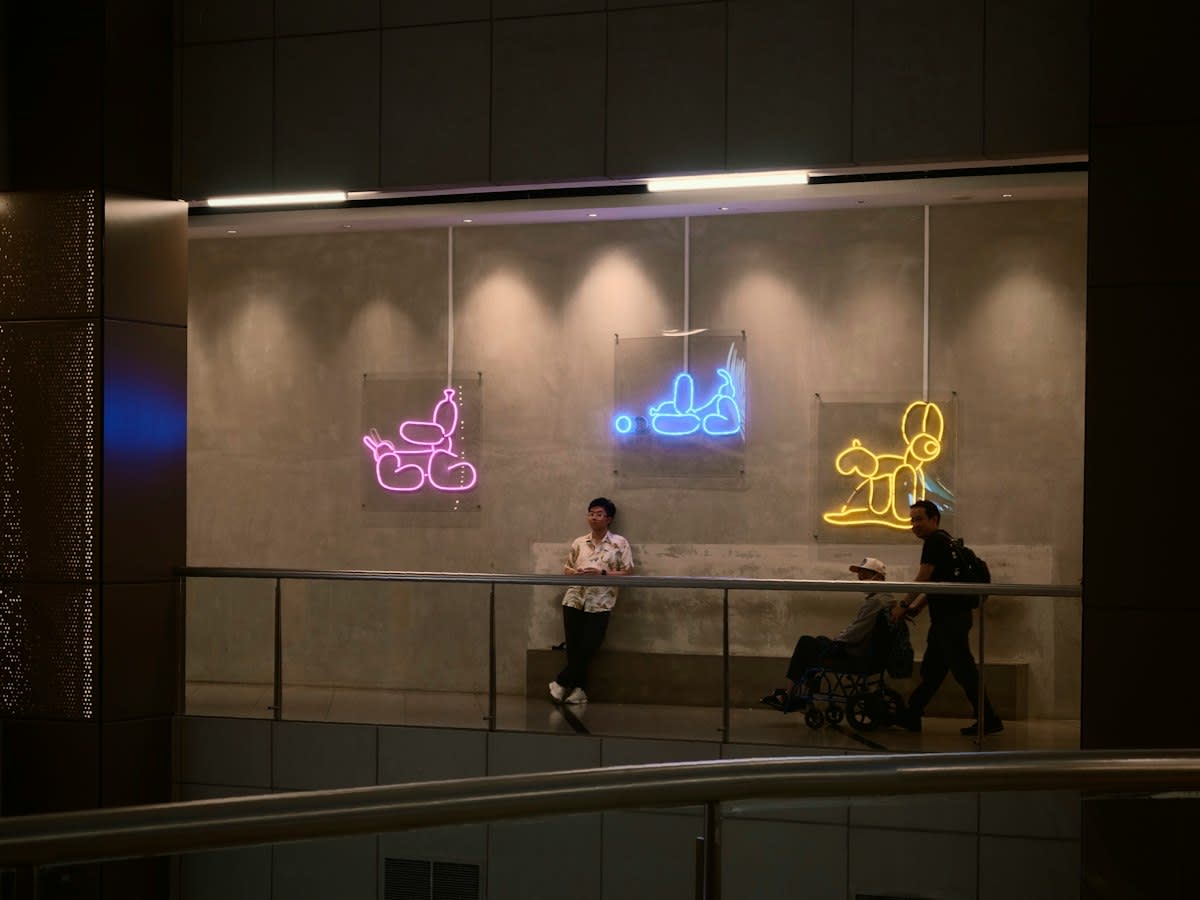
Placement decisions depend on the intended psychological effect. Retailers often place signs behind counters or at the back of stores to create a focal point (Source: Helioneon, 2026). Hotel lobbies utilize neon to establish a backdrop that customers associate with the physical location (Source: Helioneon, 2026). These elements act as visual signatures that influence consumer behavior (Source: Helioneon, 2026).
Execution Steps for Visual Anchoring
- Map the visual field to identify where 70% of sensory receptors will focus (Source: MediaPost, 2017).
- Select a hue based on color psychology to align with the brand mood (Source: Helioneon, 2026).
- Verify that the chosen LED neon remains cool to the touch for safety in high-traffic areas (Source: Helioneon, 2026).
- Install the 12V system according to the restaurant or hotel floor plan (Source: Helioneon, 2026).
- Test the installation under camera lenses to ensure it photographs well for social media (Source: Helioneon, 2026).
Installation teams must prioritize the photographability of the grid. Because LED neon photographs well, it extends the physical experience into digital spaces (Source: Helioneon, 2026). This creates a loop where the physical anchor drives digital engagement. High-contrast colors against a chrome-cold surface can enhance this effect.
"LED neon plays a special role here: it is ambient lighting and brand identity in one."— Helioneon, Sensory Marketing Guide
Grid stability relies on the longevity of the components. A lifespan of 100,000 hours reduces maintenance overhead for facility managers (Source: Helioneon, 2026). Regular checks on the 12V power supply prevent flicker, which can disrupt the visual experience. Consistency in luminosity is required to maintain the sensory anchor.
Practitioner Perspectives on Implementation
Field work in Jakarta reveals constant tension between aesthetic goals and electrical limitations. Designers often fight for specific hues that may require different power draws. Friction arises when floor plans are altered after the neon grids are manufactured. Real-world deployment requires a flexible approach to mounting while maintaining the exact typeface of the logo (Source: Helioneon, 2026).
| Metric | Standard Value | Impact |
|---|---|---|
| Operating Voltage | 12V | Safety and Heat Control (Source: Helioneon, 2026) |
| Lifespan | 100,000 Hours | Long-term ROI (Source: Helioneon, 2026) |
| Visual Influence | 90% | Brain Information Processing (Source: MediaPost, 2017) |
| Sensory Receptor Load | 70% | Eye-centric Engagement (Source: MediaPost, 2017) |
Data indicates that sensory marketing engages sight, hearing, smell, touch, and taste (Source: Helioneon, 2026). Neon grids handle the visual component, which is the most dominant. By securing the visual anchor first, other sensory elements like scent or sound can be layered onto the environment. This method shapes the atmosphere with a clear, repeatable process (Source: Helioneon, 2026).
Failure Points in Neon Grid Design
System failure typically occurs at the power conversion stage. Using non-12V adapters can lead to overheating or premature LED failure. Another failure point is the misalignment of the visual anchor with the customer's line of sight. If the sign is not positioned as a backdrop, it loses its ability to serve as a brand signature (Source: Helioneon, 2026).
Incorrect typeface reproduction is a critical error. LED neon must reproduce the exact typeface and color of a logo to be effective (Source: Helioneon, 2026). Deviations in font weight or color hue can weaken the brand association. This results in a visual disconnect that undermines the sensory marketing strategy.
Common Pitfalls
- Ignoring the 12V requirement in favor of cheaper, incompatible power sources.
- Placing signs in areas where they cannot be easily photographed for social media (Source: Helioneon, 2026).
- Neglecting the floor plan stage for restaurant layout design (Source: Helioneon, 2026).
- Overlooking the 100,000-hour lifespan when calculating long-term maintenance budgets (Source: Helioneon, 2026).
Installation Tip
Ensure all 12V power supplies are shielded from moisture in Jakarta's humid climate to prevent short-circuiting and maximize the 100,000-hour lifespan.
Verification
Fact-Check & Accuracy Note: All technical specifications regarding LED neon (12V, 100k hours) are sourced from Helioneon (2026). Sensory data regarding visual information (90%) and receptors (70%) are sourced from MediaPost (2017).