Brazilian Amazon deforestation falls to lowest on record as pivotal vote looms
Source Entity
Jonathan Watts
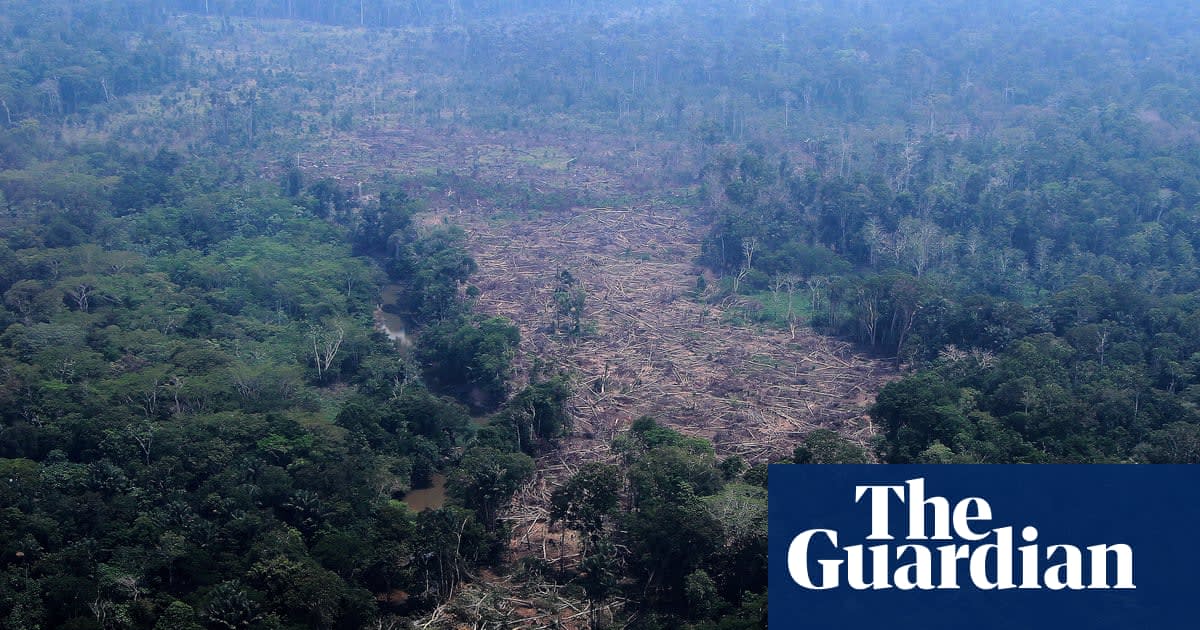
Deforestation in the Brazilian Amazon has reached record lows, dropping 41.8% in the past year. This environmental success faces a critical test in the upcoming October 25 presidential election run-off between incumbent Lula da Silva and Flavio Bolsonaro.
A Historic Milestone for the Amazon
Recent government data from Brazil has revealed a monumental shift in environmental conservation: deforestation in the Amazon rainforest has plummeted to its lowest level since records began. According to the Prodes satellite data series, which is recognized as the most accurate metric for tracking forest loss, the rate of destruction dropped by 41.8% in the year leading up to July 2026. Specifically, deforestation fell to 3,335 square kilometers, down from 5,731 square kilometers the previous year. This achievement underscores the effectiveness of current policy initiatives aimed at curbing the illegal logging that has plagued the region for decades.
The Political Stakes of Environmental Policy
While this decline represents a major victory for global climate stability, its permanence is currently under intense scrutiny. The nation stands at a crossroads as it approaches a presidential election run-off on October 25. The incumbent, Luiz Inácio Lula da Silva, has built his platform on a pledge to reach zero deforestation by 2030, a goal supported by his administration's recent successes. However, he faces a stiff challenge from Flavio Bolsonaro, the son of former president Jair Bolsonaro, whose previous tenure saw a massive surge in forest destruction. The election is effectively a referendum on two diametrically opposed visions for the Amazon’s future.
Contrasting Visions for the Rainforest
The ideological divide between the two candidates is profound. President Lula’s strategy has focused on balancing environmental protection with social programs designed to reduce poverty and food insecurity. In contrast, the opposition candidate, Flavio Bolsonaro, is widely expected to revert to the policies favored by his father, which prioritized economic expansion and land development over stringent environmental regulation. While Flavio has pledged to address organized crime within the Amazon, critics fear that his administration would dismantle the enforcement mechanisms that have allowed these recent record-low deforestation numbers to be achieved.
Global Implications and Climate Stability
The Amazon serves as a critical buffer against global climate change, acting as a massive carbon sink that regulates regional and global weather patterns. The progress made in the last three years under Lula’s administration is not merely a local success but a global imperative. The international community is watching the October 25 vote closely, as the outcome will dictate whether Brazil continues its role as a steward of this vital ecosystem or shifts back toward a policy of exploitation. The potential for a reversal in policy poses a significant threat to the progress made toward the 2030 sustainability goals.
Future Trends and Economic Relations
Beyond environmental concerns, the election results will likely reshape Brazil's geopolitical landscape, particularly its relations with the United States and the administration of Donald Trump. The economic pressures to exploit the Amazon’s resources for agriculture and mining remain high, and the upcoming election will determine how the government manages these competing interests. Whether the country maintains its current trajectory of conservation or pivots back to aggressive development will serve as a bellwether for how emerging economies address the tension between economic growth and ecological preservation in the coming decade.