Russia building 'security zone' in Ukraine that won't be part of future peace talks: Putin
Source Entity
PRANJAL PANDEY
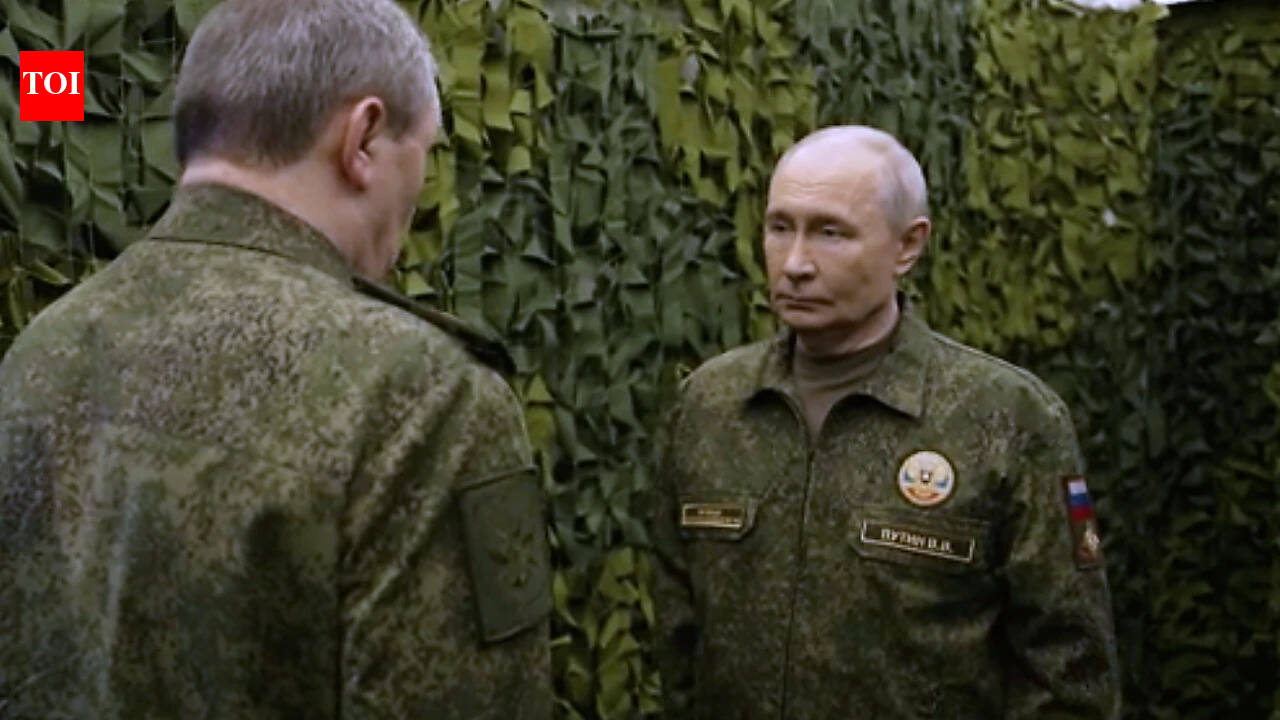
Russian President Vladimir Putin has announced the creation of a permanent 660 km 'security zone' inside Ukraine, explicitly excluding it from future peace negotiations. The move follows claims of significant territorial gains in 2026, including the capture of Dobropillia and near-total control over the Donbas region.
The Strategic Shift: Russia’s 'Security Zone' Doctrine
Russian President Vladimir Putin recently declared the establishment of a permanent 'security zone' within Ukrainian territory, marking a significant escalation in the ongoing conflict. This policy, which aims to insulate Russian border regions from future incursions, is presented as a direct response to the Ukrainian military’s operations in the Kursk region during 2024-2025. By embedding this buffer zone into the state's military strategy, Moscow is signaling a long-term commitment to territorial occupation that transcends traditional frontline maneuvering.
Excluding Sovereignty from Diplomacy
Perhaps the most consequential aspect of Putin’s announcement is the explicit exclusion of this security zone from any prospective peace negotiations. By labeling this territory as non-negotiable, the Kremlin is effectively pre-empting diplomatic compromises that might involve a withdrawal of forces. This stance suggests that Russia is moving toward a strategy of 'fait accompli,' where military control of the border regions is treated as an immutable geopolitical reality rather than a bargaining chip for future settlement talks.
Territorial Gains and the Donbas Objective
Recent reports from Russian military leadership highlight a concentrated effort to consolidate control over the Donbas. Putin has claimed that Russian forces have successfully seized approximately 6,500 square kilometers and 310 settlements since the beginning of 2026. Furthermore, the claim that Luhansk is under full Russian control, with only 10% of Donetsk remaining outside their grasp, underscores the intensity of the current autumn-winter military campaign. The reported capture of Dobropillia serves as a tactical milestone in this broader push to secure the remaining segments of the Donetsk region.
Logistical and Military Implications
Kremlin spokesman Dmitry Peskov provided further clarity on the scale of these operations, noting that the buffer zone currently spans 660 kilometers, with Russia claiming control over 70 percent of that designated area. This massive logistical undertaking necessitates a sustained military presence and significant resource allocation. The use of a command post visit by the President, alongside military leadership like General Valery Gerasimov, reinforces the image of a centralized, high-level directive aimed at cementing these territorial gains before the onset of harsher winter conditions.
Future Trends and Geopolitical Outlook
Looking ahead, the formalization of this security zone suggests a hardening of the frontline that will likely complicate any international efforts to mediate the conflict. As Russia continues to define its own borders through unilateral military expansion, the prospect of a return to pre-2024 status quo lines becomes increasingly remote. The international community now faces a scenario where the 'security zone' acts as a permanent obstacle to territorial integrity, potentially leading to a protracted state of frozen conflict or intensified border skirmishes for the foreseeable future.