Watch: Will Ukraine get the support needed as tensions with US rise?
Source Entity
BBC News
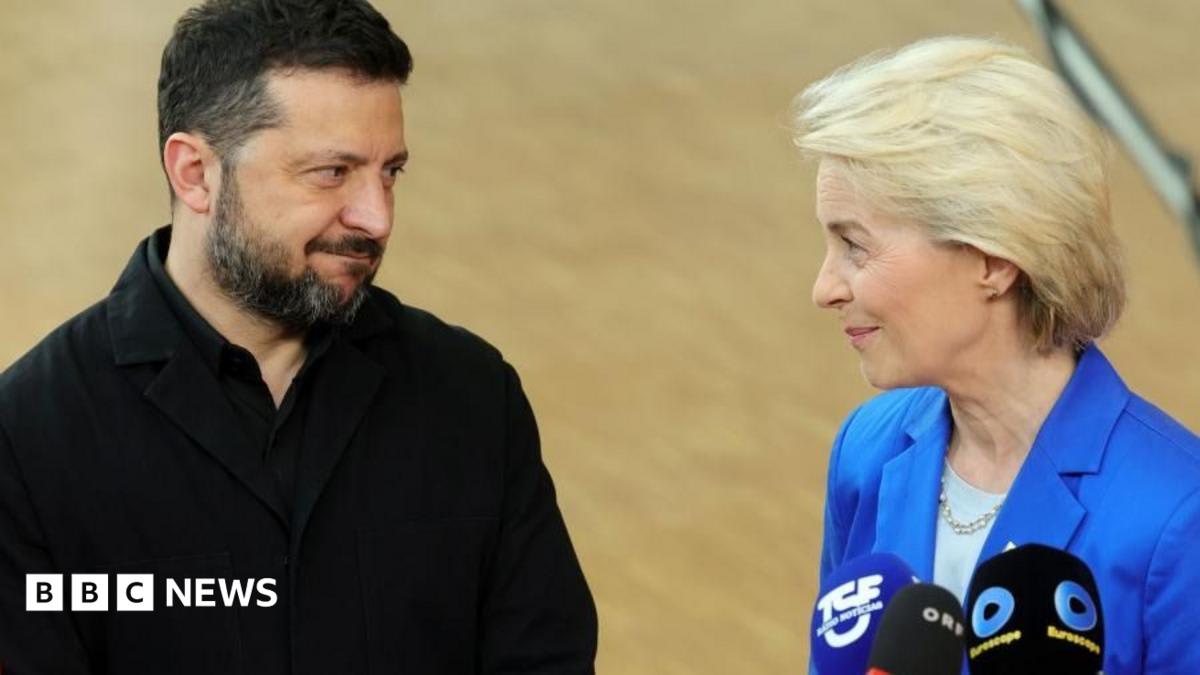
Ukrainian President Volodymyr Zelensky is pivoting toward European allies as his relationship with US President Donald Trump deteriorates. Tensions have escalated over US-Russia energy deals and Ukraine's decision to resume strikes on Russian oil refineries.
The Strategic Pivot: Zelensky’s Diplomatic Realignment
President Volodymyr Zelensky has initiated a significant diplomatic pivot toward European leaders as his relationship with the United States administration reaches a critical breaking point. During a summit in Brussels, Zelensky publicly lauded European figures as "real leaders," a pointed rhetorical shift that underscores his growing reliance on the European Union for existential support. This realignment arrives amidst a backdrop of deepening personal and political friction between Kyiv and Washington, specifically regarding the ongoing conflict with Russia.
The Catalyst: The US-Russia Diesel Deal
The deterioration of the U.S.-Ukraine partnership centers on a controversial deal involving the easing of sanctions on Russia. President Donald Trump’s decision to lift these sanctions in exchange for Moscow increasing the global supply of diesel has directly undermined Kyiv’s strategic objectives. By facilitating the release of Russian fuel to global markets, the U.S. has effectively provided an economic lifeline to the Kremlin, drawing the ire of Ukrainian leadership who view this as a betrayal of the collective effort to isolate the Russian economy.
Energy Infrastructure and Tactical Strikes
Energy infrastructure has emerged as the primary theater for these geopolitical tensions. President Trump has publicly denounced Ukraine’s tactical strikes on Russian oil refineries, labeling them a "disgrace." While Zelensky initially complied with a three-day request from the U.S. to pause these operations, he has since declared that Ukraine will resume the strikes. The justification is clear: Russia has continued its relentless bombardment of Ukrainian cities, including a recent, lethal drone strike in Kharkiv that caused multiple casualties, proving that the "ceasefire" requested by the U.S. was not reciprocated by Moscow.
Technological Hurdles and Military Friction
Beyond the diplomatic rhetoric, the physical capacity of the Ukrainian military is being compromised. Reports indicate that outages to critical U.S.-provided satellite systems have hindered Kyiv’s ability to defend against Russian attacks. This technical degradation, coupled with the political pressure from Washington, has created a sense of urgency for Zelensky to secure alternative commitments from his European counterparts. The lack of reliable support from the U.S. side is forcing Ukraine to seek a more autonomous military strategy.
Future Implications for the EU-Ukraine Bond
The current atmosphere in Brussels reflects a complex balancing act for European leaders. While there is a clear intent to support Ukraine, there is also an underlying anxiety regarding the rhetoric employed by the Ukrainian President. Several officials have expressed concerns that overly critical statements regarding President Trump could alienate the U.S. further, potentially endangering future aid packages. As EU leaders urge a more measured tone, Zelensky must navigate the narrow path between maintaining his moral defiance against Russian aggression and managing the fragile political reality of Western support.
Conclusion: A New Era of Uncertainty
As the conflict enters this volatile phase, the rift between Washington and Kyiv appears to be widening. With President Trump openly characterizing Zelensky as "more difficult to deal with than Putin," the prospect of a unified Western front seems increasingly unlikely. Ukraine now finds itself in a position where its survival is inextricably linked to the resolve of European nations, marking a major shift in the geopolitical architecture of the war.