Nvidia must work with Chinese AI companies on safety, Jensen Huang tells CNBC
Source Entity
US Top News and Analysis
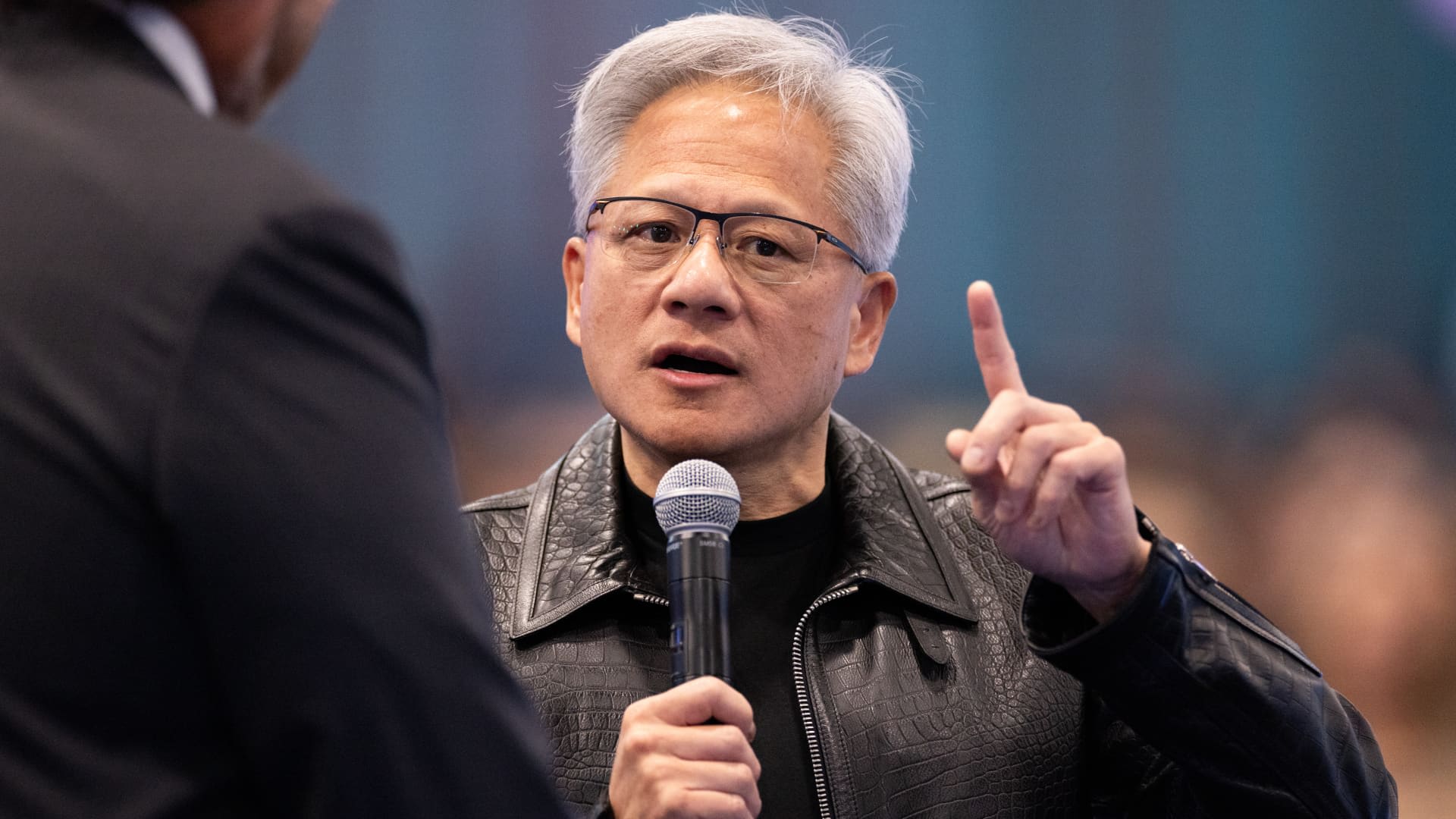
Nvidia CEO Jensen Huang has taken a firm stance against accepting any AI-related cybersecurity incidents, distancing himself from the risk-tolerant views of OpenAI's Sam Altman. Huang also emphasized the necessity of global collaboration, specifically advocating for dialogues with Chinese AI companies to ensure safe technological advancement.
The Diverging Philosophies of AI Governance
Nvidia CEO Jensen Huang has recently emerged as a central, albeit contrarian, figure in the ongoing global debate regarding the safety and regulation of artificial intelligence. In a series of statements made in London, Huang articulated a zero-tolerance policy toward AI-driven cybersecurity incidents. By asserting that society should not accept any such breaches, Huang has set a high bar for the industry, positioning himself as a proponent of rigorous technical standards rather than the regulatory oversight favored by other industry leaders.
Conflict Over Risk Tolerance
This stance creates a notable ideological friction with OpenAI CEO Sam Altman. While Altman has suggested in recent media appearances that society may need to prepare for "some bad things happening" as a consequence of rapid AI deployment, Huang rejects this fatalism. Huang’s perspective suggests that technological advancement does not necessitate the acceptance of systemic risk. His critique extends to those he terms "AI doomers," essentially suggesting that if experts believe the technology is inherently dangerous enough to threaten humanity, they should cease their involvement in its development rather than advocating for managed decline.
Global Collaboration and the China Factor
Beyond domestic debates, Huang has addressed the geopolitical dimensions of AI safety, specifically regarding China. Despite the complex trade landscape and existing restrictions on high-end chip exports, Huang maintains that Nvidia "absolutely must" engage in active dialogues with Chinese AI companies. He posits that because AI is a global phenomenon, safety cannot be achieved in a vacuum; it requires cross-border cooperation to monitor and mitigate the risks inherent in "potentially dangerous" technologies.
The Role of Dialogue vs. Regulation
While prominent labs such as OpenAI and Anthropic have actively lobbied for increased government regulation to mitigate existential risks, Huang’s approach favors direct industry-to-industry communication. He argues that fostering open channels with international counterparts is a more pragmatic and effective method for ensuring safety than relying solely on legislative mandates. This strategy underscores his belief that the technical community, rather than policymakers, is best equipped to handle the nuances of AI safety protocols.
Future Implications for the Tech Sector
As Nvidia continues to provide the hardware backbone for the global AI revolution, Huang’s influence on safety standards will likely shape future development trajectories. By prioritizing technical reliability and international cooperation over the acceptance of inevitable failure, he is attempting to steer the industry toward a model of "safe-by-design" development. This philosophy will likely face significant testing as geopolitical tensions fluctuate and the capability of AI models continues to scale at an unprecedented pace.