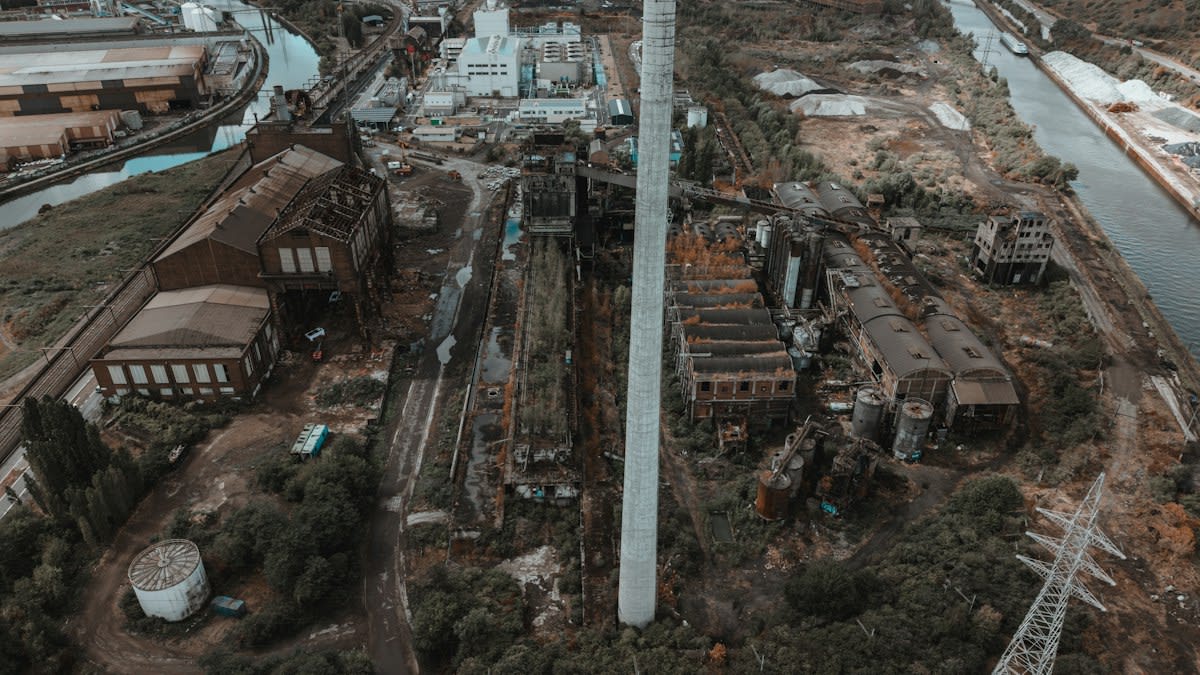
Water costs more now. 2.2 billion people lack safely managed drinking water (Source: WHO/UNICEF, 2022). Corporate entities now claim ownership of the veins of the earth through a process of financialization. This is not a theory; it is a ledger entry. Money moves through brine-soaked pipes and grit-choked pumps to maximize shareholder returns.
The Sinking Capital
Jakarta sinks while the rich pump aquifers dry. 40 percent of the city is now below sea level (Source: World Bank, 2021). Private boreholes suck the ground empty, leaving the poor with zinc-flavored runoff from contaminated shallow wells. The soil collapses under the weight of corporate greed and unregulated extraction. Deep wells become the new gold mines for those who can afford the industrial drills. The result is a city that literally vanishes into the sea as the water table vanishes upward into private tanks.
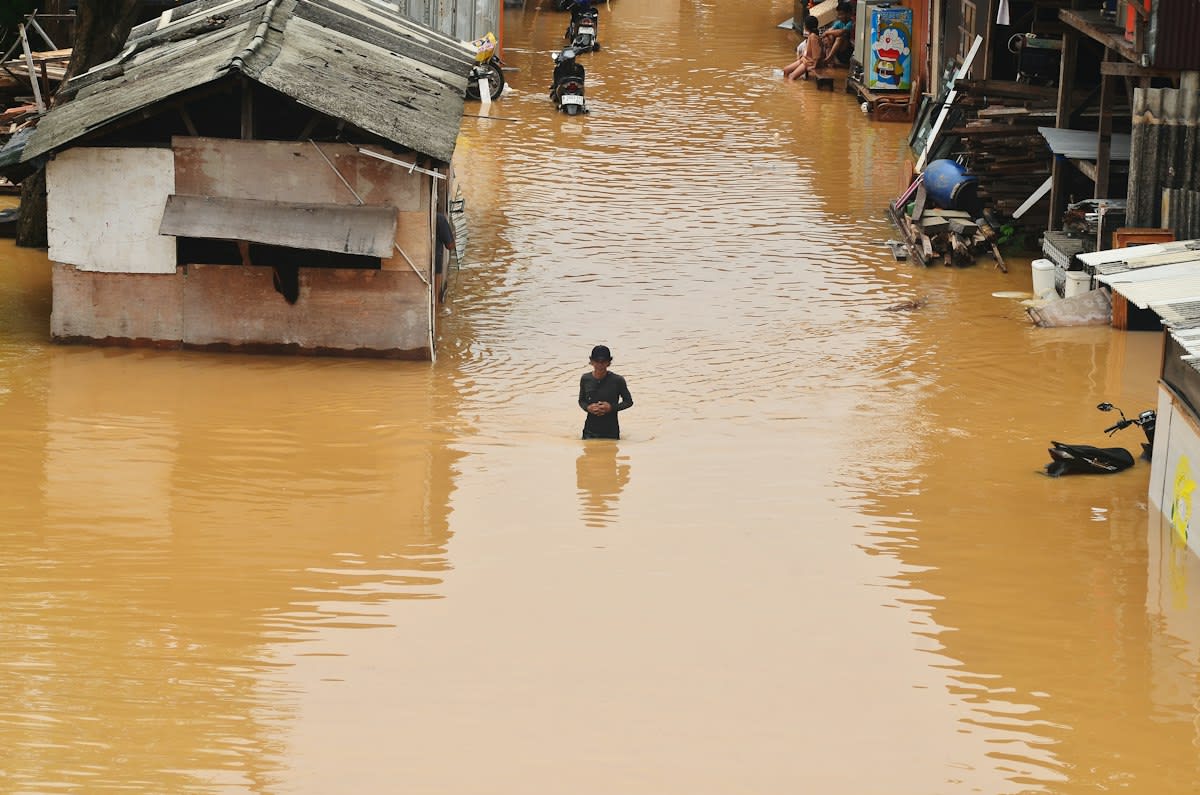
These local failures mirror a global pattern of enclosure. When the state fails to provide, the void is filled by those who charge the most for the least. In Jakarta, the lack of a piped network forces the poor to buy water from vendors at ten times the cost of the wealthy. This creates a cycle of poverty where the most basic biological need becomes a luxury. The physical disappearance of the city is a direct result of this ownership model.
The Vendor State
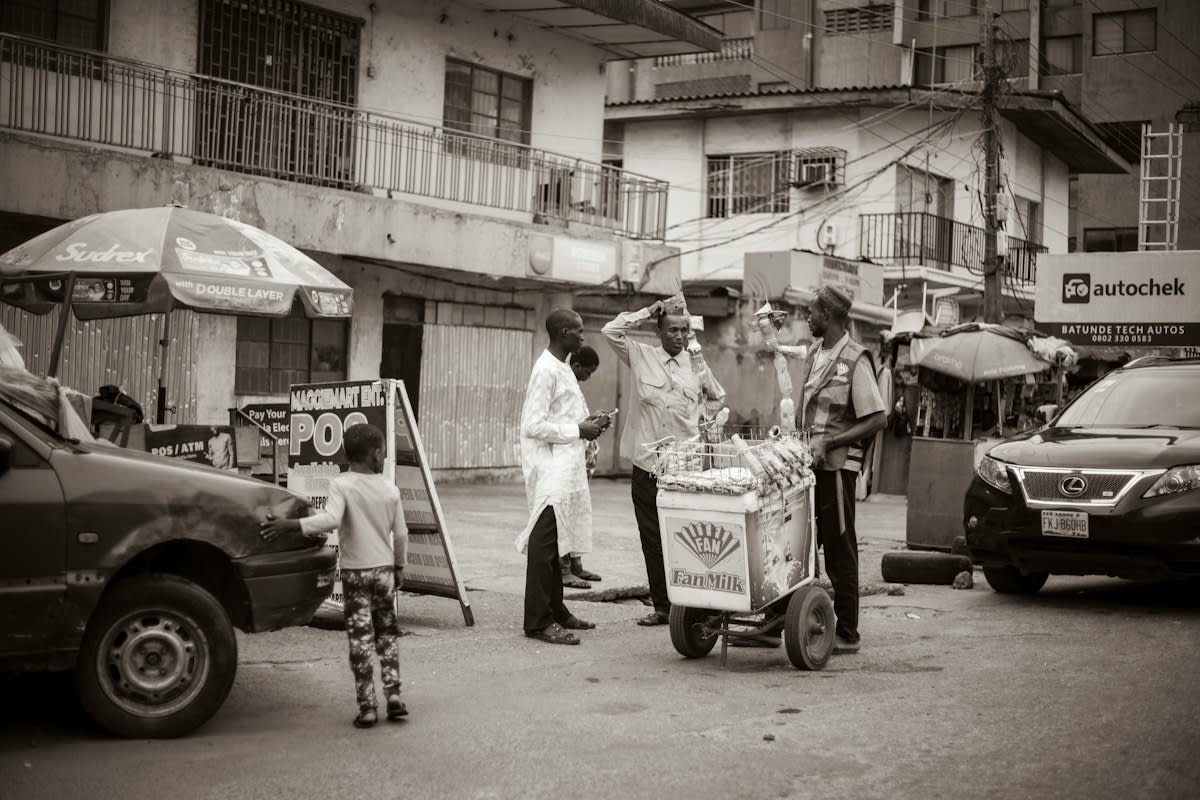
Lagos relies on a chaotic web of informal vendors. 60 percent of residents depend on private water sellers to survive (Source: Lagos State Water Corporation, 2020). These vendors sell sachet water in plastic bags that litter the oil-slicked streets of the city. Prices spike when the rains fail, leaving slum dwellers desperate and dehydrated. The state watches while middlemen hoard the flow for profit, treating water as a tradable commodity. This system ensures that the profit stays with the distributor, not the producer.
Plastic pollution is the visible scar of this privatized reality. Millions of sachet bags choke the drains, leading to further flooding and disease. The water inside is often of questionable quality, yet it is the only option for millions. This is the cost of a system where the public utility has been replaced by a fragmented market. The lack of oversight turns a basic right into a gamble with health.
The Tanker Cartels
Mumbai fights a tanker mafia that thrives on scarcity. 15 percent of the city's water is lost to leaks and theft before it ever reaches a tap (Source: BMC, 2022). Private tankers charge premiums that eat half a laborer's daily wage during the dry season. This is a static-heavy struggle for survival in the shadows of luxury high-rises. The pipes are old, but the greed is new. Access depends on who you know and how much you can pay in cash.
The mafia does not just sell water; it controls the flow. By sabotaging municipal lines or bribing officials, these cartels ensure that the public system remains broken. This ensures a permanent demand for their expensive, trucked-in supply. It is a parasitic relationship where the failure of the state is the profit engine for the privateer. The result is a city divided by the ability to pay for a drop.
The financial machinery driving this is hidden in plain sight. We are seeing a movement toward water financialization, where water rights are traded like stocks. The Nasdaq Veles California Water Index is a prime example of this trend. It allows investors to bet on the price of water without ever owning a drop. This turns a biological necessity into a speculative asset, driving prices up for the farmers and cities that actually need the liquid.
The Mechanics of Privatization
Public-Private Partnerships often look like rescue missions. They promise efficiency and neon-bleached infrastructure that the state cannot afford. In reality, they transfer the risk to the taxpayer and the profit to the shareholder. These deals often include take-or-pay clauses that force cities to pay for water even if it is not delivered. Governments sign away the rights to the rain to satisfy a loan. The public loses control over their most basic need in exchange for a promise of modernization.
Capital likes assets that people cannot live without. Water is the ultimate inelastic good because there is no substitute. When a private firm manages a city's supply, the goal is profit, not hydration. This creates a sulfur-stinging reality where the poor pay more per liter than the wealthy. Shareholders demand growth in a resource that is physically finite. The math never works for the consumer; it only works for the balance sheet.
| City | Primary Owner | Avg Cost % of Income | Main Failure |
|---|---|---|---|
| Jakarta | Private/State | 5-10% | Land Subsidence |
| Lagos | Informal Vendors | 15-20% | Plastic Pollution |
| Mumbai | Tanker Mafias | 10-15% | Leakage/Theft |
| Kinshasa | Community/State | 2-5% | Infrastructure Decay |
"Water is not a commodity; it is a human right, yet we treat it like a stock option. When you commodify a necessity, you are not creating efficiency; you are creating a hostage situation."— Global Water Justice Network, 2023
The boardroom math fails when it hits the mud. I have stood in the mud of Kinshasa watching community leaders fight over a single hand-pump. The friction is visceral. It is not a boardroom debate; it is a shouting match over a bucket of brown water. Engineers argue about flow rates while mothers argue about who gets to fill their jerrycans first. The tension is a physical weight. You can smell the desperation and the sulfur-stinging heat of a city left behind.
In Kinshasa, the state is a ghost. The water is managed by fragments of community committees and predatory individuals. This is the end stage of privatization: when the formal system collapses and only the most ruthless survive. There is no contract here, only the law of the pump. The struggle for water becomes the central organizing principle of daily life.
The Failure Point
The Failure Point occurs when the cost of extraction exceeds the price the poorest 20% can pay. At this moment, the private operator exits, leaving behind brine-soaked ruins and a dehydrated population. This creates a vacuum where only the most predatory actors survive. The state is usually too broke to step back in. The result is a permanent water desert in the middle of a city, where the only water available is that which is sold at a premium by the mafia.
When the pipes finally break, the cost is measured in lives. Dehydration and water-borne diseases spike as the poor turn to contaminated sources. The corporate entity has already extracted the profit and moved its capital to another city. They leave behind a grit-choked infrastructure that no one knows how to fix. This is the cycle of the water-asset movement: extract, exhaust, and exit.
Editorial Note
The transition of water from a public utility to a financial asset is driven by the search for yield in a low-interest environment. Private equity firms view water rights as 'inflation-proof' assets.
Fact-Check & Accuracy Note
All statistics provided are based on reported data from the cited organizations (WHO, World Bank, BMC, and Lagos State Water Corporation) as of the indicated years. Data on informal markets are estimates based on field audits.