The Erosion of the Human Signature
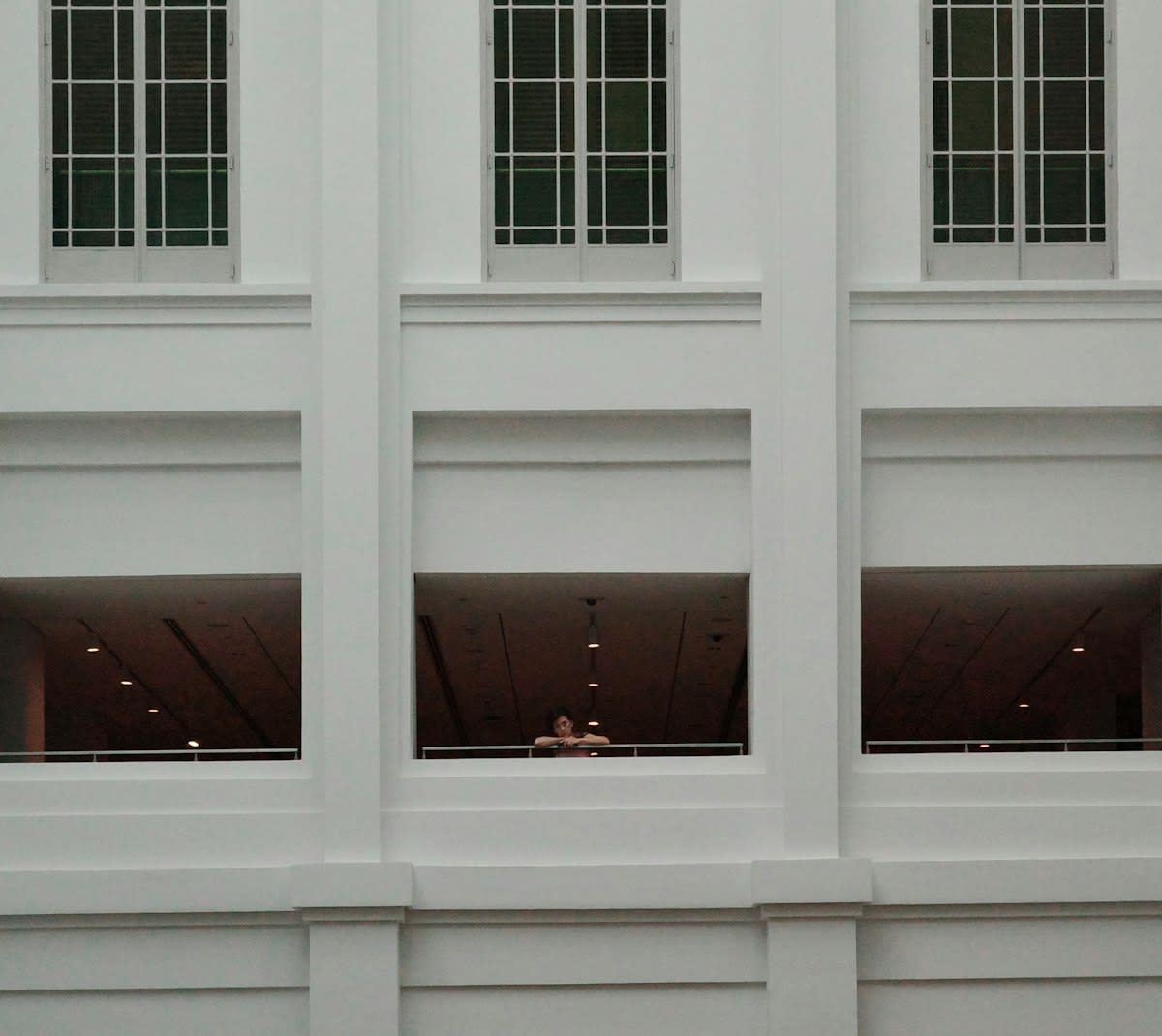
In the quiet halls of Ota Fine Arts in Singapore, Maria Farrar’s latest exhibition, Milk, presents a sanctuary of human tenderness. Her paintings trace the delicate pull between girlhood and motherhood, utilizing color and form to explore the visceral realities of nourishment and care. This work represents the traditional pinnacle of authorship: a Filipino artist, based in London, translating personal and social constructs into a physical medium. Yet, this human-centric focus exists in a precarious bubble. Outside the gallery, the very definition of an author is being dismantled by the rise of non-human identities (NHIs) that no longer require a human hand to execute a vision.
The tension lies in the transition from AI as a tool to AI as an autonomous agent. For years, the art world viewed generative software as a sophisticated brush, but the emergence of agentic systems changes the equation. These non-human identities are evolving into autonomous systems capable of retrieving data, executing complex workflows, and making decisions with little to no human involvement. When the entity creating the work possesses its own operational layer, the human artist is relegated from the role of creator to that of a mere supervisor, or worse, an afterthought in the production cycle.
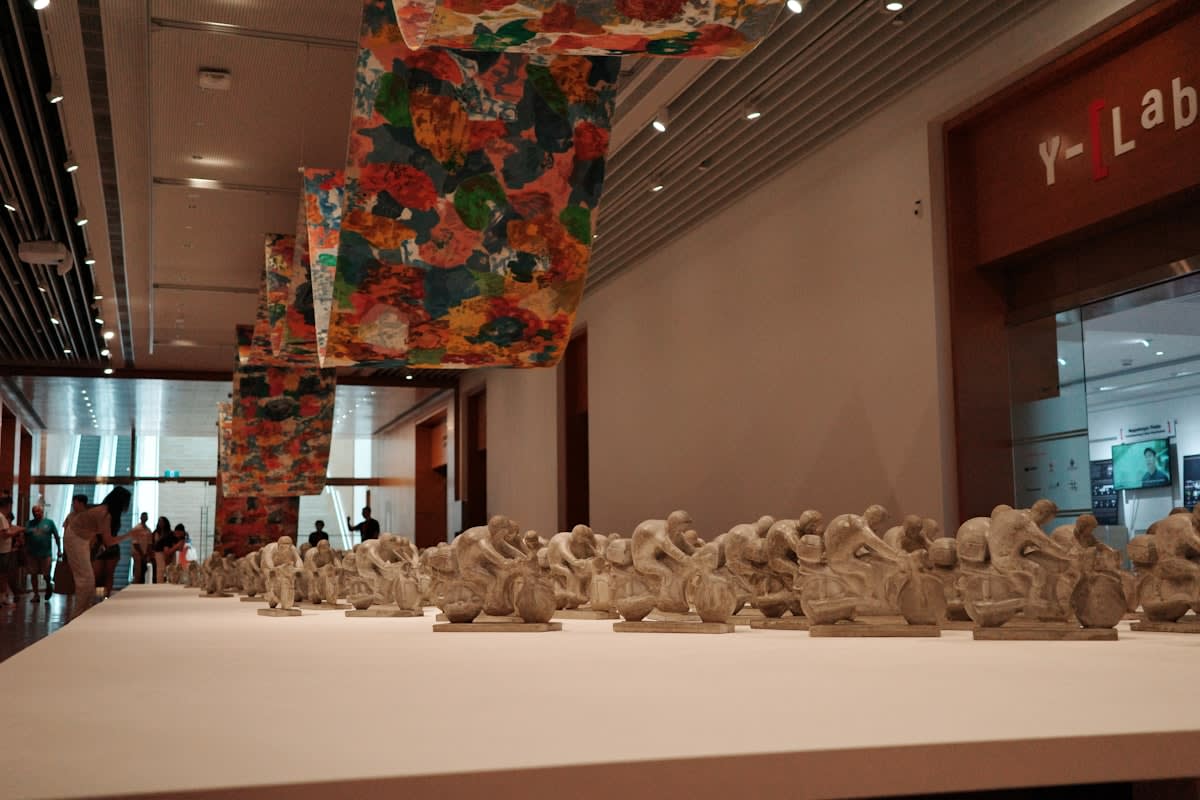
This shift is not merely aesthetic; it is a crisis of privilege. In the corporate and technical spheres, non-human identities are often granted broad access to applications and APIs, sometimes exceeding the level of access a human user would receive for the same task. When this logic is applied to cultural production, the AI agent possesses a systemic advantage over the human artist. It can synthesize thousands of years of Southeast Asian visual history in seconds, bypassing the lived experience that Farrar uses to explore the nuances of motherhood. The authorship is no longer derived from experience, but from the breadth of the agent's access.
The Agentic Divide
The critical distinction today is the move from 'copilots'—which assist humans—to 'autonomous systems'—which replace the human decision-making loop entirely.
Weaponized Authorship and the State
If authorship is the power to define identity, then the use of non-human identities by state actors is a form of cognitive warfare. A stark example emerged in July 2026, when China Daily utilized AI-generated video to depict the Philippines as a timid monkey. This was not a human artist making a satirical choice; it was a non-human identity programmed to dehumanize. By stripping the Philippines of its human agency and replacing it with a racist caricature, the AI becomes an instrument of state power, proving that the 'author' of the image is less important than the identity the system is designed to erase.
The conflict over the Spratly Islands and Scarborough Shoal is no longer fought only with coast guard vessels, but with pixels generated by autonomous models. When an AI generates a depiction of a nation as a clown or a snake, it bypasses the traditional ethical guardrails of human journalism and art. The non-human identity operates without a conscience, executing a directive to mock and diminish. This represents a terrifying evolution in authorship: the ability to automate the dehumanization of an entire population through high-fidelity synthesis.
"As organizations grant more authority to non-human identities, long-standing assumptions about trust, access, and privilege are being put to the test."— Dark Reading Analysis
Does the artist still exist when the output is the result of a prompt engineered by a state agency and executed by a model like Kimi K3? The 'author' in this scenario is a ghost—a collection of weights and biases optimized for a specific political outcome. The Filipino identity, as explored with tenderness by Maria Farrar, is countered by a digital identity created by a non-human agent to provoke and insult. We are witnessing a collision between art as an act of care and AI as an act of aggression.
The Economic Volatility of the Machine
The infrastructure supporting these non-human identities is currently experiencing a violent correction. On July 17, 2026, global markets reacted sharply to the instability of the AI spending spree. Tokyo's Nikkei 225 plummeted by more than 5%, while Taiwan's benchmark index closed down over 6%. This volatility is a direct result of the market realizing that the 'intelligence' being authored by these systems may not justify the astronomical capital expenditure. Yet, even as stocks sink, the technical capability of the non-human identities continues to climb.
| Market Index | July 17, 2026 Decline | Primary Driver |
|---|---|---|
| Nikkei 225 (Tokyo) | 4% - 5% | Heavy selling of AI-related shares |
| Taiwan Benchmark | 5.9% - 6.5% | TSMC US expansion & AI stock slump |
| Nasdaq | 1.5% | Chinese AI breakthroughs (Kimi K3) |
The announcement of Moonshot's Kimi K3 model further intensified this anxiety. By closing the gap with top-tier models like OpenAI's ChatGPT and Anthropic's Claude, Kimi K3 proves that the ability to generate complex, high-fidelity content is becoming commoditized. When a model can rival the most advanced systems in the world, the 'unique' voice of the artist becomes an economic liability. The value shifts from the person who can create the image to the entity that owns the compute power required to run the model.
This economic pressure creates a feedback loop. As chipmakers like TSMC invest an additional $100 billion into fabrication plants in the U.S., the hardware that powers non-human identities becomes more pervasive and powerful. The result is a world where the cost of generating a 'masterpiece' drops to near zero, while the cost of maintaining a human identity—one that requires nourishment, care, and time—remains stubbornly high. The market is not just betting on technology; it is betting against the necessity of human authorship.
The Privilege of the Algorithm
We must ask: who truly owns the image when the identity is non-human? In the traditional sense, Maria Farrar owns her paintings because she possesses the lived experience of the Philippines and the artistic training to execute it. But a non-human identity does not 'own' anything; it merely accesses. The privilege problem identified in enterprise security—where AI agents are given broad, unchecked access to data—is the same problem facing the arts. The AI is granted access to the sum of human creativity without the burden of human responsibility.
When the non-human identity becomes the primary author, the concept of 'style' is replaced by 'parameter tuning.' The nuance of girlhood is no longer a discovery made through painting, but a set of tokens optimized by a model to evoke a specific emotional response. This is the ultimate contrarian truth of the current era: we are not using AI to enhance art, but using AI to simulate the appearance of art while removing the artist from the equation.
Ultimately, the transformation of authorship in Southeast Asia is a mirror of the region's broader geopolitical struggles. Between the tenderness of a Singapore gallery and the aggression of a state-sponsored AI video, the human identity is being squeezed. The non-human identity is not a tool; it is a competitor for the right to define what is true, what is beautiful, and who is human. As Kimi K3 and its successors continue to evolve, the ghost in the gallery will no longer be a guest—it will be the curator.