
The Great Convergence
Walk into any high-end atelier in Paris or a tech-hub boutique in Seoul today, and you will see a garment that refuses to stay still. We have entered the era of phygital couture, a hybrid existence where physical fabric serves as a mere anchor for a digital layer of expression. For decades, a dress was a finished product—a static arrangement of silk, wool, or polyester that remained unchanged from the moment it left the sewing machine until it hit the landfill. That paradigm has collapsed. Now, a single physical piece can wear a thousand different digital skins, shifting colors, textures, and forms based on the viewer's device or the wearer's mood.
This shift represents more than a gimmick for the social media elite; it is a fundamental restructuring of how we perceive identity and ownership. Why commit to a single color palette when an AR overlay can transform a minimalist white blazer into a shimmering, iridescent sculpture in real-time? The garment is no longer a destination but a platform. By decoupling the aesthetic value of a piece from its physical material, designers are liberating fashion from the constraints of gravity, textile durability, and traditional manufacturing timelines. The result is a wardrobe that is fluid, programmable, and perpetually in beta.
Defining the Phygital
Phygital fashion is the seamless integration of physical garments with digital twins or augmented reality enhancements. Unlike pure digital fashion, which exists only on screens, phygital couture requires a tangible physical component that triggers or supports a virtual experience, usually via NFC chips, QR codes, or AR markers.
The implications for the global supply chain are staggering. In Lagos and Mumbai, emerging designers are using digital twins to prototype complex traditional patterns without wasting a single yard of expensive fabric. They create the 'digital first' version, refine the silhouette in a virtual environment, and only produce the physical garment once the demand is verified. This inverted production model flips the traditional fashion calendar on its head, replacing seasonal guesses with data-driven precision. The runway has evolved from a showcase of finished goods into a launchpad for interactive software.
The Delta: From Speculation to Utility
Twelve months ago, the conversation around digital fashion was dominated by the speculative fever of NFTs and overpriced JPEGs of sneakers. It was a gold rush of ownership without utility, where the value lay in the rarity of the token rather than the beauty of the design. Today, the narrative has shifted violently toward utility and integration. We have moved from 'owning a digital image' to 'wearing a digital layer.' The current trend focuses on the 'phygital bridge'—the technology that allows a physical item to unlock a digital benefit, such as exclusive access to a community or a dynamic AR filter that evolves as the wearer achieves certain milestones.
| Attribute | Static Couture (Pre-2023) | Phygital Couture (2024+) |
|---|---|---|
| Lifecycle | Fixed from production to disposal | Dynamic and updatable via software |
| Value Proposition | Material quality and brand prestige | Utility, interoperability, and digital identity |
| Consumer Interaction | Passive wearing/observation | Active interaction via AR/Blockchain |
| Environmental Impact | High waste through overproduction | Reduced sampling via virtual prototyping |
Consider the delta in consumer behavior. A year ago, a luxury buyer in New York might have purchased a limited-edition bag as a status symbol. Today, that same buyer expects that bag to come with a digital twin for their avatar in a virtual world, along with an NFC-embedded chip that proves authenticity and tracks the garment's provenance. The luxury market is no longer selling objects; it is selling ecosystems of ownership. This transition is driven by a generation of consumers who view their digital presence as being just as real—if not more so—than their physical presence.
The Infrastructure of Fluidity
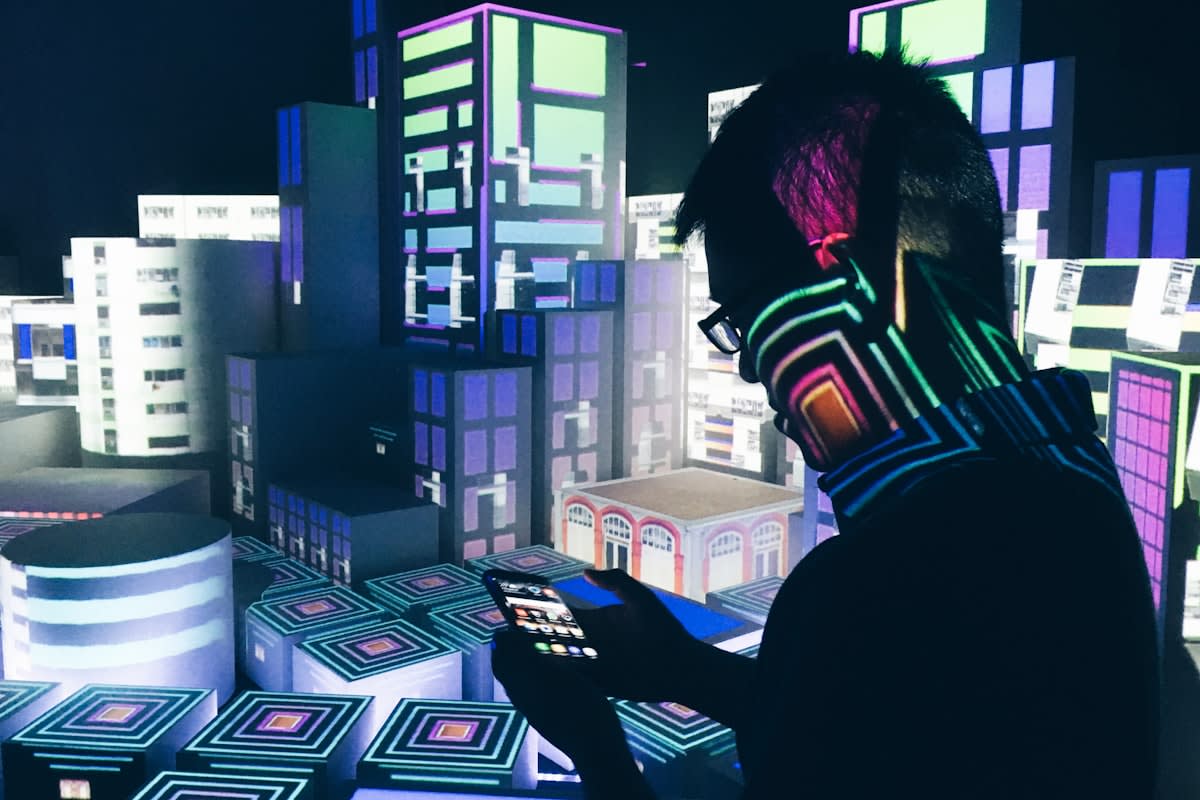
The magic of phygital couture relies on a sophisticated stack of invisible technology. Near Field Communication (NFC) tags are being sewn into hems and collars, acting as a passport for the garment. When a smartphone taps the fabric, it triggers a smart contract that verifies ownership and launches an AR experience. This eliminates the need for clunky QR codes and integrates the tech directly into the textile. We are seeing the rise of 'programmable matter'—fabrics that can change opacity or color based on electrical impulses, though this remains in the early adoption phase compared to the rapid rollout of AR overlays.
"The garment is no longer a finished object. It is a living interface that communicates with its environment and its owner."— Industry Lead, Tech-Wear Collective
In Tokyo, the intersection of street-wear and cyber-culture has pushed this further. Designers are creating 'modular' physical pieces that are designed specifically to be 'enhanced' by digital assets. A jacket might have specific geometric markers that the AR software recognizes as anchor points, allowing digital wings or floating holographic elements to appear perfectly aligned with the wearer's movement. This level of precision requires a deep collaboration between pattern makers and 3D artists, blurring the line between a fashion house and a software studio.
Projected Growth of the Digital & Phygital Fashion Market (USD Billions)
Executive Insight
+18.4%
YTD Growth
This technological leap is not without its friction. The industry currently struggles with interoperability. A digital garment purchased from one brand often cannot be worn in the virtual environment of another. However, the move toward open standards is accelerating. The goal is a universal 'digital wardrobe' where your phygital assets move with you across different platforms, from social media filters to immersive VR spaces. The brand that solves the interoperability puzzle will effectively own the infrastructure of future identity.
The Sustainability Paradox
Can phygital couture actually save the planet, or is it just another layer of consumption? The potential for waste reduction is immense. By shifting the 'novelty' aspect of fashion to the digital layer, consumers can keep a single physical garment for years while updating its appearance digitally. This attacks the core driver of fast fashion: the psychological need for constant visual renewal. If you can change the color and pattern of your shirt via an app, the urge to buy a new one every two weeks diminishes significantly.
- Virtual Sampling: Reducing physical prototype waste by up to 30% during the design phase.
- Digital Twins: Extending the emotional lifespan of a garment through digital storytelling and updates.
- On-Demand Production: Using digital interest metrics to produce only what is guaranteed to sell.
- Circular Tracking: Using NFC tags to track a garment's lifecycle and facilitate easier recycling.
Yet, we must acknowledge the energy costs of the blockchain and the servers required to host these digital layers. The industry is pivoting toward 'green' blockchains and more efficient rendering engines to mitigate this. The real victory lies in the shift from a volume-based business model to a value-based one. When a brand sells a physical piece once and then sells digital 'updates' or 'skins' for that piece over time, the incentive shifts from selling more units to maintaining the longevity of a single high-quality item.
We are witnessing the birth of a new creative discipline. The fashion designer of 2025 is as likely to be proficient in Unreal Engine as they are in draping fabric. The static garment was a limitation of our tools, not a requirement of our art. As we dissolve the boundary between the physical and the virtual, we are not losing the tactile beauty of couture; we are giving it a voice that can change in real-time. The runway is no longer a line—it is a multidimensional space where the only limit is the imagination of the coder and the courage of the wearer.