What children's family drawings may reveal about how they see loved ones
Source Entity
TOI LIFESTYLE DESK
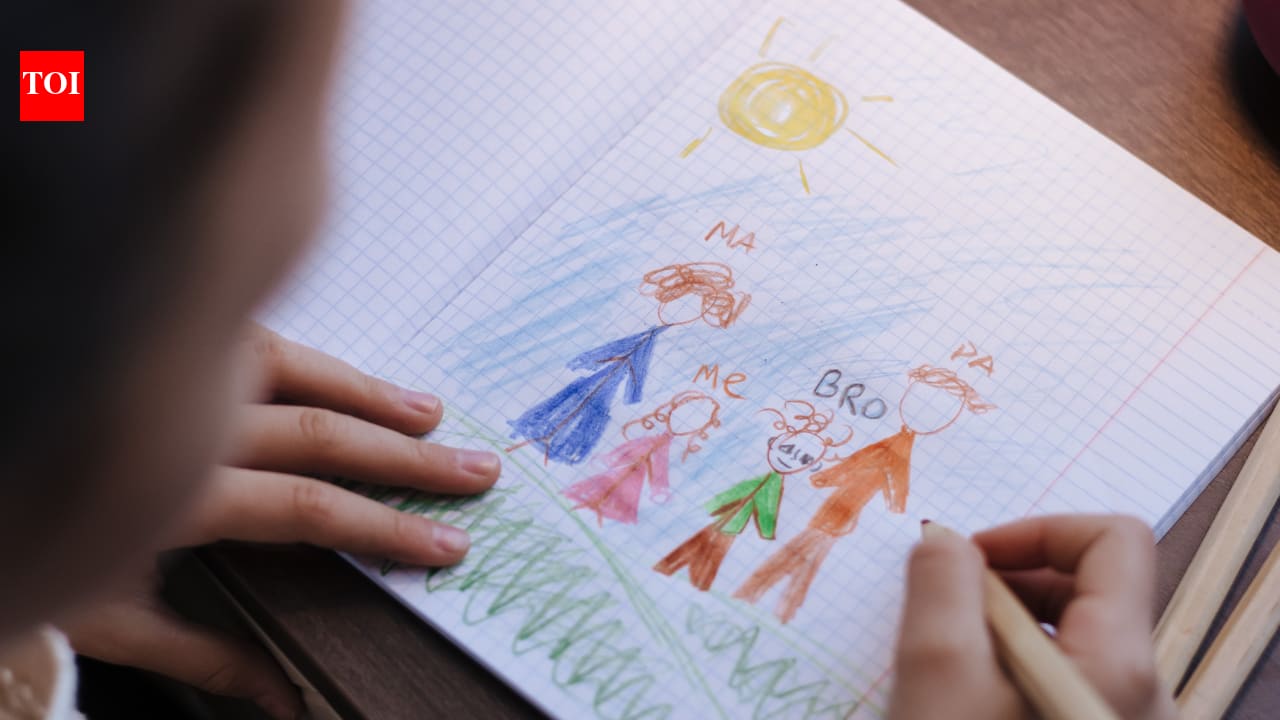
Children's drawings of their families serve as a valuable diagnostic tool for parents to understand their child's emotional landscape. By engaging in open-ended discussions about these artworks, families can foster deeper connections and improve communication.
The Psychological Significance of Children’s Family Art
Children's drawings serve as a profound, non-verbal window into their internal world, often capturing the nuances of family dynamics that they might not yet possess the vocabulary to express. When a child puts crayon to paper to depict their household, they are not merely creating an image; they are articulating their perception of emotional ties, hierarchy, and the roles they believe each member plays within the domestic unit. These illustrations act as a reflective surface for the child's lived experience, documenting the relationships and activities they hold most dear.
Deciphering Symbols and Spatial Relationships
Within the context of child development, the placement of family members and the inclusion—or exclusion—of individuals can be highly revealing. Spatial positioning often reflects a child’s sense of proximity or emotional distance, while the omission of a family member may prompt parental concern. However, it is essential to interpret these artistic choices with nuance. A child might omit a figure simply due to a lack of space or a focus on a specific narrative, rather than as a calculated statement of neglect or resentment.
The Role of Contextual Activities
Beyond the individuals depicted, the activities represented in a drawing provide critical context. Whether a child draws the family eating dinner, playing in a park, or performing household chores, these scenes highlight what the child values as significant family time. These depictions offer a glimpse into the child's memory and their understanding of daily routines, which can be instrumental for parents seeking to understand which aspects of family life are most meaningful to their offspring.
Avoiding Over-Interpretation
While these drawings are valuable, experts caution parents against reading too much into a single artwork. A drawing is a snapshot in time, influenced by the child's current mood, motor skill development, and recent experiences. Pathologizing a child’s artistic choices can lead to unnecessary anxiety. Instead, the focus should remain on observing trends over time and using the artwork as a gentle gateway to conversation rather than a definitive psychological assessment.
Building Connection Through Communication
Rather than analyzing the art in isolation, parents can utilize these drawings as a collaborative tool to build stronger connections. By asking open-ended, non-judgmental questions like, "Can you tell me what's happening here?" or "If you could add anything to this picture, what would it be?", parents can invite the child to narrate their own experience. This collaborative approach transforms a simple drawing into a vital tool for enhancing communication, providing the child with a safe space to share their feelings and memories, ultimately fostering a more cohesive and understanding household environment.