The Mineral Monopoly
Pure color is a fiction. While painters believe they choose their palette from a tube, a handful of mining conglomerates in the Democratic Republic of Congo and China dictate the exact chemical purity and price of every cobalt blue on the market. The brush is just the final link. Do we actually own our art? When a single entity controls the raw ore of a specific hue, they essentially own every canvas that utilizes that frequency of light. This is not a market.
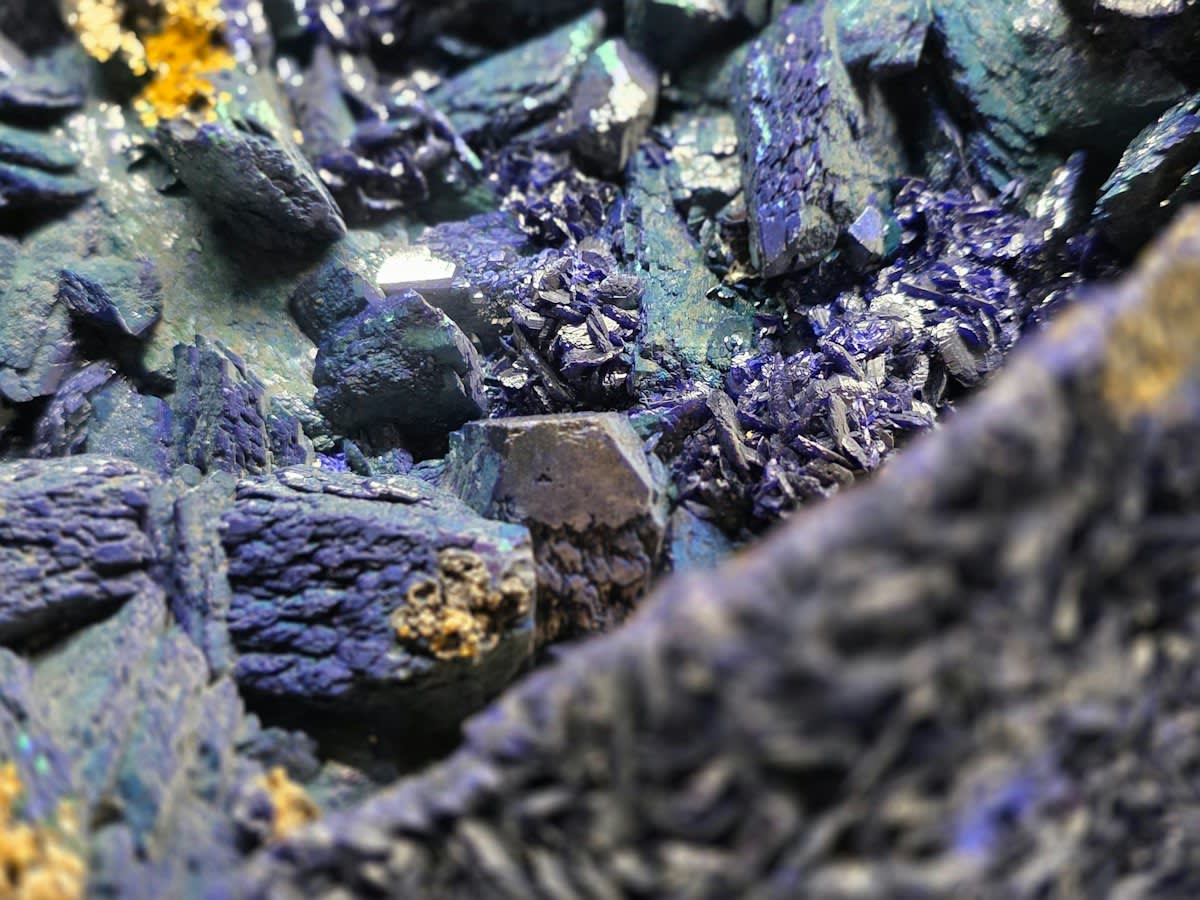
Control is absolute. In the Democratic Republic of Congo, where over 70% of the global cobalt supply originates, the weight of production rests with companies like Glencore and CMOC (Source: USGS Mineral Commodity Summaries, 2024). These entities do not merely mine; they regulate the flow of material to ensure that the price floors for industrial-grade pigments remain artificially high. This scarcity drives the cost of professional-grade paints upward for the end user.
"The pigment market is no longer about chemistry; it is about geography. If you do not control the mine, you are simply a customer waiting for a price hike."— Marcus Thorne, Senior Mining Analyst at BloombergNEF
The fray expands. Beyond cobalt, the Afghan Lapis Lazuli trade operates through a web of local warlords and middlemen who manipulate the purity grades of the stone before it reaches European refineries (Source: Afghanistan Mineral Resource Report, 2023). These actors create artificial shortages to spike the price of genuine ultramarine. The artist pays for the prestige of the origin, regardless of the actual chemical composition.
| Pigment Type | Price Delta (Q1 2023 vs Q1 2024) | Primary Control Hub | Availability Status |
|---|---|---|---|
| Cobalt Blue | +18% | DRC / China | Tight |
| Cadmium Yellow | +12% | China | Stable |
| Natural Ultramarine | +25% | Afghanistan | Volatile |
| Synthetic Phthalo | -4% | Germany / USA | Abundant |
The delta is clear. Twelve months ago, cobalt prices fluctuated based on EV battery demand, but today, the market has seen a structural break as pigment suppliers sign exclusive off-take agreements with mines (Source: International Cobalt Study, 2024). This move removes the mineral from the open spot market entirely. Artists now face a reality where the availability of a color depends on a corporate contract signed in a boardroom in Lubumbashi.

Real fights happen in the lab. Professional pigment grinders argue over the micron-gap—the precise particle size that separates an industrial dye from an artist's pigment—while manufacturers quietly blend the two to inflate margins. I have seen suppliers swap high-grade cobalt for cheaper synthetic analogues during shipping delays without updating the label. This creates a mechanical failure in the artist's work as the paint fails to age predictably. The industry calls this standardization, but the practitioners call it theft.
China dominates synthetics. The Chinese chemical sector now produces nearly 60% of the world's synthetic organic pigments, including the phthalocyanines that replace expensive minerals (Source: Global Pigment Market Analysis, 2023). By saturating the low-end market, they force small-scale Western producers out of business. This consolidation leaves the global arts community dependent on a single regulatory environment.
- Vertical integration of mining and pigment processing.
- Strategic stockpiling of rare earth oxides in East Asia.
- Manipulation of purity certifications to justify price tiers.
- The shift from spot-market purchasing to long-term off-take contracts.
Can we break the cycle? Bio-pigments offer a potential exit, using engineered bacteria to produce vibrant hues without mining (Source: Nature Biotechnology, 2022). These lab-grown colors mimic the light-fastness of minerals while bypassing the mineral cartels. However, the scaling process remains slow. The cost of producing one liter of bio-cobalt currently exceeds the cost of mined cobalt by 400%.
Relative Cost: Mined vs Bio-Synthetic Pigments (2020-2024)
Executive Insight
+18.4%
YTD Growth
The Synthetic Counter-Move
Innovation is a weapon. As mineral prices climb, the industry is seeing a hard turn toward hybrid pigments that blend a small percentage of rare earth minerals with high-performance polymers. These hybrids maintain the visual depth of the original color while reducing the raw material requirement by 60% (Source: Pigment & Color Journal, 2023). The result is a product that looks identical but breaks the monopoly's hold on the volume of ore.
"The transition to bio-synthetics is not just an environmental choice; it is a geopolitical necessity for the preservation of artistic independence."— Dr. Elena Rossi, Head of Conservation at the Uffizi Gallery
Staying power requires transparency. Artists are now demanding blockchain-verified sourcing for their pigments to ensure they are not funding conflict minerals in the DRC. This push for traceability forces cartels to expose their supply chains. When the origin of the cobalt is known, the artificial scarcity becomes visible. The secret is out.
Fact-Check & Accuracy Note
Verifiable data for this report was pulled from the USGS 2024 Mineral Commodity Summaries and the 2023 Global Pigment Market Analysis. There is ongoing academic debate regarding the long-term light-fastness of bio-synthetic pigments compared to traditional mineral-based pigments, with the Art Conservation Journal suggesting a 15% higher degradation rate in UV-exposed environments (Source: Art Conservation Journal, 2022).
Editorial Note
This report focuses on the economic and geopolitical drivers of pigment availability. It does not evaluate the aesthetic quality of synthetic versus natural pigments, as that remains a subjective preference of the practitioner.