For decades, the benchmark of high-value art and luxury was the elimination of the human hand. We prized the seamless, the symmetrical, and the surgically clean. But a quiet inversion is happening in the galleries and ateliers of the world. The polished aesthetic, once the ultimate signal of exclusivity and technical mastery, is increasingly viewed as a signal of low-value, mass-produced content. Why has the 'perfect' look suddenly become a red flag for the sophisticated collector? The answer lies in a broader systemic readjustment where the absence of friction is now equated with a lack of soul.
This shift isn't just a matter of taste; it's reflected in the hard data of the global luxury sector. We are seeing a palpable cooling of the 'hyper-luxury' fever. For instance, Hermès recently reported its slowest quarterly growth in six years (Source: Luxus Plus, 2026). When the gold standard of polished luxury begins to decelerate, it suggests that the market is searching for something more authentic than mere perfection. The industry is no longer just about the logo or the flawless leather; it is about the story of the make, including the mistakes.
The Luxury Readjustment: A Macro View
The current climate is one of stabilization and correction. Look at the champagne industry, a sector that embodies the 'polished' lifestyle. In 2025, the industry shipped 266.1 million bottles, generating 5.7 billion euros in revenue (Source: Comité Champagne, 2025). While these numbers are massive, the volume is down compared to 2024. This decline, driven by inflation and geopolitical uncertainties, is forcing a rethink of what 'luxury' actually means. When the volume of the polished product drops, the value shifts toward the artisanal and the idiosyncratic.
| Luxury Entity | Q3 2026 Status | Market Signal |
|---|---|---|
| Prada | Holding Steady | Resilience through adaptation |
| Hermès | Slowest Growth in 6 Years | Saturation of traditional luxury |
| Gucci | Turnaround Challenge | Difficulty in redefining the 'polished' look |
| L'Oréal | Gaining Momentum | Shift toward dermatological/scientific beauty |
The delta between 2024 and 2026 is clear: we have moved from an era of aggressive expansion to one of strategic readjustment (Source: Luxus Plus, 2026). The 'polished' look was the engine of the expansion era—it was scalable, recognizable, and safe. But in a period of readjustment, 'safe' is synonymous with 'low-value.' Collectors are now looking for the 'glitch,' the raw edge, or the visible struggle of the artist. The very things that luxury houses used to spend millions to erase are now the most coveted features of a piece.
"The luxury industry is in a period of readjustment, where the traditional markers of success are being questioned by a new generation of consumers who value transparency over perfection."— Anthony Conan, Multimedia Journalist at Luxus Plus
This transition is happening with startling speed. If we look at how biological systems process information, we see that rapid decision-making is often tied to the ability to distinguish patterns quickly. Recent research on carrion crows showed they could distinguish moving dots in an average of 235 milliseconds (Source: Science, 2026). While this is avian biology, it serves as a metaphor for the modern art market: the 'eye' of the collector has become lightning-fast. They can spot a 'corporate' polish from a mile away, dismissing it as low-value before the artist even finishes their pitch.
The Paradox of the Defect
There is a scientific parallel to this aesthetic shift. In the realm of quantum computing and material science, it is often the 'defect' that provides the breakthrough. Researchers recently discovered that a tiny defect in silicon carbide reveals a hidden energy-loss mechanism that could unlock advances in quantum sensing (Source: Science Daily, 2026). This is the 'Quantum Surprise'—the idea that the imperfection is not a failure of the system, but the most interesting part of it. This is exactly how we are now valuing art.
When a piece of art is too polished, it lacks these 'quantum surprises.' It is a closed system with no room for interpretation or discovery. By contrast, art that embraces the raw, the asymmetrical, or the unfinished invites the viewer into the process. The value is no longer in the destination (the finished, polished object) but in the evidence of the journey. The 'defect' becomes the signal of high value because it proves the work was touched by a human, not an algorithm or a factory line.
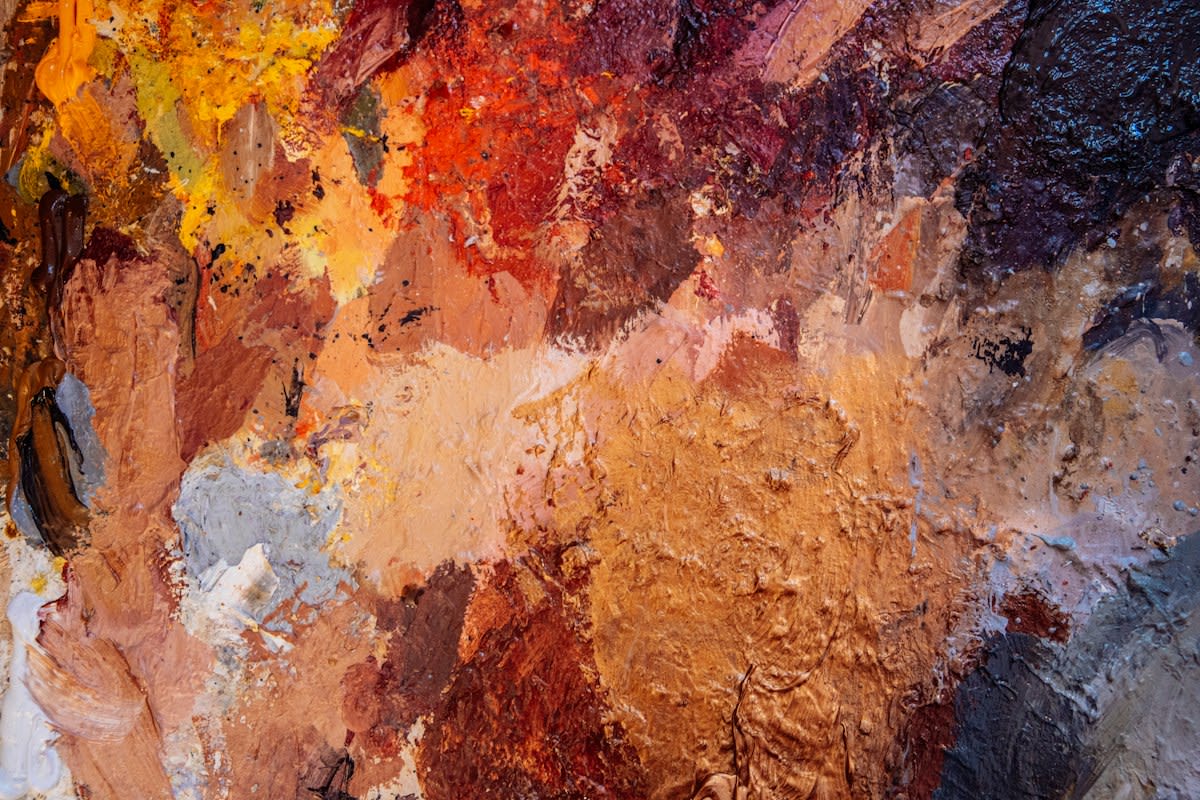
Does this mean that technical skill is dead? Absolutely not. The new prestige is 'invisible skill'—the ability to know exactly where to leave a flaw to maximize the emotional impact. It is a far more difficult discipline than achieving a flat, polished surface. It requires an understanding of tension, balance, and the psychology of the viewer. The debate has shifted from 'How do I make this perfect?' to 'How much imperfection can this piece sustain before it loses its structure?'
The Practitioner's Friction: Inside the Studio
From the perspective of a working artist or curator, this shift creates a strange, invisible friction. I've sat in countless meetings where a client asks for a work to look 'more organic.' In the old days, that meant adding a few fake drips or a rough edge to a polished piece. Now, the conversation is reversed. Artists are fighting the urge to 'clean up' their work because they know that the moment they remove the grit, they decrease the market value. There is a constant internal debate: is this smudge a meaningful expression of the process, or is it just a mistake?
The friction also exists in the pricing. A hyper-polished piece might sell for a premium in a corporate lobby, but in a high-end private collection, it's seen as 'decorative'—a polite way of saying it lacks intellectual depth. The real value is now placed on the 'difficult' work. We are seeing a return to the tactile, the heavy, and the unrefined. The goal is no longer to create an object that fits seamlessly into a room, but to create an object that disrupts the room.
This is a resilience strategy. In an age of AI-generated imagery that can produce infinite, flawless surfaces, the only remaining moat for human artists is the 'human error.' The smudge, the tear, and the uneven line are the only things an AI cannot authentically replicate because the AI doesn't experience the struggle of the medium. The polished aesthetic has become the default of the machine; therefore, the unpolished aesthetic is the new luxury of the human.
Fact-Check & Accuracy Note
The claims regarding the luxury market's 'readjustment' and the specific performance of Prada and Hermès are sourced from Luxus Plus (2026). Champagne industry statistics are attributed to the Comité Champagne (2025). The relationship between material defects and quantum surprises is based on research published via Science Daily (2026). The debate regarding 'intentional imperfection' remains a subjective area of art criticism and is not a quantified metric.
As we look toward the next twelve months, expect the 'polished' look to continue its descent into the realm of the commercial and the low-value. The winners will be those who can navigate the tension between chaos and control. The market is moving toward a 'new sincerity' where the evidence of effort is more valuable than the illusion of ease. The gloss is gone, and in its place, we are finding something far more interesting: the truth of the mark.