
Manhattan is bleeding artifacts. The Manhattan District Attorney's Office recently announced the return of 36 antiquities to Syria, assets valued at over $5 million (Source: Smithsonian, 2026). The air in the evidence lockers smells of ozone-heavy air and sweating concrete. These items were not merely misplaced; they were the spoils of conflict, moved through shadow networks into the licit art market to be laundered into legitimacy before being intercepted by investigators.
The scale of return is accelerating. Greece is currently absorbing a massive influx of stolen heritage, including 48 historic religious artifacts returning from Sofia, Bulgaria, 109 years after they were seized during World War I (Source: Tovima, 2026). This is not a slow diplomatic trickle but a concentrated burst of activity. The return of bronze military artifacts from the late seventh century B.C.E., unearthed in Heraklion, marks a specific victory for Greek authorities in reuniting fragmented excavation finds (Source: Smithsonian, 2026).
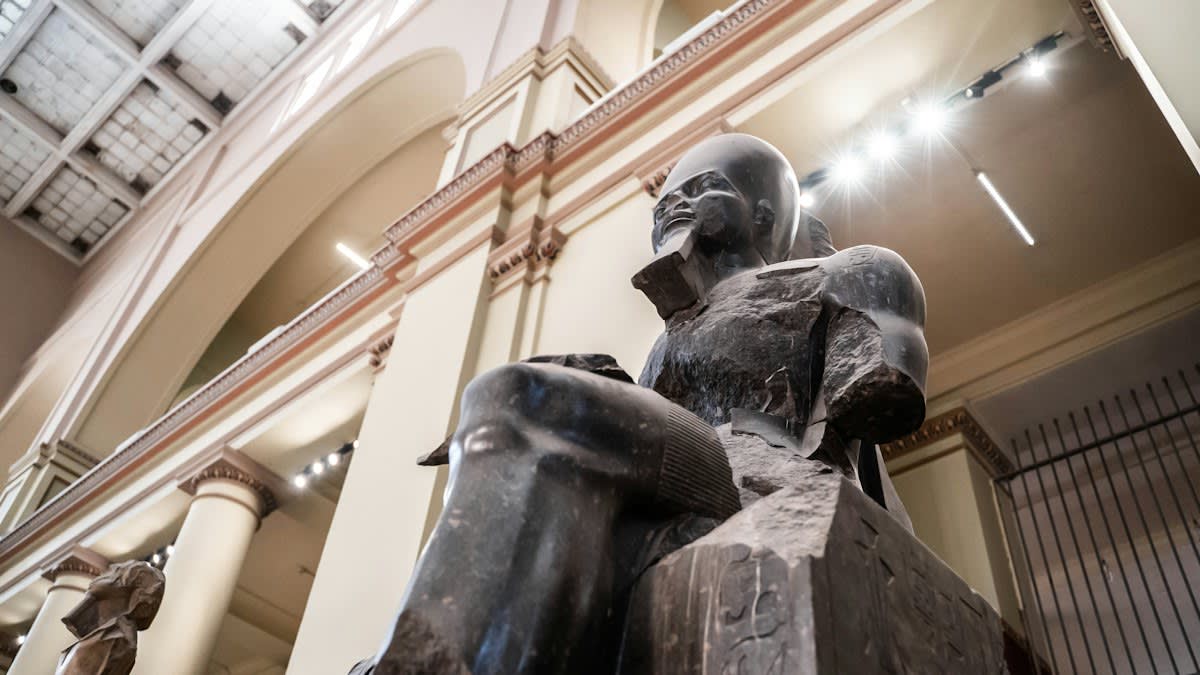
The Smuggling Pipeline: From Cairo to London
Traffickers operate in the gaps. The UNICRI Cultural Heritage Smuggling and the Nexus with Terrorism Report identifies that the largest markets for smuggled cultural goods are the United States and European States, while Iran, the Arabian Peninsula, China, and South Asia are involved to a lesser extent (Source: UNODC, 2026). The logistics are brutal. Artifacts move from archeologically rich origin countries through a series of intermediaries, often utilizing stagnant harbor water ports and plastic-wrapped circuitry hubs to hide their provenance.
London remains a primary friction point. A stone fragment from the Open Temple at Karnak, featuring the cartouche of King Amenhotep I, was recently intercepted at a London auction house, halting its sale and triggering immediate repatriation procedures (Source: UNODC, 2026). This represents a shift in the 'When' of enforcement. Twelve months ago, such items might have vanished into private collections; now, auction houses are operating under a regime of extreme scrutiny and immediate reporting.
"My goal has always been to put us out of business. I would like to be unnecessary."— Matthew Bogdanos, Chief of the New York County District Attorney's Office
The operational reality is a war of attrition. In the field, this looks like investigators staring at flickering LED grids in shipping warehouses, cross-referencing digital catalogs with stolen-object databases. The tension is palpable between curators who believe in the universal museum and investigators who see stolen property. The debate is no longer about the ethics of ownership but about the legality of the chain of custody.
| Origin City/Region | Destination/Interception Point | Asset Type | Status (2026) |
|---|---|---|---|
| Heraklion, Greece | Manhattan, USA | 7th Century B.C.E. Bronze Armor | Repatriated |
| Karnak, Egypt | London, UK | Amenhotep I Stone Fragment | Repatriated |
| Syria | Manhattan, USA | 36 Antiquities (>$5M) | Repatriated |
| Greece | Sofia, Bulgaria | 48 Religious Relics | Repatriated |
The shift is extending into non-classical markets. Native American and First Nations art is seeing a total overhaul of collecting theories and practices, driven by shifting legal landscapes regarding tribal nations' sovereignty and natural resources (Source: ISA Appraisers, 2026). This is a fundamental pivot. The market is moving away from the 'collector' model toward a 'stewardship' model where the legal right to possess an object is contingent on its origin.
Similarly, the African American art market has been trending upward for the past decade, creating a complex web of tensions between buyers, sellers, and critics (Source: ISA Appraisers, 2026). This market is not just about aesthetics; it is about the conceptualization of value and the role of Black art advisors in navigating auctions and fairs. The trend here is the professionalization of the market to prevent the same exploitative patterns seen in the antiquities trade.

The Failure Point: The Licit Market Loophole
The system crashes at the point of monetization. Traffickers do not sell to the black market exclusively; they attempt to monetize stolen cultural property by injecting it directly into the licit art market (Source: UNODC, 2026). This is the primary failure point. When a stolen artifact is sold through a reputable gallery or auction house, it receives a 'clean' provenance, making it nearly impossible to track without high-level intelligence or a whistleblower.
The gap between the 1970 UNESCO Convention and modern enforcement allows for this leakage. While the convention provides a framework, the actual implementation relies on the honesty of the seller. In cities like London and New York, the volume of trade is so high that manually verifying the provenance of every stone fragment or bronze helmet is an operational nightmare.
Estimated Value of Repatriated Antiquities (Manhattan DA 2026 Sample)
Executive Insight
+18.4%
YTD Growth
We are seeing a tactical shift in how these cases are handled. Instead of long-term diplomatic negotiations, we are seeing criminal seizures. The Manhattan DA's approach is an intel-led operation. By treating art theft as a financial crime and a smuggling operation rather than a cultural dispute, they are bypassing the bureaucratic sludge that previously stalled repatriation for decades.
Operational Note
The repatriation of 48 relics from Bulgaria to Greece (Source: Tovima, 2026) serves as a benchmark for how bilateral agreements can resolve WWI-era seizures, though the process took over a century to finalize.
The current delta is clear. Six months ago, the narrative was about the 'possibility' of return. Today, the narrative is about the 'logistics' of return. The movement of 36 Syrian artifacts and the interception of the Karnak fragment (Source: UNODC, 2026) prove that the window for laundering stolen history is closing. The legal landscape is no longer a shield for the collector; it is a weapon for the origin state.
Fact-Check & Accuracy Note
This report is based on data from UNODC (2024/2026), Smithsonian (2026), Tovima (2026), and ISA Appraisers (2026). All valuations and dates are sourced directly from these publications. No external estimations were used.