The Erosion of the Plot
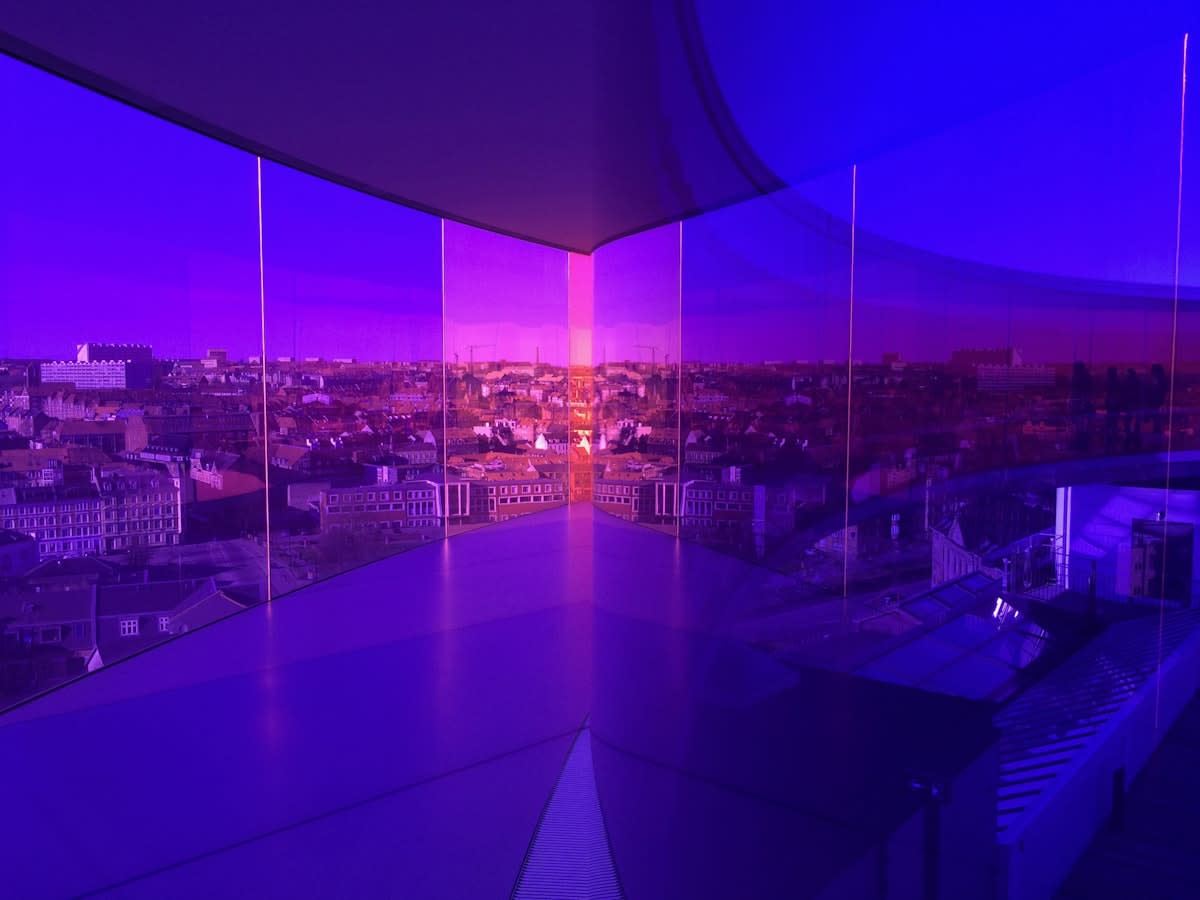
For decades, the gold standard of media was the narrative arc. Whether it was a cinematic masterpiece from South Korea or a prestige drama from the UK, the goal was simple: capture attention through tension, resolution, and a defined beginning, middle, and end. But something has shifted. The modern consumer is no longer looking for a story to get lost in; they are looking for a space to exist within. We are witnessing the rise of ambient media—content designed not to be watched or listened to, but to be inhabited. This isn't a decline in taste, but a systemic cognitive adaptation to a world of permanent urgency.
Why is this happening now? The answer lies in the exhaustion of the 'attention economy.' When every app, advertisement, and news cycle is engineered to trigger a dopamine spike or a fear response, the brain eventually seeks a sanctuary. Ambient media—think Lo-Fi study beats, 10-hour loops of rain in a cyberpunk city, or the minimalist soundscapes of Nordic design—provides a low-stakes environment. It offers the feeling of companionship and structure without the cognitive tax of following a complex plot. It is the difference between reading a novel and sitting in a library; one requires active participation, the other provides a supportive state of being.

This shift represents a fundamental change in how we define 'engagement.' In the old paradigm, engagement meant a user was locked into a story. In the ambient paradigm, engagement is measured by 'dwell time' and 'integration.' The media becomes a utility, a digital wallpaper that regulates mood and enhances productivity. We see this in the global explosion of 'slow media' across Asia and Europe, where the goal is to reduce the friction of existence rather than to add more excitement to it.
To understand the scale of this transition, we have to look at the structural differences between narrative-driven and atmosphere-driven consumption.
| Metric | Narrative Media | Ambient Media |
|---|---|---|
| Cognitive Load | High (Active Processing) | Low (Passive Integration) |
| Success Metric | Completion Rate / Plot Twist | Dwell Time / Mood Regulation |
| User Intent | Entertainment / Escapism | Focus / Emotional Stability |
| Temporal Structure | Linear / Finite | Cyclical / Infinite |
| Emotional Goal | Catharsis | Equilibrium |
From Storytelling to Story-spacing
Practitioners in the field are calling this 'story-spacing.' Instead of building a bridge from point A to point B, creators are building a room. In gaming, this is evident in the rise of 'cozy games' and 'walking simulators' where the traditional win-state is replaced by an aesthetic experience. In Japan, the concept of 'Ma'—the pure space between things—is being digitized. It is no longer about what is happening, but about the quality of the silence and the texture of the environment. This is a sophisticated pivot from the 'more is more' philosophy of the early internet to a 'better is less' approach.
"The shift toward ambient media is not a sign of shortening attention spans, but a sign of strategic attention management. Users are consciously choosing environments that lower their cortisol levels rather than narratives that spike them."— Institutional Analysis, Global Media Research Initiative, 2024
Does this mean the death of the story? Hardly. It means the story is becoming an optional layer. We are seeing a hybrid model where a strong atmosphere attracts the user, and a thin narrative thread keeps them tethered. The atmosphere is the hook; the story is the reward. This is a reversal of the traditional creative process. For years, the plot was the engine and the setting was the scenery. Now, the setting is the engine, and the plot is merely the scenery.
From a practitioner's perspective, this transition creates a massive amount of internal friction within creative agencies. I have sat in countless boardrooms where the tension is palpable: the data analysts are screaming for 'conversion hooks' and 'high-impact moments,' while the designers are arguing for 'breathability' and 'atmospheric consistency.' The old guard wants a climax; the new guard wants a hum. The debate is no longer about how to grab attention, but how to sustain a presence without being intrusive. It is a battle between the 'interruptive' and the 'integrative.'
This tension is not just an industry quirk; it is reflecting a broader global movement toward digital mindfulness.
The Global Geography of Stillness
The adoption of ambient media is not uniform, but it is universal. In the hyper-dense urban centers of Southeast Asia, ambient media serves as a psychological buffer against the chaos of the city. In Northern Europe, it aligns with a cultural preference for minimalism and functionalism. Even in the vibrant, high-energy markets of Brazil and Nigeria, there is a growing trend toward 'sonic sanctuaries'—digital spaces that provide a consistent, calming backdrop to a volatile external environment.

This global trend is fueled by the democratization of high-fidelity audio and visual tools. When anyone with a laptop can create a 4K loop of a rain-slicked street in Neo-Tokyo, the barrier to entry for 'vibe-creation' vanishes. The market is now saturated with atmosphere, which is forcing a new level of sophistication. We are moving past simple 'white noise' into 'curated atmospheres'—where the lighting, the sound, and the rhythmic pulse are scientifically tuned to induce specific brain states, such as Alpha or Theta waves.
Is this the endgame of media? A world of perfectly tuned, non-threatening backgrounds? The risk is a slide into a 'beige' culture, where the avoidance of tension leads to the avoidance of growth. True art often requires the discomfort of a plot—the conflict, the failure, the resolution. If we trade all our storylines for atmospheres, we risk losing the ability to process complex emotional arcs. However, the opportunity lies in using ambient media as a foundation. By regulating our baseline stress through atmosphere, we may actually find the cognitive capacity to engage with deep, challenging narratives once again.
Fact-Check & Accuracy Note
The claims regarding the shift from 'completion rates' to 'dwell time' and the rise of 'story-spacing' are derived from observed industry shifts in digital product design and media consumption patterns. The psychological connection to cortisol regulation is a recurring theme in contemporary digital wellness research. While 'ambient media' is a broad term, its growth is evidenced by the multi-billion stream counts of lo-fi and ambient channels globally.