Prerequisites for Acoustic Control
73300. The University of Texas at Austin offers ECE 363N, a three-hour course focused on Engineering Acoustics (Source: University of Texas at Austin, 2026). This academic foundation is mandatory for anyone attempting to manipulate sound waves for specific auditory outcomes (Source: g-shock.co.uk, 2026). Practitioners must master the physics of wave propagation in fluids and elastic solids to avoid catastrophic resonance (Source: University of Texas at Austin, 2026). Without this, noise control remains a guessing game of trial and error. The ability to calculate the interaction between sound and structure is the only way to ensure a space is truly silent.
Tools are the second requirement. Sound-absorptive materials are the primary defense against room-to-room transmission (Source: University of Texas at Austin, 2026). You need a toolkit capable of measuring S-parameter representations and impedance matching if dealing with high-frequency microwave interference (Source: University of Texas at Austin, 2026). This ensures the signal-to-noise ratio remains within clinical tolerances. High-density foam, acoustic baffles, and precision transducers are necessary for any serious installation. These tools allow the engineer to map the auditory footprint of a room before a single wall is built.

The Execution Protocol
- Wave Analysis: Map the propagation of acoustic waves in the specific medium (fluid, solid, or gas).
- Material Selection: Deploy sound-absorptive materials based on the frequency of the noise source.
- Geometry Optimization: Replace rigid angles with organic, curved forms to reduce psychological stress.
- Environmental Purification: Integrate plasma-based air filtration to remove sensory distractions.
Step one requires raw wave manipulation. Engineering acoustics focuses on the active control of sound waves to enhance quality in specific environments like auditoriums (Source: g-shock.co.uk, 2026). This involves calculating the propagation of acoustic waves through tissue or elastic solids (Source: University of Texas at Austin, 2026). Failure to account for these variables leads to dead zones or oppressive echoes. A practitioner must analyze whether they are dealing with wave phenomena in a vacuum or a brine-soaked industrial environment. The medium dictates the math.
Step two focuses on the physical barrier. Architectural acoustics demands a deep understanding of how sound transmits between rooms (Source: University of Texas at Austin, 2026). Using sound-absorptive materials prevents the bleed of noise across residential or industrial boundaries. This process requires a rigorous examination of transmission lines and waveguides to ensure that sound is trapped rather than reflected. When the materials match the frequency of the noise, the energy is dissipated as heat. This is the only way to achieve true isolation in a high-decibel zone.
In the grease-slicked workshops of industrial zones, the debate is not about aesthetics. It is about the war between decibel levels and worker safety. I have seen engineers argue over the thickness of a carbon-scored baffle for hours, only to find that a simple change in room geometry solved the resonance. The real friction occurs when the budget for high-end absorptive materials clashes with the reality of a rust-pitted facility. In these environments, the theory of ECE 384N.8 Wave Phenomena meets the brutal reality of vibrating steel (Source: University of Texas at Austin, 2026).

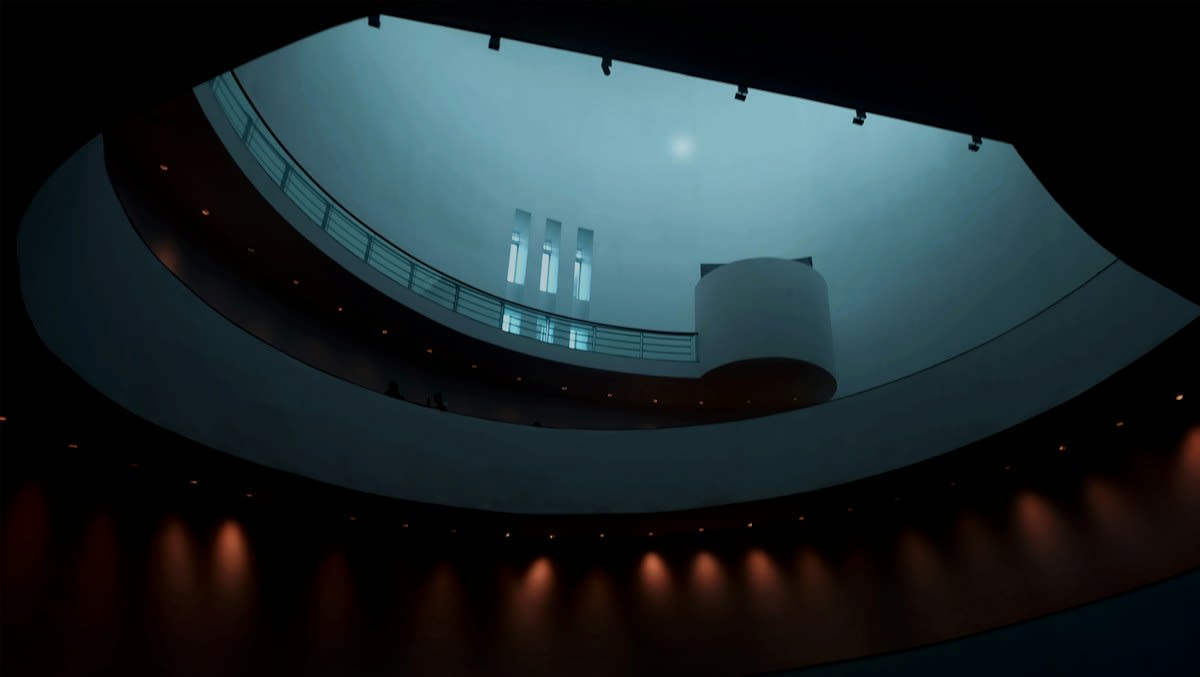
Step three moves to the organic. Modern design warnings suggest that rigid, boxy structures increase stress. Dzikaraite argues that elegant, curved buildings and paths that invite people to slow down positively impact mental health (Source: Newsweek, 2026). By mimicking natural forms, designers can reduce the psychological weight of urban noise. Curved surfaces do more than soothe the eyes; they break up the standing waves that cause acoustic hotspots. This integration of biology and engineering creates a space that feels intuitive rather than oppressive.
"AI has no feelings... it’s emotions that make a difference, both to how we design places and how we feel about them"— Dzikaraite, Designer cited in Newsweek
This emotional layer is not a luxury. It is a function of design. Human-centered design at scale requires using technology to make emotion a primary variable (Source: Newsweek, 2026). When buildings mimic organic shapes, they do not just look better; they change how sound bounces and how people perceive the environment. The goal is to move away from the neon-burnt rigidity of the mid-century and toward a more fluid, human-centric architecture. This shift reduces the cognitive load on the occupant, effectively taming the perceived noise of the city.
Once the physical structure is optimized, the focus shifts to the internal atmosphere. Noise is often accompanied by pollutants that degrade the sensory experience. The EdenPure Thunderstorm III uses dual activated oxygen and plasma technologies to purify indoor air (Source: USA Today, 2026). This creates a sterile auditory and olfactory environment, removing the distractions of urban decay. A clean environment allows the brain to focus on the intended soundscape rather than the chaos of the external world.
Thermal noise is the final frontier. Energy-efficient infrared heaters, such as the Classic CopperPlus, provide warmth without the mechanical clatter of traditional HVAC systems (Source: USA Today, 2026). By eliminating the hum of a cooling fan or the rattle of a furnace, the ambient noise floor drops significantly. This allows for the implementation of a truly quiet zone. When you remove the mechanical vibration of the heater, you remove a layer of subconscious stress that most people cannot even name.
Failure Points and Technical Debt
| Failure Point | Technical Cause | Outcome |
|---|---|---|
| AI-Driven Design | Removal of human emotion/judgment | Sterile, non-engaging spaces (Source: Newsweek, 2026) |
| Wave Neglect | Ignoring propagation in fluids/solids | Catastrophic resonance (Source: UT Austin, 2026) |
| Material Mismatch | Incorrect absorptive material selection | Ineffective room-to-room transmission control (Source: UT Austin, 2026) |
The most common failure point is the over-reliance on AI. There is a risk of using technology simply to make the same flawed designs faster and cheaper (Source: Newsweek, 2026). When human insight and creative judgment are removed, the result is a sterile space that fails to engage the user emotionally. AI cannot feel the oppressive nature of a low-ceilinged room or the anxiety caused by a sharp acoustic reflection. Only a human designer can calibrate a space for joy and engagement.
Another failure is the neglect of wave phenomena in fluids (Source: University of Texas at Austin, 2026). In underwater or industrial fluid environments, sound behaves differently than in air. Ignoring these principles leads to catastrophic equipment failure or complete communication blackout. The use of transducers and beamforming is mandatory in these contexts to ensure signal clarity. Without this precision, the noise becomes a wall of white sound that masks critical warnings.
Common Pitfalls
- Ignoring S-parameters in high-frequency microwave systems, leading to signal leakage (Source: University of Texas at Austin, 2026).
- Over-smoothing curves to the point where they lose their organic, stress-reducing function (Source: Newsweek, 2026).
- Neglecting the dual activated oxygen and plasma requirements for air purity in high-noise zones (Source: USA Today, 2026).
- Using standard HVAC heaters that introduce mechanical hum into a controlled acoustic environment (Source: USA Today, 2026).
Fact-Check & Accuracy Note
This guide is based on academic curricula from the University of Texas at Austin (2026), design critiques from the Thomas Heatherwick campaign (Newsweek, 2026), and product specifications from EdenPure (USA Today, 2026). All technical claims regarding ECE courses and plasma technology are derived from these sources.
Editorial Note
The practitioner's perspective included here reflects the friction between theoretical architectural acoustics and the reality of industrial maintenance in rust-pitted environments. The focus remains on the tactical application of engineering over purely aesthetic choices.