Region In Flux, All Relationships To Improve: Pak Minister In Delhi On Ties
Source Entity
NDTV News Search Records Found 1000
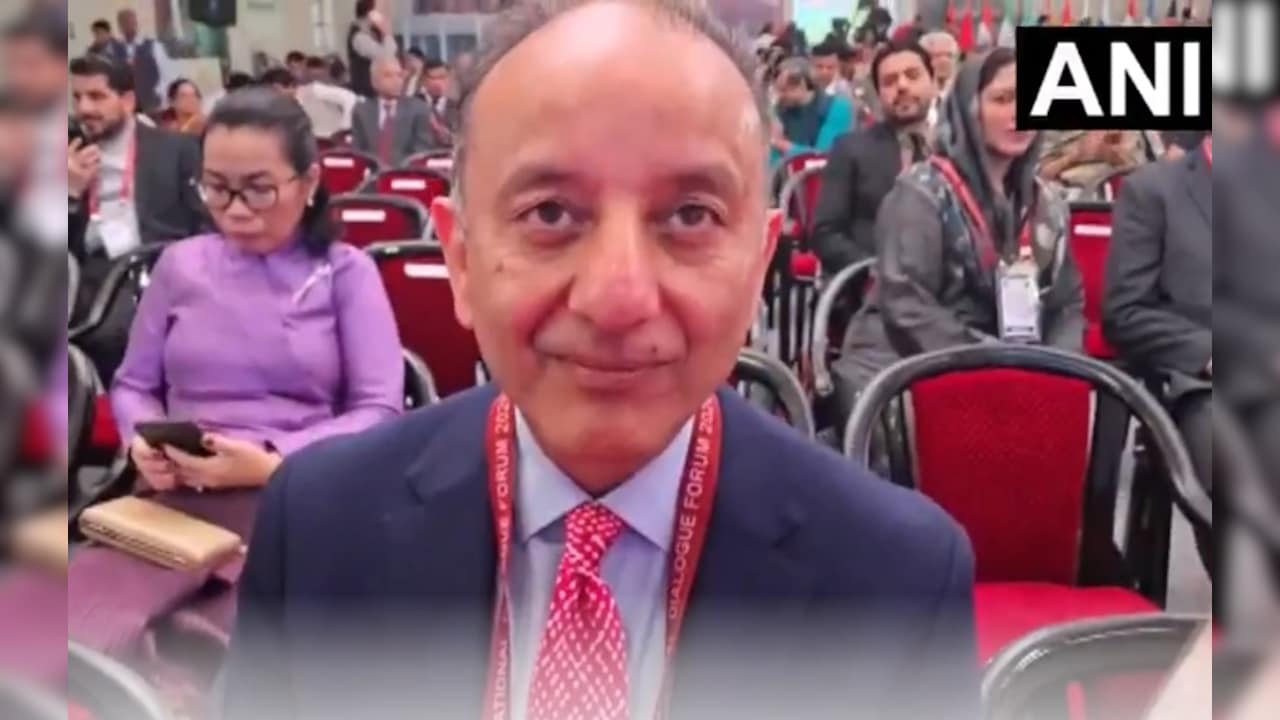
The visit of Pakistani Minister Musadik Masood Malik to New Delhi for the SCO Civilisation Dialogue has sparked a domestic political controversy in India. While the minister emphasized the potential for improved regional relations, opposition leaders have criticized the government for hosting a representative from Pakistan.
The SCO Civilisation Dialogue and Diplomatic Friction
The recent arrival of Pakistan’s Federal Minister for Climate Change and Environmental Coordination, Musadik Masood Malik, in New Delhi to attend the Shanghai Cooperation Organisation (SCO) Civilisation Dialogue has triggered a significant political debate. The event, intended to foster multilateral engagement on shared history and cultural heritage, has instead become a focal point for internal Indian political discourse regarding the nature of bilateral engagement with Pakistan.
The Diplomatic Stance: Multilateral vs. Bilateral
Minister Malik has been careful to frame his visit strictly within the context of the SCO, explicitly stating that his presence in India is "not a bilateral negotiation." This distinction is crucial in the complex landscape of South Asian diplomacy, where multilateral forums are often used as a neutral ground to maintain communication channels without necessarily implying a thaw in frosty bilateral relations. By focusing on environmental coordination and civilisational exchange, the minister aims to keep the dialogue focused on regional cooperation rather than contentious political issues.
Domestic Political Backlash
Despite the multilateral nature of the visit, the Indian National Congress has voiced sharp criticism against the BJP-led central government. The opposition has accused the ruling party of "rubbing salt into the wounds" of the families affected by the Pahalgam massacre. This internal friction highlights how sensitive the issue of Pakistan remains in Indian domestic politics, where any form of diplomatic engagement is frequently scrutinized through the lens of historical grievances and national security concerns.
The Challenge of Diplomatic Consistency
Critics of the government have pointed to what they perceive as "double standards" in India's foreign policy approach. The Congress party has challenged the consistency of the government's stance, citing past diplomatic maneuvers and policy shifts as evidence of an unpredictable strategy. This rhetoric underscores a broader challenge for the Indian government: navigating the requirements of hosting international summits under organizations like the SCO while managing the domestic political fallout that arises from hosting Pakistani officials.
Hopes for Regional Stability
Amidst the political maneuvering, Minister Malik has expressed optimism regarding the future of regional relations. Describing the SCO forum as a "tremendous opportunity," he suggested that such dialogues could contribute to a climate where relationships across the subcontinent might improve. This optimistic outlook contrasts sharply with the cautious, often skeptical, reception he has received from certain political quarters in India, reflecting the inherent tension between diplomatic idealism and historical reality.
Future Implications for SCO Engagement
As India continues to participate in and host SCO-related events, the challenge will remain in balancing its global diplomatic commitments with its regional geopolitical constraints. The incident surrounding Minister Malik’s visit serves as a case study in how international forums can inadvertently amplify domestic political tensions. Moving forward, the effectiveness of these platforms for genuine cultural or environmental cooperation will depend heavily on the ability of involved nations to insulate such dialogues from the volatile pressures of bilateral political history.
Multiple Citing Sources
Verification Required?