'His name is Siraj': Congress MP on pacer's exclusion from India team; BJP hits back
Source Entity
ABHISHEK MISHRA
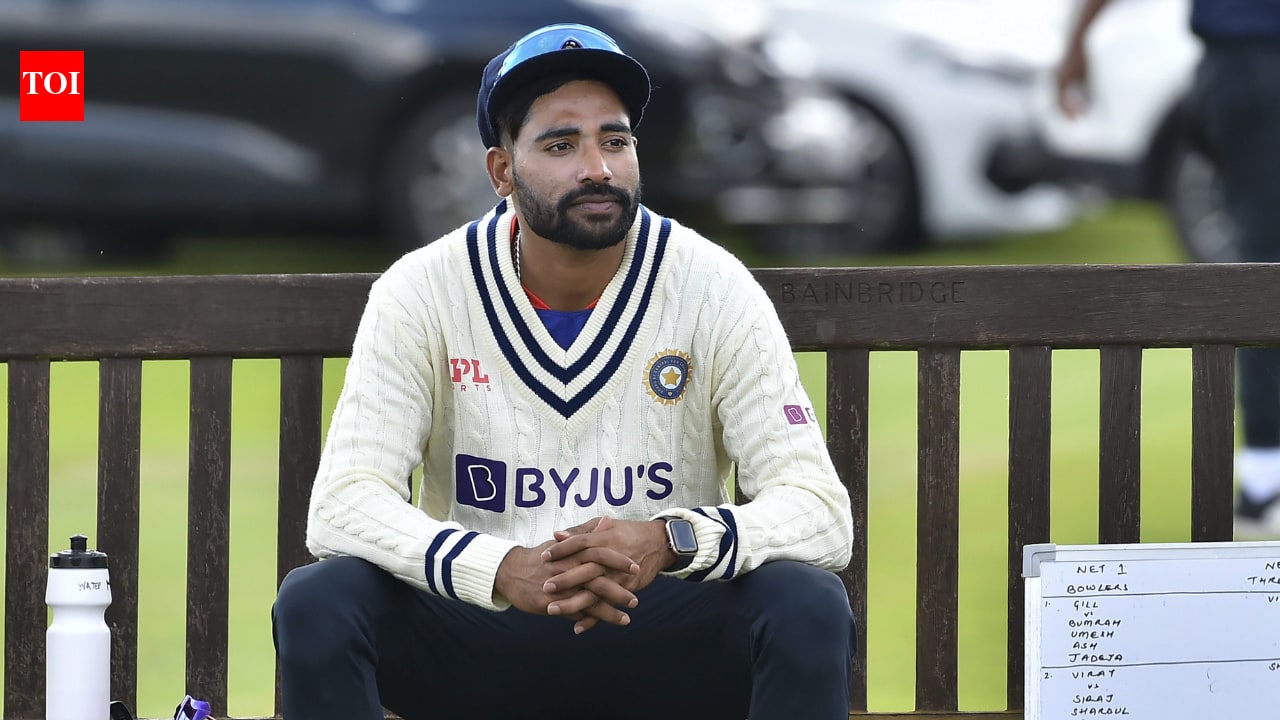
Mohammed Siraj's exclusion from the first Test against New Zealand has sparked a political controversy involving Congress and BJP leaders. The debate centers on whether the decision was purely performance-based or influenced by religious discrimination. This incident highlights the intersection of sports selection and national political discourse.
The Intersection of Cricket and Politics: The Siraj Exclusion Controversy
A Performance-Based Selection or a Political Catalyst?
The recent decision to exclude Mohammed Siraj from India's playing XI for the first Test against New Zealand has transcended the boundaries of sports analysis, evolving into a significant political flashpoint. Siraj, widely regarded as India's most experienced pacer behind Jasprit Bumrah, found himself relegated to the sidelines following a lackluster performance during the recent Sri Lanka tour. While team management often justifies such exclusions based on tactical requirements or recent form, the vacuum created by his absence has been filled by intense speculation regarding the integrity of selection processes.
The Congress Allegation and BJP Counter-Narrative
Congress MP Imran Masood ignited the controversy by publicly questioning the exclusion, explicitly alleging that religious discrimination played a role in the decision to drop the pacer. By framing a technical sports selection as a matter of identity politics, Masood tapped into sensitive national discourse. In response, BJP spokesperson Pradeep Bhandari vehemently rejected these claims, accusing the Congress party of 'communalising' the sport and utilizing the team's internal decisions as a tool for vote-bank politics. This rapid escalation reflects the hyper-polarized environment where even individual athletic achievements or setbacks are scrutinized through a partisan lens.
Analytical Context: The Pressure of Modern Cricket
To understand the gravity of Siraj's exclusion, one must look at his role within the Indian bowling unit. Following a modest outing in Sri Lanka, Siraj’s status as a 'disposable' asset across formats represents a sharp decline in his perceived utility. In high-stakes international cricket, players are often rotated based on surface conditions and matchup data; however, when such decisions coincide with political rhetoric, the distinction between meritocracy and bias becomes blurred. The controversy highlights the extreme scrutiny under which modern Indian athletes operate, where performance dips are rarely viewed in isolation.
Broader Implications for Indian Sports Governance
This incident underscores a growing trend where the governance of Indian cricket is increasingly subjected to external political pressure. When political figures intervene in selection debates, it complicates the relationship between the Board of Control for Cricket in India (BCCI) and the public. The 'communication breakdown' suggested by some observers reflects a lack of transparency in how selection criteria are conveyed to the public, creating an information vacuum that political actors are eager to exploit for their own agendas.
Future Trends and Concluding Thoughts
Moving forward, the Indian team management faces the dual challenge of managing player form while navigating a media landscape that is quick to politicize internal team decisions. If the trend of linking player selection to religious or political identity continues, it risks undermining the professional autonomy of the selection committee. Ultimately, while Siraj’s future in the squad remains a matter of performance, the surrounding discourse serves as a stark reminder that in the current climate, no aspect of Indian public life—not even the playing XI—is immune to the pressures of political narrative-building.