Akash Deep bowls the ball of the match after a long road back
Source Entity
Sriram Veera
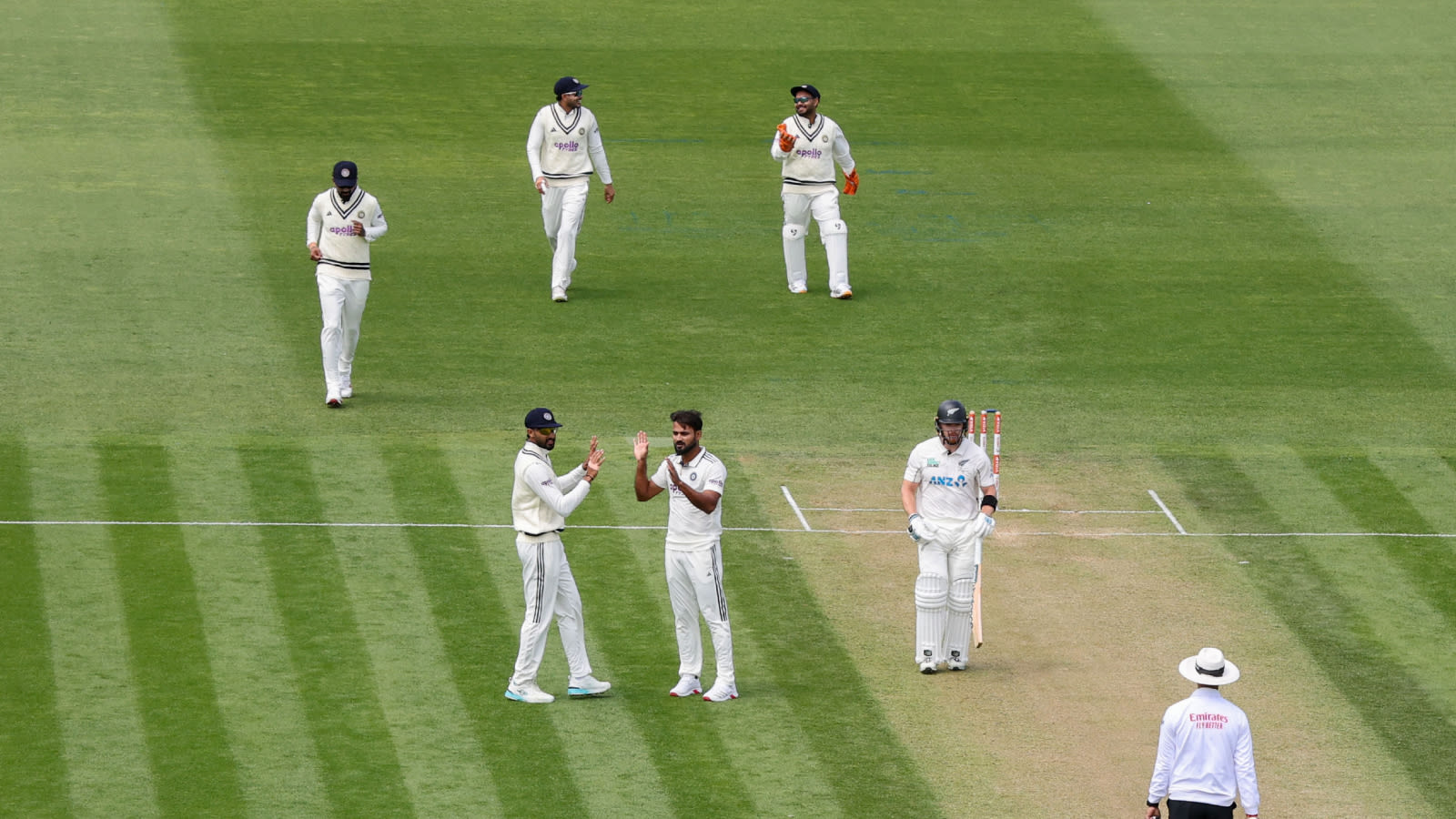
India's cricket team faced a strong challenge from New Zealand's Henry Nicholls and Glenn Phillips during the first Test in Wellington. Despite the hosts' marathon partnership, Akash Deep's breakthrough enabled India to bowl New Zealand out for 368.
Tactical Reshuffle and Early Challenges
The ongoing first Test match between India and New Zealand at the Basin Reserve in Wellington has emerged as a test of strategic depth for the Indian side. Prior to the commencement of play, the team management made bold selection calls, opting to exclude seasoned veterans Mohammed Siraj and Ravindra Jadeja from the playing XI. In their stead, the selection committee introduced Anshul Kamboj, Akash Deep, and Prasidh Krishna to bolster the pace attack alongside Jasprit Bumrah, with Washington Sundar also receiving a nod. This decision sparked significant debate among cricket experts and fans, as the team sought to balance experience with fresh energy in challenging overseas conditions.
The Nicholls-Phillips Resistance
Day 2 of the match presented a formidable hurdle for the Indian bowlers. New Zealand’s middle order, anchored by Henry Nicholls and Glenn Phillips, constructed a grueling sixth-wicket partnership that reached 216 runs. This marathon stand effectively shifted the momentum toward the hosts, forcing the Indian captain, Shubman Gill, to rotate his bowlers frequently to find a breakthrough. The partnership tested the patience and discipline of the debutant-heavy pace battery, as the New Zealand batters capitalized on conditions that had initially offered assistance to the seamers.
Akash Deep: The Catalyst for Change
Despite the frustration of the morning session, the tide turned when Akash Deep claimed the crucial wicket of Glenn Phillips, who had contributed a well-made 94. This breakthrough was the turning point for the Indian contingent. The dismissal of Phillips fractured the New Zealand resistance, allowing India to regain control of the innings. The impact was immediate, as the visitors capitalized on the momentum shift to dismantle the remaining New Zealand batting order.
Clinical Closing of the Innings
Following the departure of Phillips, the Indian bowlers operated with renewed clinical precision. The team managed to strike quickly, capturing the final four wickets for a mere 30 runs. This efficient bowling performance restricted New Zealand to a total of 368, a score that could have been significantly higher had the partnership remained intact. The ability to clean up the tail effectively underscores the resilience of the younger pace bowlers under pressure.
Strategic Implications and Future Outlook
As the match progresses, the importance of the initial selection strategy becomes clearer. While the omission of senior players raised eyebrows, the eventual success in restricting New Zealand highlights the potential of the rotated squad. The post-lunch response from the Indian batting lineup will now be critical in determining the outcome of the match. With the pitch at the Basin Reserve expected to evolve, the performance of the top order will be pivotal in establishing parity or dominance in this series opener.
Multiple Citing Sources