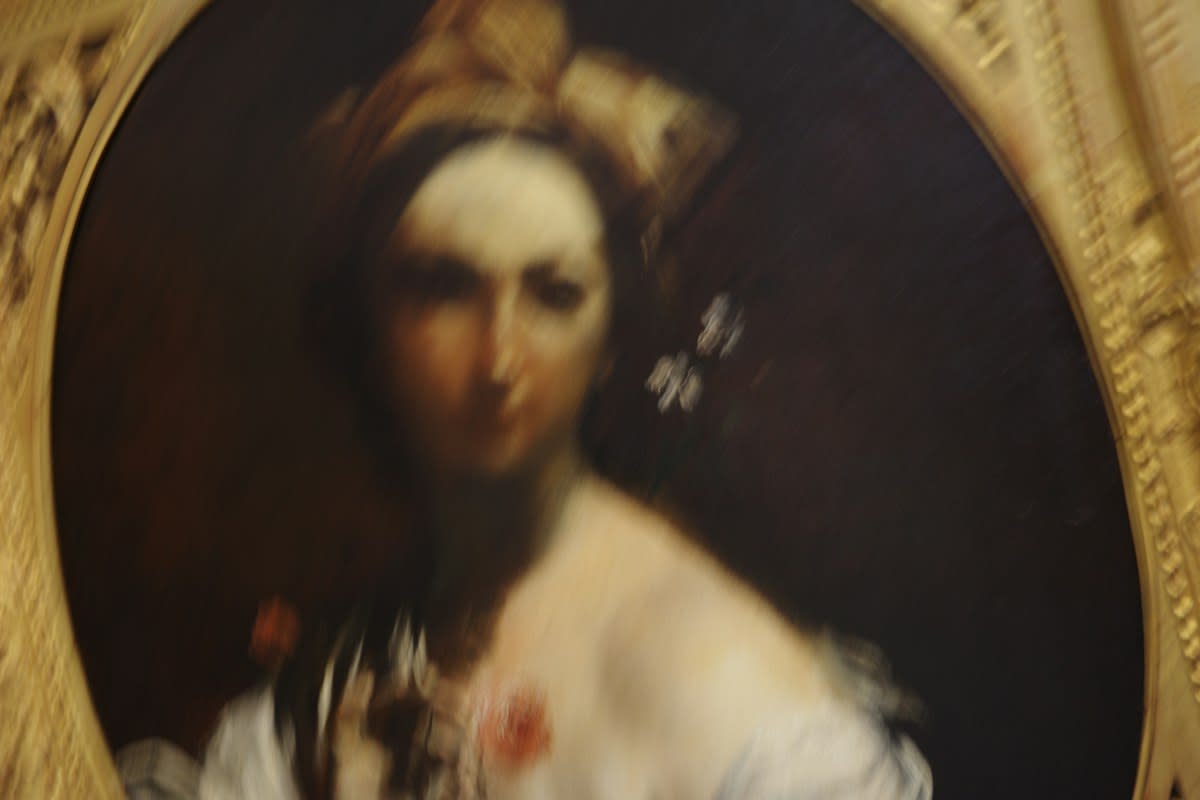
Who decided that high-fidelity is the goal? Most AI artists obsess over the 'perfect' prompt, scrubbing every artifact and smoothing every edge until the image feels sterile. This is a mistake. When we remove the friction, we remove the soul. AI, in its default state, often operates as a cold tool (Source: Frontiers in Psychology, 2026). To make AI art feel human, you must stop optimizing for precision and start engineering strategic failures. The goal is not a flawless render, but a calculated asymmetry that mimics the erratic nature of human touch.
Prerequisites for Strategic Imperfection
You cannot break the system effectively if you do not understand how it holds together. This process requires two distinct forms of knowledge. First, you need Visual Literacy (VL). This isn't just knowing art history; it is the ability to use a sophisticated design vocabulary to guide the AI, often creatively expanding on a brief rather than following it literally (Source: The Unseen Hand, 2026). Second, you need AI Literacy (AIL). This is the mechanical understanding of how the model interprets tokens. Without AIL, you are just guessing. With it, you can treat the prompt as a set of precise specifications that you can then intentionally sabotage.
- A deep understanding of non-stop tokens and descriptive adjectives to create visual weight.
- Comfort with 'brico-lage'—the practice of constructing art from a diverse range of available things (Source: Chalmers, 2015).
- The willingness to accept 'mechanical failure' as a creative asset.
- An understanding of the lag between a prompt's intent and the AI's execution.

The Framework: Siphoning Humanity via Wabi-Sabi
Humanity resides in the gap. In Japanese aesthetics, this is captured by wabi-sabi, the appreciation of beauty in imperfection (Source: uzswlu.uz, 2026). Translating this concept into AI art is difficult because the term often loses its philosophical depth when rendered in English (Source: uzswlu.uz, 2026). For the practitioner, wabi-sabi is not a 'style' to be prompted, but a method of design. It is the act of leaving the seam visible. It is the decision to keep the blur in the foreground or the slight anatomical asymmetry that suggests a shaking hand rather than a calculated algorithm.
"The creator has lived through things, so the emotional expression comes through more strongly … AI feels to me like a cold tool."— YR, Oil Painting Student, cited in Frontiers in Psychology (2026)
This 'coldness' stems from the AI's tendency toward optimization. Consider how modern smartphone cameras use AI-driven HDR to balance luminosity, attempting to mimic the human visual system by 'mentally exposing' different areas of a scene (Source: Vincent Thornhill, 2025). While this creates a balanced image, it often kills the mood. To regain the human feel, you must reintroduce the shadows. You must allow the image to leak light or clip the blacks in a way that feels visceral, not mathematical.
Step-by-Step: Implementing Strategic Failure
- Define the Emotional Anchor: Instead of prompting for 'a beautiful sunset,' prompt for the feeling of 'exhaustion after a long day.' Use adjectives that imply weight and drag rather than perfection.
- Introduce Token Asymmetry: Mix highly specific art genres with contradictory media. For example, pair '17th-century Dutch realism' with 'digital glitch artifacts.' This creates a collision in the latent space that prevents the AI from falling into its default 'polished' mode.
- Execute the Brico-lage Loop: Do not rely on a single generation. Treat the AI output as raw material. Use the brico-lage practice of assembling a final piece from fragmented, imperfect outputs (Source: Chalmers, 2015).
- Apply Manual Judgment: This is the most critical step. The final execution must involve manual intervention—cropping, color grading, or intentional over-painting. This breaks the tether to the AI's default optimization and injects personal experience into the work (Source: Frontiers in Psychology, 2026).
- Test for 'Coldness': View the image alongside a human-made piece from the same era. If the AI piece feels too 'balanced' or lacks a focal point of failure, return to step two.
The invisible friction in this process occurs during the hand-off between the prompt and the pixel. I have seen countless disputes in studio settings where 'AI-literate' users treat the prompt as a precise specification, while 'visually literate' artists feel a deep frustration with the lack of granular control (Source: The Unseen Hand, 2026). The AI-literate user wants the machine to be a vending machine; the artist wants it to be a collaborator that can fail. The magic happens when you stop fighting the lack of control and start using the machine's unpredictability as a brushstroke.

Common Pitfalls
The most common failure is the 'Over-Polish Trap.' This happens when an artist uses AI tools to remove every 'error' the model made. By doing so, they inadvertently signal to the viewer that the work is synthetic. Another error is the 'Generic Imperfection'—adding a fake film grain or a sepia filter. This is a superficial layer, not a structural break. True strategic imperfection is baked into the composition, not slapped on at the end.
Fact-Check & Accuracy Note
The debate over AI's 'soul' is often a debate over HCI (Human-Computer Interaction). Research into Wabi-Sabi as a design resource in HCI explores how sensing non-habitual patterns can make technology feel more organic (Source: Chalmers, 2016). There is an ongoing academic tension regarding whether AI can ever truly 'express' emotion or if it merely siphons the emotional markers left behind by the human artists in its training data.
Ultimately, the goal is to move from a state of 'generation' to a state of 'curation.' The AI provides the terrain, but the artist provides the path. By embracing the leak, the lag, and the mechanical failure of the system, we can move past the era of the 'cold tool' and create works that actually resonate with the human experience.