
The Liability of Visibility
For decades, the ultra-high-net-worth (UHNW) collector operated on a logic of prestige. Wealth was validated through the public curation of taste—the naming of museum wings, the high-profile auction win, and the publicized acquisition of contemporary masterpieces. That logic has inverted. In a climate of aggressive regulatory scrutiny and geopolitical volatility, the public record has transformed from a badge of honor into a target. We are witnessing a migration toward strategic invisibility, where the primary goal is no longer to be seen, but to be unfindable.
The catalyst for this retreat is not merely a preference for privacy, but a calculated response to legal risk. Consider the recent case of Hauser & Wirth, which was cleared of breaching U.K. sanctions against Russia regarding the 2022 sale of a George Condo work. While the gallery was ultimately exonerated, the mere existence of the investigation underscores the peril of the paper trail. When assets become instruments of geopolitical warfare, the most secure way to hold wealth is to ensure that the connection between the owner and the object is surgically severed from public view.
"The most valuable asset in a modern portfolio is no longer the object itself, but the opacity of its ownership."— Strategic Analysis of Asset Opacity
This shift is manifesting in a two-speed recovery within the art market. While contemporary art—the traditional vehicle for public signaling—continues to cool, other segments are exploding. Phillips reported a 36.4 percent growth in the first half of the year, yet this surge was driven by watch auctions rather than contemporary pieces. Watches are the ultimate tool for the invisible collector: they are high-density in value, easily portable, and far less likely to trigger the same level of public scrutiny as a ten-foot canvas hanging in a Manhattan penthouse.
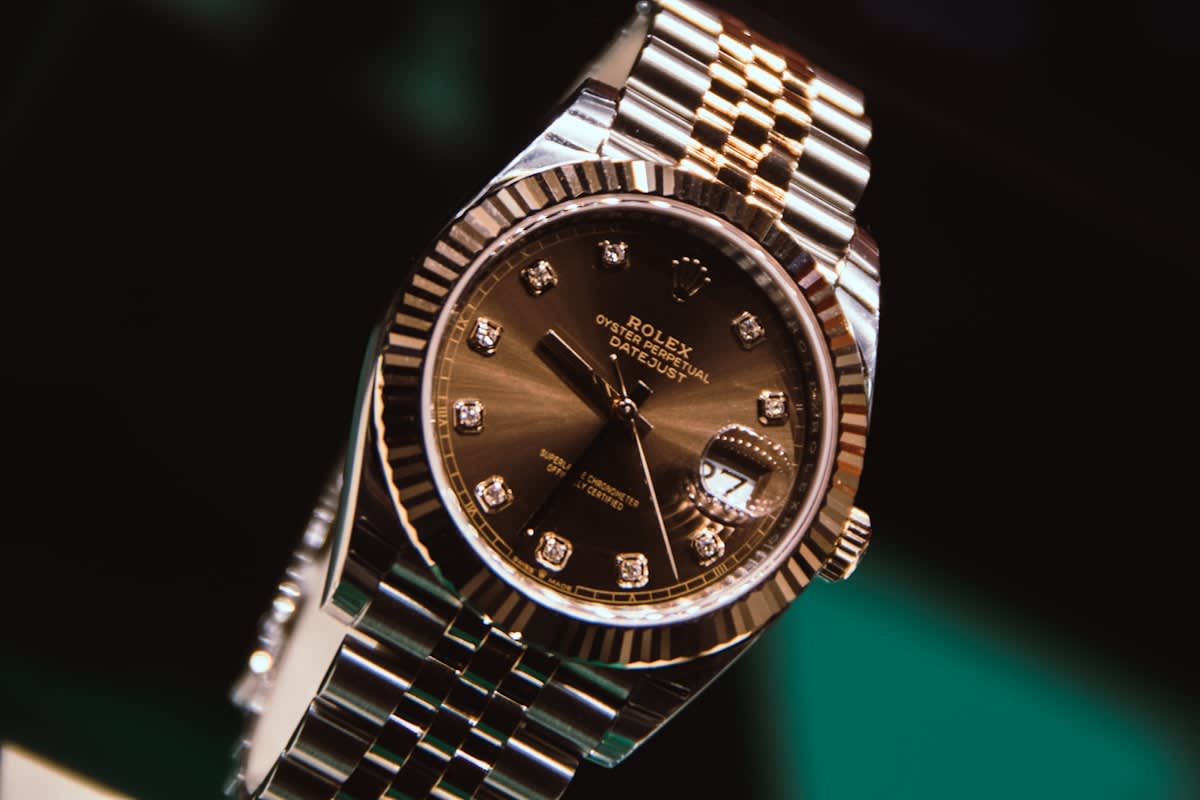
Heritage Auctions recently posted its best mid-year total ever, signaling a boom in the broader collectibles market. This suggests a systemic migration. Collectors are moving away from 'statement' art and toward 'store-of-value' assets. The goal is no longer to provoke a conversation at a gala, but to preserve capital in a form that does not attract the attention of tax authorities or sanctions committees. The trophy has been replaced by the hedge.
The Liquidity Trap and the Flight to Hard Assets
The move toward invisibility is also a flight from the volatility of traditional private markets. US private equity is currently struggling; deal value in the second quarter of 2026 plummeted to US$177.3 billion, the lowest level since the end of 2020. Fundraising for the first half of 2026 sat at $159.6 billion, a stark decline compared to the $184.4 billion seen in all of 2025. When the primary engines of capital formation stutter, the wealthy seek refuge in tangible assets that exist outside the traditional financial plumbing.
| Asset Class | Recent Performance/Trend | Visibility Profile | Strategic Driver |
|---|---|---|---|
| US Private Equity | Q2 Deal Value: $177.3B (Low) | High (Institutional) | Liquidity Crunch |
| Contemporary Art | Cooling Segment | Very High (Public) | Risk Aversion |
| Watches/Collectibles | Phillips +36.4% Growth | Low (Private) | Wealth Preservation |
| Specialized Storage | Increasing Institutional CapEx | Hidden (Off-site) | Physical Security |
This flight to tangibility is complicated by a growing valuation crisis. In the current economy, enterprise value is increasingly driven by intangible assets—intellectual property, brand equity, and data—which are notoriously difficult to measure. This opacity in the corporate world mirrors the desired opacity in the collecting world. If the benchmarks for valuation are inconsistent and based on opinion rather than data, the only logical move for the UHNW individual is to control the narrative by removing the asset from the public eye entirely.
Interestingly, there is a paradoxical trend in asset management. While 97% of construction contractors reportedly lack real-time visibility into their tools and equipment, the UHNW sector is intentionally designing this lack of visibility into their portfolios. For a contractor, missing assets are a cost center; for a billionaire, a missing asset is a security feature. The inability to track an asset is no longer a failure of management, but a successful implementation of privacy.
The Infrastructure of Discretion
The physical manifestation of this trend is the rise of institutional-grade, discreet storage. In Sarasota, DXD Capital recently opened a 928-unit self-storage facility on land purchased for $2.2 million. While presented as a neighborhood-friendly development, the partnership with international subsidiaries of the Kuwait Financial Centre highlights a broader trend: the financialization of the vault. Wealth is being moved out of residential galleries and into specialized, secure facilities that offer a layer of separation between the owner and the object.

However, this move toward hard-asset storage is not without risk. The self-storage CMBS (Commercial Mortgage-Backed Securities) market is showing early signs of credit stress. Nearly 30% of outstanding self-storage CMBS balances are currently on watchlists, with risk concentrated in loans from 2021-2024. With $23.7B in current CMBS exposure across 15,600 properties, the very infrastructure used to hide wealth is becoming a point of financial fragility.
The Invisibility Logic
The shift toward invisibility is not a trend of modesty, but a trend of survival. When the state can freeze assets based on a name on a ledger, the only safe ledger is the one that doesn't exist.
What does this mean for the future of the arts? We are entering an era of the 'Shadow Collection.' The most significant works of the 21st century may never be seen by the public, not because they are in private hands, but because they are in invisible hands. The curation of the future will happen in climate-controlled warehouses in Florida or freeports in Switzerland, far from the gaze of the public and the reach of the regulator.
Ultimately, the movement toward strategic invisibility is a rational response to a world where transparency is weaponized. By diversifying into portable collectibles, leveraging opaque private valuations, and utilizing institutional storage, the ultra-wealthy are decoupling their identity from their assets. They are no longer collectors in the traditional sense; they are managers of invisible equity.