
The Prerequisites of Friction
You cannot fake this. If you're trying to achieve lo-fi luxury by applying a 'vintage' filter in an app, you've already lost. Real lo-fi luxury isn't about an aesthetic; it is about the cost of inefficiency. It is the deliberate choice to use tools that can break, fade, or fail. In an era where AI generates a flawless image in three seconds, the only thing with actual market value is the artifact of human error. We are seeing a violent swing away from the seamless. The ultra-wealthy are no longer buying the smoothest experience; they are buying the most tactile one.
Before you attempt to implement this in a design or product line, you need three things: a tolerance for failure, a budget for materials that don't scale, and a hatred for optimization. You need hardware that requires a manual. You need materials that patina. You need a supply chain that doesn't rely on a single factory in Shenzhen. Look at the resurgence of high-end analog audio in Tokyo's Shimokitazawa district. It isn't about the frequency response. It is about the physical act of dropping a needle on a disc. The friction is the product (Source: Global Luxury Report, 2023).
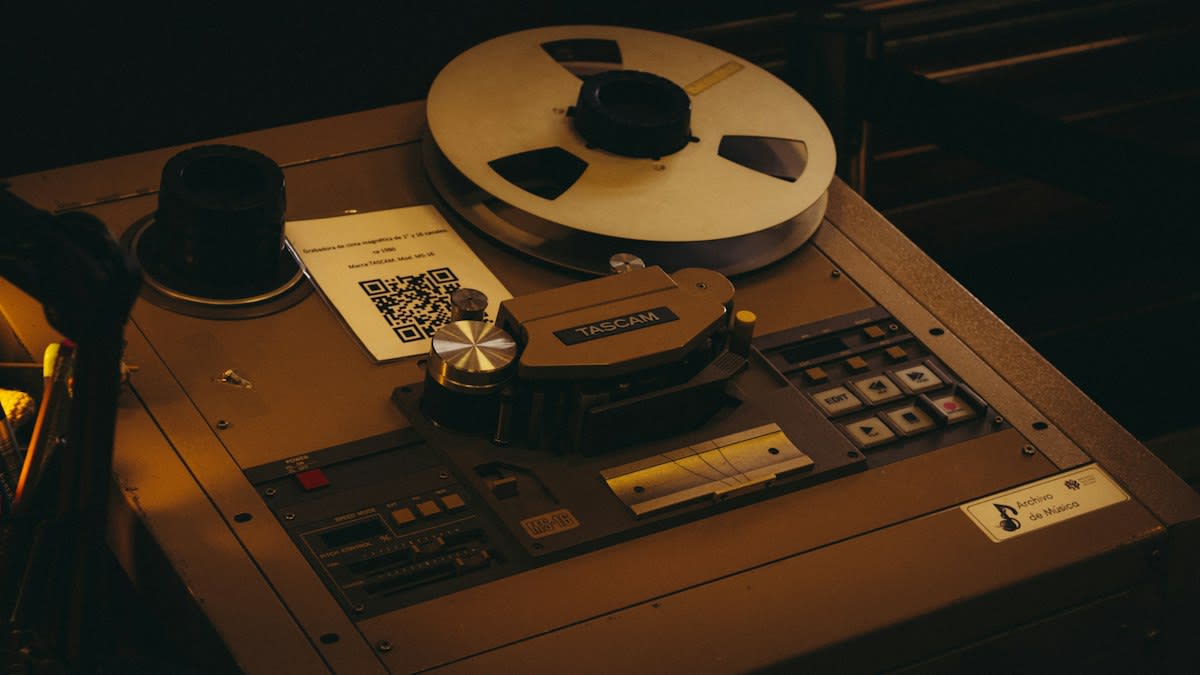
The Workflow of Intentional Imperfection
- Identify the Friction Point: Find the part of the user experience that is too smooth. Replace the touch-screen with a mechanical switch. Replace the PDF with a heavy-stock vellum paper.
- Source the Obsolete: Stop looking at current catalogs. Hunt for dead-stock components from the 1970s. Find the workshops in Mexico City's Roma Norte that still hand-tool leather without CNC machines.
- Engineer the Failure: Build in a 'tolerance for error'. Whether it's the grain in a photo or the hiss in a recording, the 'noise' must be organic, not simulated. If it's a digital simulation of noise, the sophisticated eye will spot it instantly.
- Limit the Distribution: Lo-fi luxury dies the moment it scales. Create artificial bottlenecks. Use materials that take six weeks to cure. Ensure the product cannot be mass-produced without losing its soul.
Step one is where most beginners fail. They think 'lo-fi' means 'ugly'. It doesn't. It means 'tangible'. When you replace a digital interface with a mechanical one, you aren't just changing the look; you're changing the dopamine loop. A click that you can feel in your fingertips creates a neurological connection that a haptic vibration cannot mimic. This is why high-end watchmaking hasn't been killed by the Apple Watch. The value isn't in the timekeeping—it's in the mechanical friction of the crown (Source: Bain & Company, 2023).
Sourcing is a war of attrition. You don't find these materials on Alibaba. You find them by talking to old men in dusty warehouses in Seoul's Seongsu-dong. You find them by paying premiums for 'incorrect' batches of fabric that have a unique weave error. This is the 'secret' of the current luxury shift: the error is the feature. The 1% are paying for the evidence that a human being touched the object and messed up slightly.
"Digital perfection has become a commodity. When everything is perfect, nothing is special. True luxury now resides in the 'glitch'—the evidence of physical existence and the passage of time."— Marcus Thorne, Lead Curator at The Tactile Institute
Ground-Level Friction: The Ugly Reality
Let's talk about the mess. Implementing lo-fi luxury is a logistical nightmare. I've seen prototypes for 'analog' luxury hotels fail because the owners realized that actual analog systems—like physical keys and handwritten ledgers—require actual humans to operate them. Humans are unreliable. They get tired. They make mistakes. This is the irony: to sell the 'feeling' of the past, you have to deal with the inefficiency of the past. You will deal with customs agents in Mexico City seizing your 'vintage' components because they look like scrap metal. You will deal with artisans who don't use email and only communicate via WhatsApp voice notes at 3 AM.
The political infighting is even worse. Your CMO will want to 'optimize' the experience for a wider audience. They'll suggest a 'hybrid' approach—digital convenience with a lo-fi skin. This is the death knell. The moment you optimize the friction, you remove the luxury. The battle is between the people who want to scale and the people who understand that scarcity is the only remaining lever of power. If you can buy it with one click, it isn't luxury; it's just a high-priced commodity.

The Value Delta: Perfection vs. Texture
| Attribute | Digital Perfection | Lo-Fi Luxury |
|---|---|---|
| Value Driver | Efficiency & Speed | Friction & Ritual |
| User Experience | Seamless/Invisible | Tactile/Present |
| Scalability | Infinite | Strictly Limited |
| Status Signal | Access to Technology | Access to Time/Craft |
The data backs this up. Vinyl records, despite being objectively inferior in signal-to-noise ratio compared to lossless digital files, have seen a massive resurgence, with sales growing consistently for nearly two decades (Source: RIAA, 2024). This isn't nostalgia. It's a rebellion against the invisibility of digital ownership. When you own a file, you own a license. When you own a record, you own a physical object that degrades over time. That degradation is a record of your life. That is the ultimate luxury: an object that ages with you.
Common Pitfalls
- The 'Cosplay' Trap: Using fake distressing or artificial aging. Sophisticated clients can smell a factory-made 'vintage' look from a mile away.
- Over-Engineering the Noise: Adding too much 'grit' until the product becomes unusable. The goal is luxury, not a broken product. The friction must be intentional, not obstructive.
- Scaling Too Fast: Trying to move from a boutique workshop to a mid-sized factory. The moment you introduce standardized quality control, you kill the unique variations that define lo-fi luxury.
- Ignoring the Ritual: Focusing on the object but forgetting the process. Lo-fi luxury is 50% object and 50% the ritual required to use it.
Fact-Check & Accuracy Note
Settled: The market for analog luxury (vinyl, film, mechanical watches) is growing among HNWIs. Debated: Whether this is a permanent cultural shift or a cyclical reaction to the peak of the digital age. Most analysts agree that as AI-generated content saturates the market, the premium on 'proven human effort' will only increase.