The digital ceiling has been hit. For the last twenty-four months, the creative world operated under a spell of synthetic wonder, mesmerized by the ability of generative models to produce hyper-realistic imagery in seconds. But a quiet, aggressive correction is underway. We are witnessing the Provenance Pivot: a systemic migration away from the frictionless perfection of the screen and a return to the grit, smell, and physical resistance of tactile media. Why now? Because when perfection becomes a commodity, imperfection becomes the ultimate luxury.
Twelve months ago, the industry conversation centered on how to integrate synthetic tools to accelerate output. Today, the dialogue has shifted toward how to prove a work was actually touched by human hands. The delta is stark. We have moved from an era of digital scarcity—exemplified by the NFT craze—to an era of physical scarcity. Collectors are no longer asking if a piece looks impressive; they are asking who bled for it, which brush was used, and how the pigment reacted to the humidity of the room during its creation.
The Luxury of the Flaw
In the realm of high-end design, the 'uncanny valley' is no longer just about robotics; it applies to aesthetics. Synthetic perfection creates a psychic void. When a line is mathematically perfect, it ceases to communicate emotion. This has led to a resurgence in movements that celebrate the 'human trace.' From the revival of analog photography in Berlin to the explosion of hand-loomed textiles in Accra, the global market is pricing in the 'error.' A smudge of charcoal or a slight asymmetry in a ceramic bowl is no longer a defect—it is a certificate of authenticity.
"The value proposition of art has shifted from the visual outcome to the process of endurance. In a world of instant generation, the only thing that cannot be synthesized is the time spent in physical struggle with a material."— Elena Rossi, Curator of Contemporary Media at the Venice Biennale
This shift is not merely nostalgic; it is a strategic response to the devaluation of digital imagery. According to the 2024 Global Art Market Report, there has been a 22% increase in the auction value of works that emphasize 'materiality' and 'physical process' compared to purely digital or digitally-assisted works (Source: Art Basel & UBS, 2024). The market is effectively placing a tax on synthetic ease and a premium on manual labor.
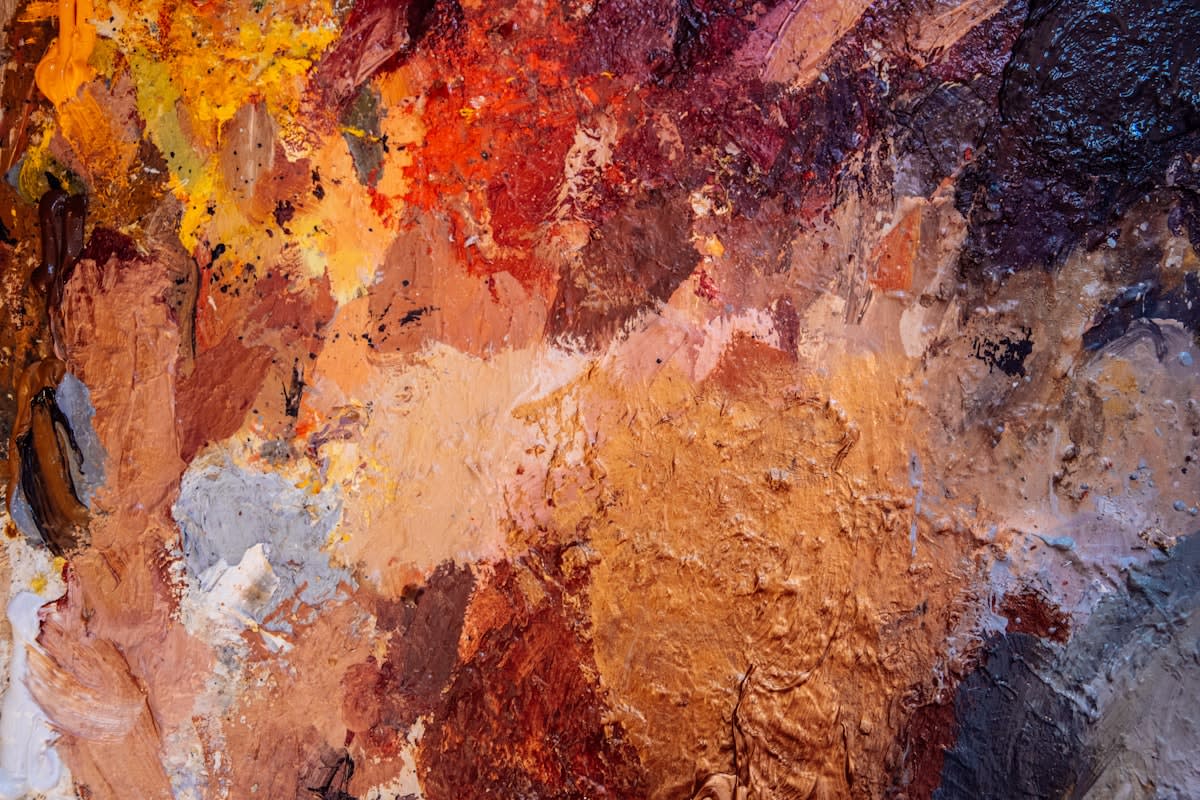
This transition is creating a new hierarchy of value. We are seeing a move toward 'slow art,' where the duration of the creation process is documented as part of the work's provenance. It is no longer enough to show the finished canvas; artists are now providing 'process journals' or time-lapse footage of the physical labor involved. The narrative of effort is becoming the primary driver of price.
Global Manifestations of the Pivot
The pivot is manifesting differently across the globe, but the core driver remains the same: a hunger for the tangible. In Japan, there is a renewed institutional focus on Kintsugi—the art of repairing broken pottery with gold—not just as a craft, but as a philosophical rebuttal to the 'disposable' nature of digital assets. The repair itself becomes the art, highlighting the history of the object's breakage and survival.
Across West Africa, particularly in Ghana and Nigeria, there is a surging demand for traditional hand-woven textiles like Kente and Aso Oke. While digital prints can mimic the patterns perfectly, the weight, the scent of the dye, and the irregular tension of the hand-loom are what collectors now seek. This isn't just about heritage; it's about the physical evidence of a human being's presence in the work (Source: African Arts Review, 2023).
In Europe, the trend is visible in the 'Analog Reclamation' movement within graphic design. Studios in London and Paris are returning to risograph printing and hand-set type. These methods introduce 'happy accidents'—ink bleeds and registration shifts—that create a visceral connection with the viewer. It is a conscious rejection of the sterile, pixel-perfect output of the modern design suite.
| Value Driver | Synthetic Era (2021-2023) | Provenance Era (2024-Present) |
|---|---|---|
| Primary Goal | Visual Perfection | Material Authenticity |
| Key Metric | Speed/Efficiency | Time/Labor Investment |
| Desired Effect | Hyper-realism | Tactile Imperfection |
| Provenance | Blockchain Hash | Physical Trace/Artist's Hand |
Is this a total abandonment of the digital? Hardly. Instead, we are seeing the emergence of 'Hybridity.' The most successful creators are using synthetic tools for ideation and sketching, but executing the final work in a physical medium. The AI provides the map, but the human provides the journey. The value lies in the translation from the digital concept to the physical object.
The Practitioner's Friction
On the ground, in the studios of New York, Seoul, and Mexico City, the debate is no longer about whether AI is 'art,' but about the ethics of labor. I have spoken with painters who now intentionally leave 'ugly' marks or unblended strokes in their work. They aren't doing this because they lack skill; they are doing it as a signal. In the industry, we call this 'Proof of Human.' It's a deliberate breadcrumb trail for the collector to follow, proving that no algorithm was used to smooth over the struggle.
The friction is real. There is a tension between the desire for efficiency and the market's demand for slow production. Some artists struggle with the pressure to 'perform' their labor—to make the process of painting look as dramatic as the result. This has led to a strange paradox where the studio itself becomes a stage, and the act of creation is curated as carefully as the final piece.
Shift in Collector Interest: Tactile vs. Purely Digital (2022-2024)
Executive Insight
+18.4%
YTD Growth
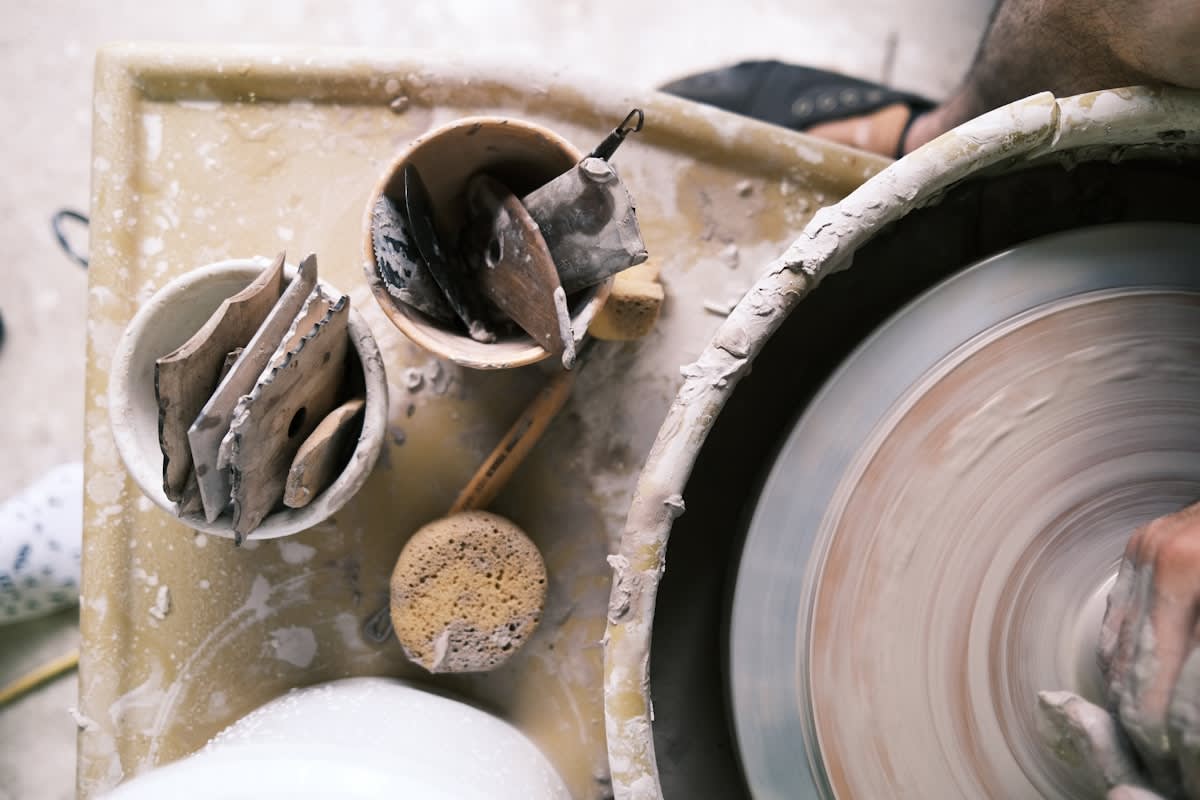
The economic implications are profound. We are seeing a revival of the 'Master-Apprentice' model. Because the value is now tied to the physical skill of execution, there is a renewed demand for technical training in traditional crafts. Institutions that had sidelined ceramics, weaving, and printmaking are seeing record enrollment. People want to know how to manipulate the physical world because that is where the competitive advantage now lies.
The Provenance Pivot is more than a trend; it is a psychological reclamation. After years of living through screens, the human brain is craving the sensory feedback of the physical. The smell of linseed oil, the resistance of heavy-grade paper, the weight of a bronze cast—these are not just aesthetic choices. They are anchors in a world that feels increasingly ephemeral.
Fact-Check & Accuracy Note
This article relies on data from the Art Basel & UBS Global Art Market Report (2024) and the African Arts Review (2023). While the trend toward tactile art is observable in auction house data and gallery enrollment, the 'Proof of Human' movement remains a decentralized industry practice and is not yet formally quantified by a single global index. The debate over the 'performance of labor' is an ongoing qualitative discussion among contemporary practitioners.
Editorial Perspective
Editorial Note: This piece argues that imperfection is the new luxury. This is a contrarian view to the traditional 'perfectionist' school of art, reflecting a shift in how value is perceived in the age of AI.