Stalin writes to CM Vijay seeking all-party meeting on Cauvery issue
Source Entity
India Latest News: Top National Headlines Today & Breaking News | The Hindu
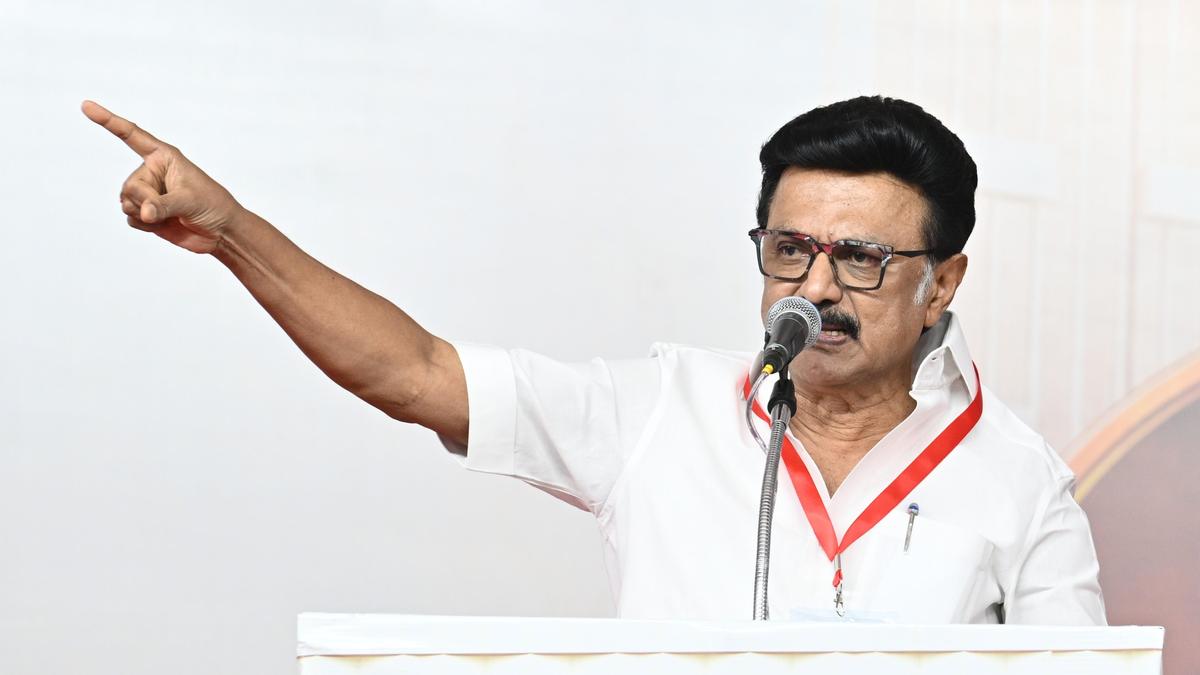
The proposed Mekedatu dam on the Cauvery river has sparked a sharp political rift between Congress leaders in Tamil Nadu and Karnataka. Tamil Nadu officials are calling for an all-party meeting to oppose the project, citing concerns over water rights and legal compliance.
The Mekedatu Dam Dispute: A Growing Political Divide
The long-standing dispute over the Cauvery river has intensified as Karnataka Deputy Chief Minister D.K. Shivakumar reaffirmed his government's commitment to the Mekedatu dam project. This development has triggered a rare internal conflict within the Congress party, as Tamil Nadu Congress president Manickam Tagore has publicly criticized Shivakumar’s “stubborn stance.” Tagore argues that the project violates the final award of the Cauvery Water Disputes Tribunal and the rulings of the Supreme Court, creating a friction point that transcends standard party lines.
The Source of the Contention
At the heart of the disagreement is Shivakumar’s assertion that the construction of the balancing reservoir at Mekedatu is a non-negotiable right for Karnataka. During a recent event in Mysuru attended by Prime Minister Narendra Modi, Shivakumar appealed to the central government to expedite approvals for the dam. This move was viewed by Tamil Nadu leadership as an aggressive provocation, leading to the sharp rebuke from Tagore, who labeled the remarks as “deeply condemnable.”
Tamil Nadu’s Legislative Response
In response to the escalating rhetoric, DMK president M.K. Stalin has formally urged Chief Minister C. Joseph Vijay to convene an all-party meeting to address the threat posed by the project. Stalin’s call to action is rooted in the belief that historical negotiations with Karnataka have consistently failed to secure Tamil Nadu’s water rights. By proposing that a delegation of MPs meet with the Prime Minister to present formal resolutions, Stalin aims to solidify a unified state front against the reservoir construction.
Legal and Historical Implications
This conflict is deeply embedded in the historical struggle for water sharing between the two states. The Cauvery river serves as a lifeline for agriculture in both regions, and any infrastructure development that threatens downstream flow is met with significant political resistance. While Shivakumar maintains that Karnataka will respect the Supreme Court’s guidelines on water distribution, Tamil Nadu remains skeptical, fearing that the reservoir will diminish its guaranteed allocation during critical dry seasons.
The Future of the Conflict
As the political temperature rises, the role of the central government becomes increasingly pivotal. The demand for an all-party meeting in Tamil Nadu suggests that the state is moving toward a more confrontational approach, prioritizing legal and parliamentary pressure over bilateral discussions. Whether the federal government will intervene or allow the states to resolve their differences through the judiciary remains the defining uncertainty in this unfolding water crisis.
Concluding Summary
The impasse over the Mekedatu dam highlights the fragility of inter-state cooperation when essential natural resources are at stake. With local leaders digging in their heels, the dispute serves as a reminder of the complex interplay between infrastructure development, regional political survival, and the enforcement of judicial mandates in the Indian federal system.
Multiple Citing Sources
Verification Required?