India is no longer functioning as a democracy, destroyed since 2014: Rahul Gandhi
Source Entity
India Latest News: Top National Headlines Today & Breaking News | The Hindu
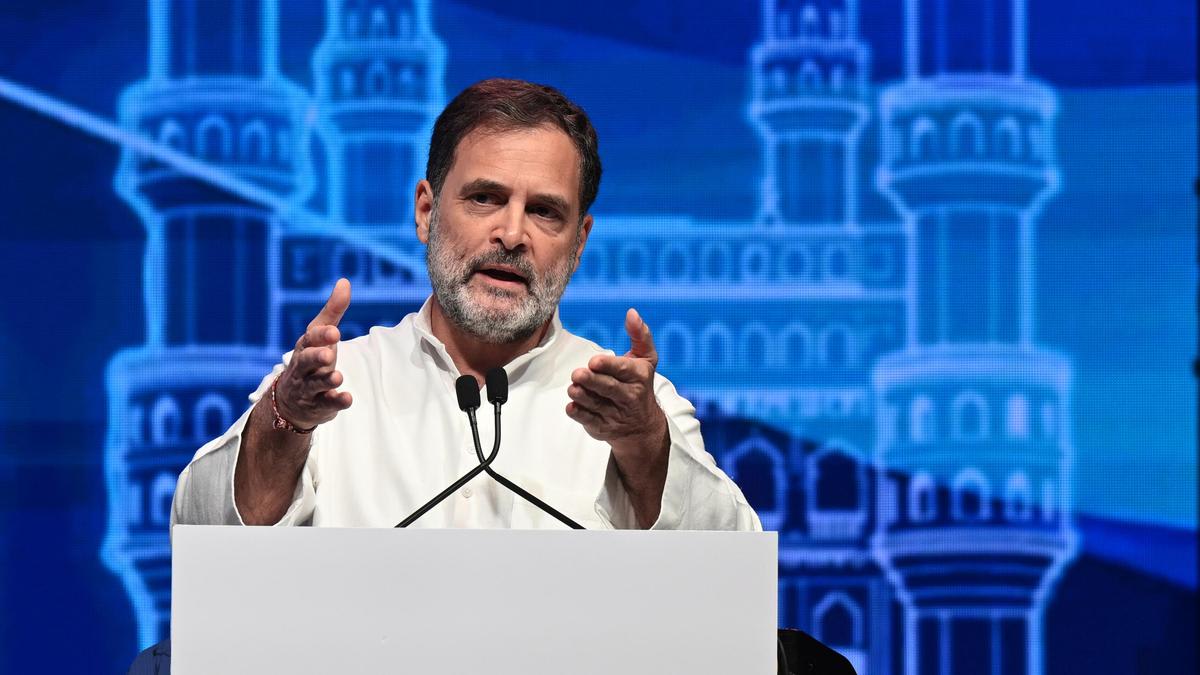
Leader of the Opposition Rahul Gandhi has declared that India’s democratic framework was dismantled in 2014. He cites institutional capture, massive financial influence in elections, and alleged voter roll anomalies as evidence for his claims.
The Erosion of Democratic Norms: A 2026 Perspective
At the recent Bharat Summit 2026 in Hyderabad, Leader of the Opposition (LoP) Rahul Gandhi delivered a scathing critique of India's current political trajectory. Gandhi asserted that the nation's democratic foundation was fundamentally destroyed in 2014, marking a decade-long shift toward what he characterizes as a non-democratic regime. This assertion rests on the premise that the political landscape has been irreversibly altered by the systematic capture of state institutions and the overwhelming influence of capital in the electoral process.
The Impact of Financial Dominance
Central to Gandhi's argument is the role of 'money power' in modern Indian elections. He claims that the 2014 Lok Sabha elections acted as a catalyst for a new era of politics, where massive financial resources were deployed to secure electoral advantages. By his account, this influx of capital created an uneven playing field that left traditional Opposition parties in a state of shock, struggling to remain competitive against a ruling party backed by superior financial influence. This trend, he argues, has persisted through subsequent election cycles, effectively sidelining democratic dissent.
Institutional Capture and Electoral Integrity
Beyond financial influence, Gandhi raised concerns regarding the integrity of the electoral system itself. During his address, he specifically highlighted alleged anomalies in Maharashtra's electoral data, claiming that approximately 7 million additional voters were added to the rolls between the Lok Sabha and subsequent assembly elections. Such allegations point to a broader anxiety regarding the transparency of the Election Commission and the administrative mechanisms that govern voter registration, which the Opposition believes have been compromised since 2014.
The Shift in Political Landscape
Gandhi’s narrative suggests that the transformation of the Indian state has been a calculated, long-term project. By weakening independent institutions, the government has, in his view, dismantled the checks and balances necessary for a functioning democracy. This has pushed the Opposition to the margins, creating a political environment where the ruling Bharatiya Janata Party (BJP) faces little institutional resistance, effectively neutralizing the democratic discourse that characterized the pre-2014 era.
Global Implications and Future Outlook
Concluding his address, Gandhi emphasized the global significance of India's democratic status, arguing that the health of India's democracy is vital for the global democratic movement. As he looks toward the future, Gandhi signaled a defiant stance, claiming that the Opposition is preparing to challenge the current hegemony. Whether these allegations of systemic failure will gain traction with the public or lead to a reconfiguration of political power remains the defining question for Indian politics as the nation navigates the challenges of the late 2020s.
Multiple Citing Sources
Verification Required?