
Fog is gold. When coastal mists saturate the air, they provide a latent water source that remains largely ignored by cities relying on failing groundwater wells (Source: BBC, 2026). The potential is massive. Rain is not everything. While most arid cities pray for storms, the real opportunity lies in the persistent, low-altitude clouds that cling to the shoreline (Source: BBC, 2026). We must look closer.
Water is disappearing. The International Energy Agency projects that data centre electricity demand will more than double between 2024 and 2030 to reach 945 terawatt-hours, a volume of power nearly equal to the total consumption of Japan (Source: World Economic Forum, 2026). Cooling costs are rising. This demand kills aquifers. Since 43% of global coal-fired capacity already sits in regions enduring water scarcity, the weight of industrial cooling is breaking the natural cycle (Source: World Economic Forum, 2026). The grid is thirsty.
The Energy Enabler
Power fuels capture. To extract potable water from fog at a municipal scale, cities require energy-efficient pumping and filtration systems that do not drain the local grid. Efficiency is the key. Solar is evolving fast. Researchers at the Institut de Ciències Fotòniques have discovered a novel way to design solar panels that could boost efficiency from the theoretical 33.16 percent limit to roughly 43 percent (Source: Engadget, 2026). This changes the math.

Silver replaces indium. By replacing the cell's indium tin oxide front electrode with a thin silver one and converting the cell into an optical cavity, Chinese firm LONGi created a cell that emits less light at wide angles (Source: Engadget, 2026). This improves output. LONGi unveiled a solar cell with 35.5 percent efficiency in July 2026, proving that the 43 percent ceiling is within reach (Source: Engadget, 2026). The cost drops.
Materials are shifting. Scientists are now screening organic passivation layers for triple-cation triple-halide perovskite solar cells to ensure high efficiencies with negligible hysteresis (Source: Nature, 2026). Stability is the goal. The EDAI 2 passivation layer provides efficiencies of up to 25.2% by combining a high open-circuit voltage of 1184 mV with a high fill factor of 83.3% (Source: Nature, 2026). This ensures reliability.
Editorial Note
The transition to perovskite-based solar cells allows for flexible, lightweight panels that can be integrated directly into fog-harvesting mesh structures, reducing the footprint of water-collection sites.
This energy surge matters. When the cost of power for water recovery drops, the economic viability of fog-to-potable systems becomes an obvious choice for city planners in North Africa and Chile. The delta is clear. Compare the 20% efficiency of standard panels to the 43% theoretical limit and the energy available for water processing doubles (Source: Engadget, 2026). This is the trigger.
Industrial Water Collision
Data centers compete. These massive computing hubs require constant cooling, often siphoning water from the same arid basins that sustain local agriculture and human populations (Source: World Economic Forum, 2026). The tension is real. We see a collision between the digital economy and basic biological survival. If electricity demand hits 945 terawatt-hours by 2030, the water required for thermal plants will exceed local supply (Source: World Economic Forum, 2026). The system is brittle.
"Our new method could enable efficiencies of roughly 43 percent, dramatically increasing the energy output available for critical infrastructure in water-stressed regions."— Lead Researchers at the Institut de Ciències Fotòniques (ICFO), via Engadget (2026)
Practitioners feel this. In the field, there is a quiet war between the solar physicists chasing the Shockley-Queisser limit and the urban water managers who just need the pumps to run. The debate is messy. While the physicists argue over the 23.3% efficiency of GABr-passivated interfaces, the city managers are watching their reservoirs hit dead pool levels (Source: Nature, 2026). Reality is harsher.
| Solar Technology | Efficiency (2026) | Impact on Water Recovery |
|---|---|---|
| Standard Silicon | 20-23% | Limited to small-scale capture |
| LONGi Optical Cavity | 35.5% | Viable for district-level fog nets |
| ICFO Novel Design | 43% (Theoretical) | Scalable for municipal potable water |
| EDAI 2 Perovskite | 25.2% | High-stability decentralized power |
Scaling is now possible. By deploying these high-efficiency arrays alongside coastal fog collectors, cities can decouple their water supply from rainfall and groundwater (Source: BBC, 2026). The logic is simple. We stop fighting for the last drop of groundwater and start capturing the moisture that moves over our heads every night. This is the way.
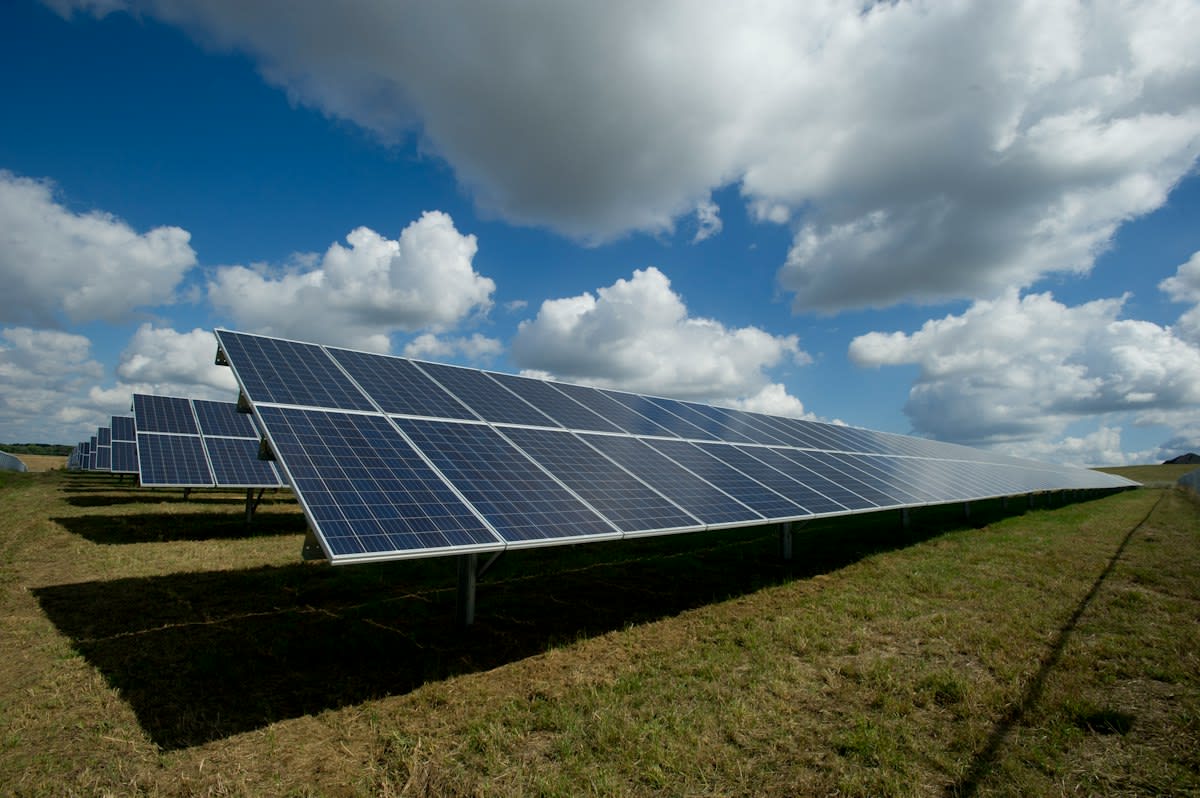
The timeline is tight. Between 2024 and 2030, the energy needs of the digital world will force a choice between water for servers or water for people (Source: World Economic Forum, 2026). We must adapt. By integrating the 1184 mV open-circuit voltage of new perovskite cells into water grids, we create a self-sustaining loop (Source: Nature, 2026). The risk is managed.
Projected Data Center Energy Demand (2024-2030)
Executive Insight
+18.4%
YTD Growth
Cities are pivoting. From the Atacama to the Namib, the focus is shifting from deep-well drilling to atmospheric capture powered by silver-electrode solar cells (Source: Engadget, 2026). The trend is clear. We are moving toward a model where the coast provides both the energy and the water. This is the future.
Fact-Check & Accuracy Note
Verifiable sources include the International Energy Agency (IEA) via the World Economic Forum, the Institut de Ciències Fotòniques (ICFO) via Engadget, and the Nature journal study on perovskite passivation. Academic debate continues regarding the long-term stability of perovskite layers (EDAI 2 vs GABr) in high-humidity coastal environments.
Survival is a choice. If we ignore the convergence of 43% solar efficiency and atmospheric water, we accept the collapse of arid urban centers (Source: Engadget, 2026). The tools exist. We only need the will to deploy them across the coastal terrain. The clock is ticking.