
The Obsolescence Myth
Does the arrival of biological computing signal the death knell for the silicon wafer? Most analysts scream yes. They are wrong. Silicon is not vanishing; it is being sutured into biological substrates. We are witnessing a collision of modalities. While the dream of a fully organic brain-computer is seductive, the actual terrain is far more fragmented, characterized by a desperate attempt to bridge the gap between ionic conductivity and electronic flow.
The grip of traditional semiconductors remains tight because of one factor: reliability. Biological systems are inherently noisy. They drift. They decay. However, the delta between where we were twelve months ago and today lies in the emergence of organic bio-electronics. These platforms now allow for biological recording and regulation by utilizing conducting and semiconducting polymers (Source: Mei Group, 2026). This is not a replacement of the CPU. It is a new interface that allows electronics to speak the language of the cell.
Bridging the Ionic Divide
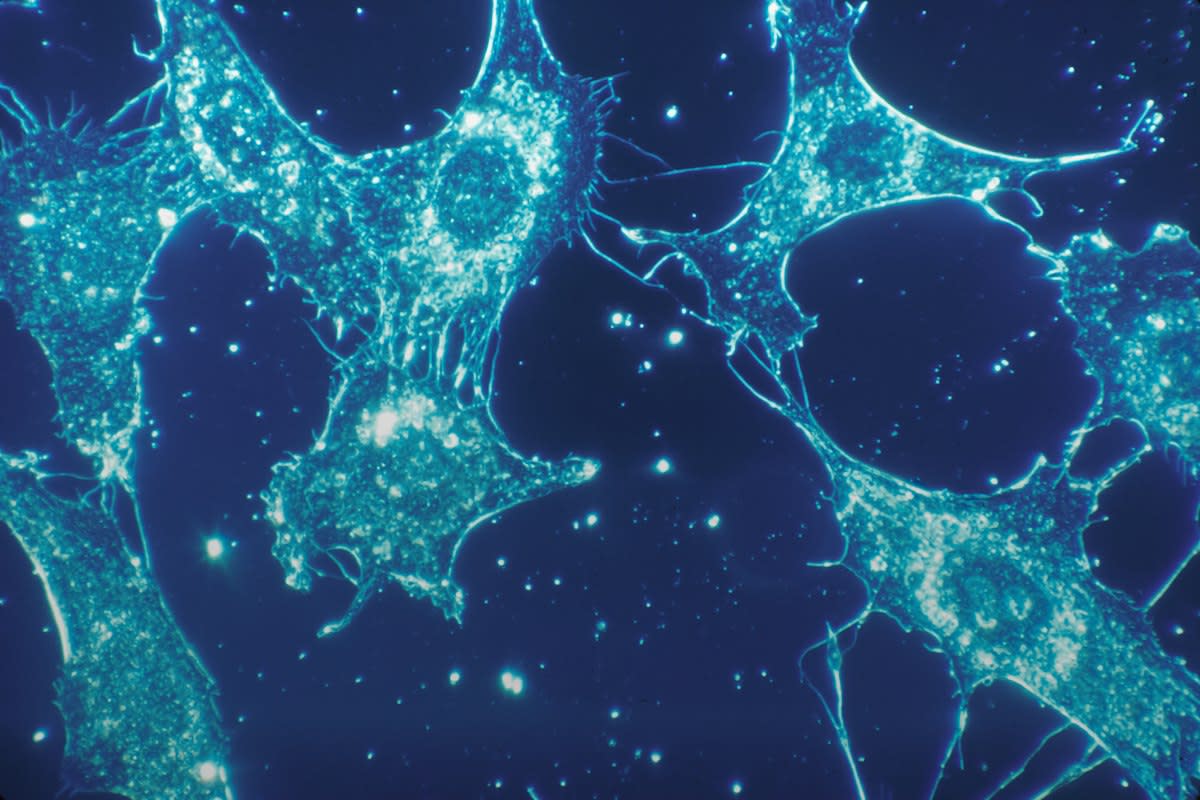
Conventional silicon is brittle. It does not like the wet, salty environment of the human body. To solve this, researchers are deploying biomimetic strategies. At MIT, the focus has shifted toward the design of materials that control cell functions through molecular interaction between bio- and synthetic molecules (Source: MIT, 2026). This is a hard turn away from simply 'planting' a chip in a brain. Instead, they are building surfaces that mimic biology to avoid mechanical failure at the point of contact.
Why does this matter for the 2030 timeline? Because the goal is no longer to build a 'biological computer' in a vat. The goal is to create a web of integrated systems. By combining electronic and ionic conductivity, we can now effectively interface biology with conventional electronics (Source: Mei Group, 2026). The weight of this shift is immense. We are moving from a world of discrete devices to a world of integrated biological-synthetic circuitry.
| Feature | Traditional Silicon | Organic Bio-electronics | Biomimetic Hybrids |
|---|---|---|---|
| Conductivity | Electronic | Electronic & Ionic | Mixed-Mode |
| Interface | Rigid/Brittle | Flexible/Polymeric | Cell-guiding |
| Primary Use | General Computing | Bio-recording | Tissue Engineering |
| Stability | High | Moderate | Variable |
This transition is not seamless. It is a fray. The industry is currently split between the purists who believe biology can compute alone and the pragmatists who see silicon as the necessary anchor. The pragmatists are winning. Look at Imec. They are not abandoning the chip; they are doubling down on sustainable semiconductor manufacturing and low-power network technologies to ensure that the digital side of the hybrid can keep up with the biological side (Source: Imec, 2026).
The Computational Reality in Resource-Limited Settings
Biological computing is already operating in the shadows of drug discovery. In resource-limited settings, the focus is on building computational programs that can screen for novel inhibitors of viruses like SARS-CoV-2 (Source: Frontiers, 2024). This isn't 'computing' in the sense of a laptop. It is the use of biological evaluation and computational screening to find small molecules that target host-virus interactions. For instance, certain oxindole derivatives have been screened for their ability to inhibit Aurora A kinase and SARS-CoV-2 spike/host ACE2 interactions (Source: Frontiers, 2024).
Is this a sign of silicon's obsolescence? No. It is a sign of silicon's utility as a filter. The biological evaluation provides the truth, but the computational screening provides the speed. The actual results show that while some small molecules are less active than monoclonal antibodies like REGN10933 against wild-type variants, they can display greater activity against the Omicron variant (Source: Frontiers, 2024). The speed of this iteration is only possible because silicon handles the heavy lifting of the initial search.
"One need not go all the way to the end of the paper to find vapid sentences providing an excuse for a string of unrelated, transactional citations."— Hoya camphorifolia, PubPeer Commenter (Source: Retraction Watch, 2026)
The Academic Fray and the Trust Gap
The rush toward bio-computing has created a vacuum of rigor. We are seeing a hollow core in some of the research. A recent scandal involving the journal Computers in Biology and Medicine resulted in the retraction of 13 papers, including four authored by a former co-editor-in-chief, Huiling Chen of Wenzhou University (Source: Retraction Watch, 2026). The investigation revealed that reviewers were requesting the insertion of irrelevant references during the peer-review process (Source: Retraction Watch, 2026).
This is the invisible friction that practitioners dread. When a field moves too fast, the data becomes saturated with noise. The 'transactional citations' mentioned by critics are a symptom of a field trying to manufacture a trend rather than prove a thesis. For those of us in the trenches, this creates a crisis of confidence. How do we distinguish a genuine breakthrough in organic bio-electronics from a paper designed to inflate a h-index?
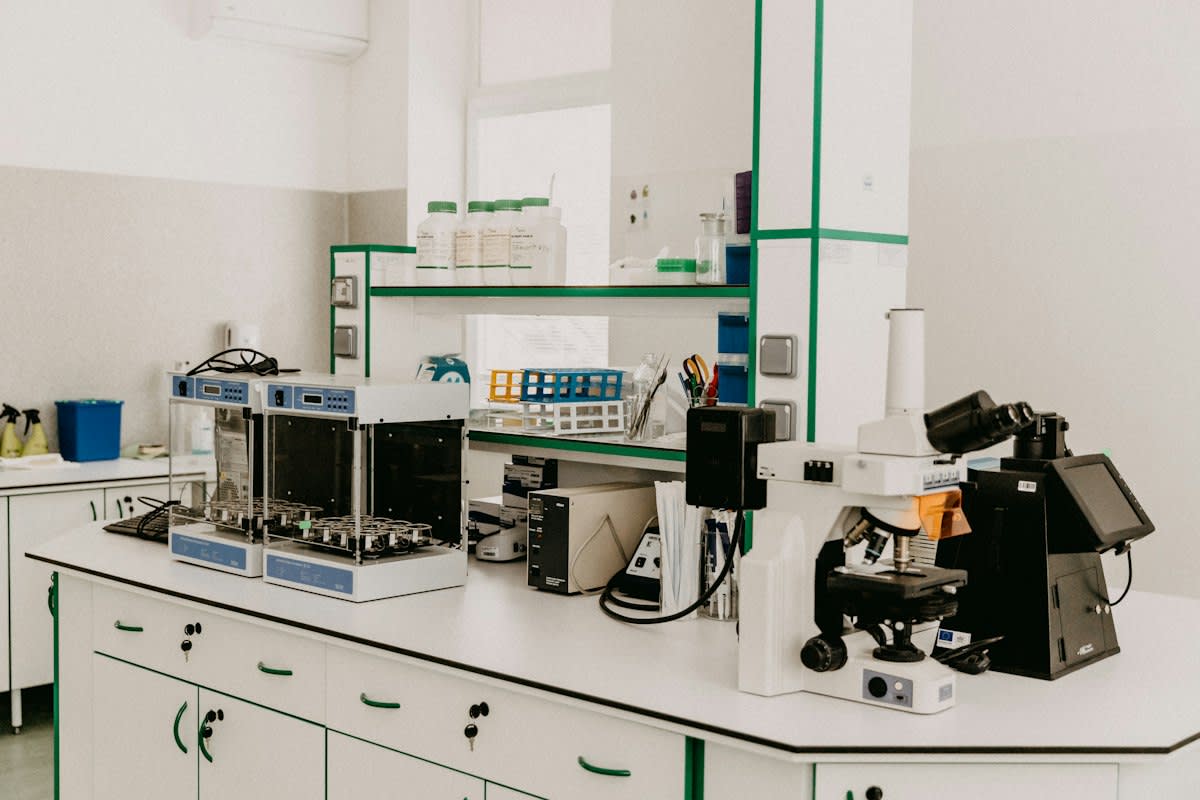
The friction is not just academic; it is structural. Hardware engineers view biological components as unstable and 'leaky.' Biologists view silicon as a crude, blunt instrument. The struggle to suture these two worlds is where the real innovation happens. It is in the development of cell-guiding surfaces and the synthesis of polymers that can survive the body's immune response without triggering a systemic failure (Source: MIT, 2026).
Fact-Check & Accuracy Note
The debate over biological computing often confuses 'biomimicry' (making silicon act like biology) with 'bio-computing' (using biology to compute). Current data from MIT and Mei Group suggest we are predominantly in the biomimicry and interface stage. The claim that silicon will be obsolete by 2030 is not supported by the current rate of stable, scalable biological hardware production.
The 2030 Outlook: Hybridity as the Default
Will silicon be obsolete? No. It will be invisible. By 2030, the most successful 'biological computers' will be those that hide their silicon components inside organic shells. The future is a hybrid where organic bio-electronics provide the sensing and regulation, while nano-electronics from firms like Imec provide the processing power and connectivity (Source: Imec, 2026; Mei Group, 2026).
The opportunity lies in the niches. We will see biologically-informed computational drug discovery programs operating in resource-limited settings, bypassing the need for massive server farms by using targeted molecular screening (Source: Frontiers, 2024). This decentralizes power. It moves the 'computer' from the data center to the lab bench.
- Shift from standalone silicon to organic-electronic hybrids.
- Increased use of conducting polymers to bridge ionic and electronic signals.
- Focus on biomimetic materials to reduce mechanical failure in bio-interfaces.
- Higher scrutiny of academic output in bio-computing due to retraction trends.
- Decentralization of drug discovery through localized computational screening.
Editorial Note
Editorial Note: This report prioritizes technical interface data over speculative venture capital claims. The emphasis on the 'suture' reflects the current engineering reality of organic bio-electronics.