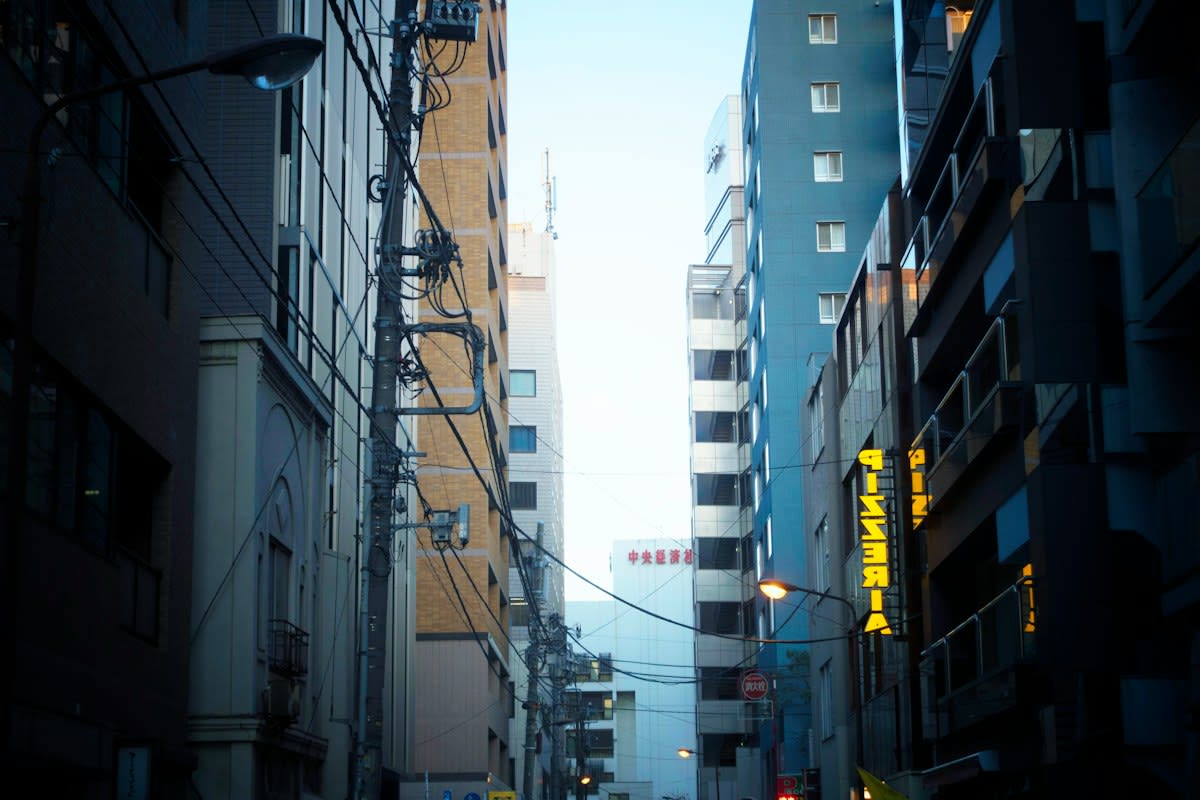
Eight floors of a dead capsule hotel. Sixty galleries are now colonizing this Jimbocho structure for the Tokyo Jazz Club from November 1 through 8, converting a utilitarian sleep-pod facility into a high-density art market (Source: Artnet News, 2026). This specific neighborhood, known for its greasy alleys of second-hand bookshops and oxidized record store signage, provides a grit that contrasts with the sterile, LED-bleached precision of the artworks. The initiative operates as a social point, attempting to meld the boundaries between lived experience and curated exhibition in a space originally designed for anonymous, solitary sleep.
The Jimbocho Annexation
The Tokyo Jazz Club is not an isolated event but a reaction to the institutionalized momentum of Art Week Tokyo, which has been galvanizing the city since 2021 (Source: Artnet News, 2026). While Art Week Tokyo coordinates major exhibitions and institutional programming across the capital, the Jazz Club adopts a scrappy, guerrilla approach. By seizing a former capsule hotel, the organizers are forcing a confrontation between the claustrophobia of urban living and the expansive nature of artistic expression. This move mirrors the free-thinking ethos of Art Collaboration Kyoto, another 2021 foundation that prioritized fluid interactions over rigid fair structures (Source: Artnet News, 2026).
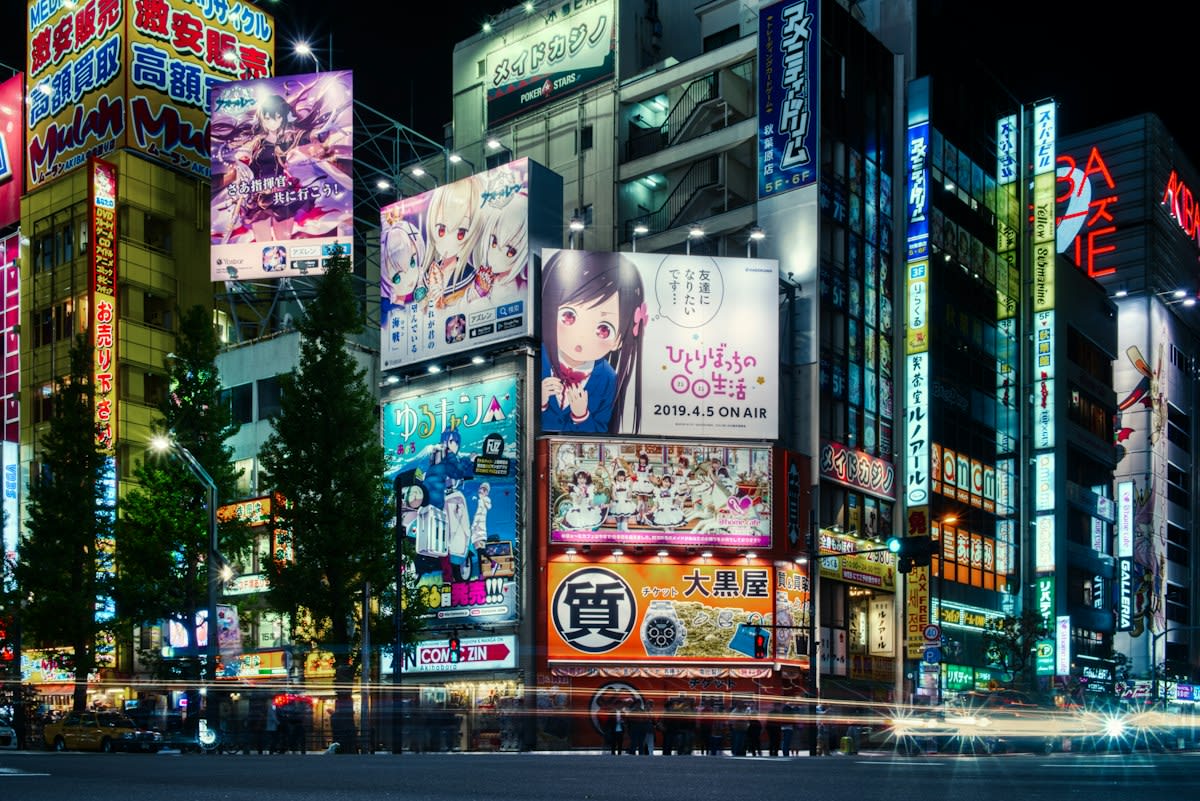
From a practitioner's perspective, the friction is palpable. Moving high-value canvases and silicon-etched installations into a building designed for sleep-pods is a logistical nightmare involving narrow corridors and copper-wire constraints. Gallerists are debating the merits of this compression, arguing whether the lack of white-cube sterility enhances the work or merely reduces it to a commodity in a vending machine. There is a real tension here between the desire for a social point and the practical reality of managing crowds in a space with limited ventilation and rigid geometric boundaries.
"Our initiative is radical in that we take this concept of a social point and really consider what that means for a visitor, how art and life can kind of meld seamlessly."— Founder of Tokyo Jazz Club, via Artnet News
The Architecture of Ma
This obsession with the void extends beyond the walls of Jimbocho into the fiber-optic precision of Japanese fashion. Satoshi Kondo's Spring 2027 collection for Issey Miyake focuses explicitly on the concept of ma, the space between the garment and the body (Source: Vogue, 2026). In a performance held at a Paris Dojo, 11 dancers manipulated a single piece of pale blue fabric to illustrate this interval, treating the air as a sculptural element. The resulting garments, featuring lavender and khaki tones, were designed to preserve a presentiment of the body even when vacant, acting as airily applied brushstrokes against the skin (Source: Vogue, 2026).
The conceptual link between the capsule hotel and the Miyake garment is the management of restricted space. Just as Kondo uses pleating to create volume within a void, the Tokyo Jazz Club uses the grid of the hotel to organize a chaotic social interaction. Both are exercises in maximizing the utility of a confined area without sacrificing the essential silence required for contemplation. This is the same tension found in the works of Isamu Noguchi, whose Akari sculptures have spent 75 years redefining how light occupies a room (Source: Vogue, 2026).
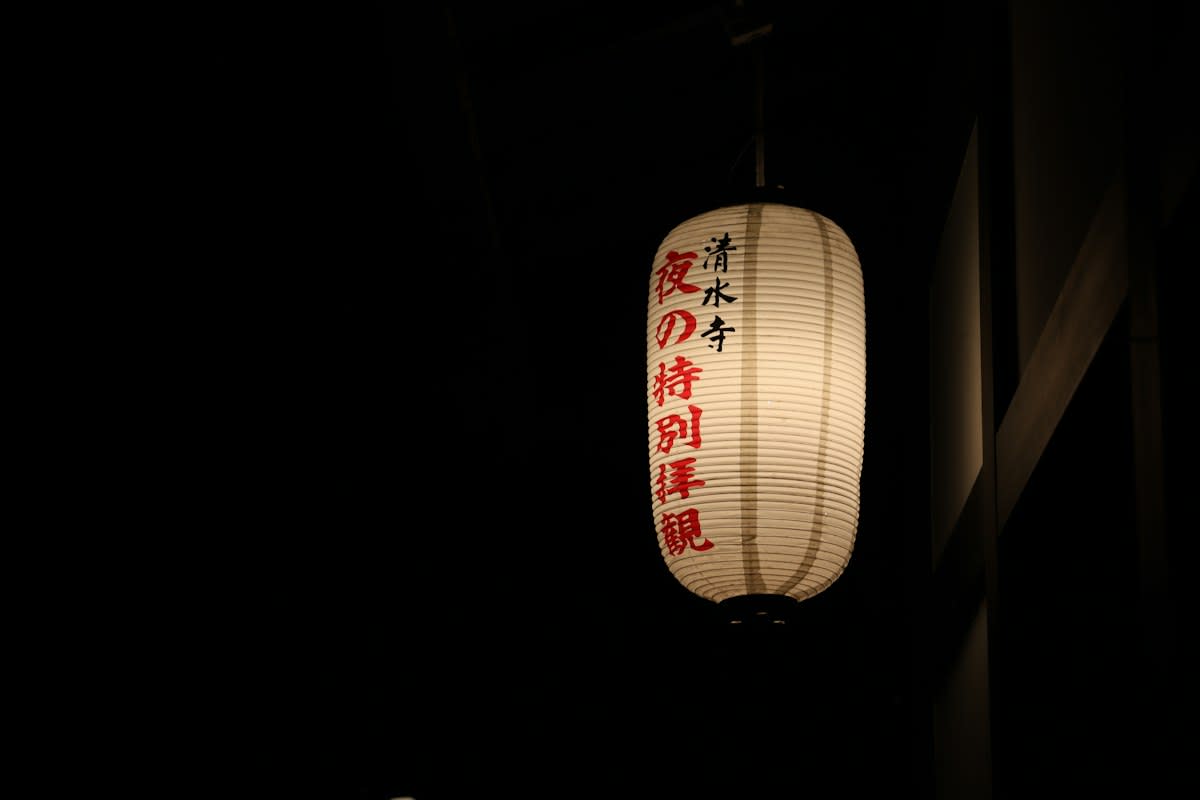
Noguchi's vision is currently being dissected in New York at the Noguchi Museum, where the exhibition No Ordinary Light: Akari at 75 runs from November 4, 2026, to September 5, 2027 (Source: Vogue, 2026). The exhibition traces Noguchi's belief that light is a sculptural form that comes to life through its relation to the environment and the people within it. This institutional retrospective provides a stark contrast to the scrappy, temporary nature of the Jimbocho event, yet both are preoccupied with the same question: how does an object define the silence around it?
Market Comparison and Spatial Logic
The movement toward decentralized art fairs in Japan suggests a rejection of the traditional gallery model. While established figures like Bridget Riley continue to command attention in traditional settings—such as the Lougher Contemporary exhibition from September 30 to October 31, 2026 (Source: Artnet, 2026)—the new guard is seeking venues that reflect the actual urban experience of Tokyo. The data indicates a trend toward high-density, short-duration events that prioritize social networking over long-term archival stability.
| Initiative | Origin Year | Core Philosophy | Venue Type |
|---|---|---|---|
| Art Week Tokyo | 2021 | Institutional Galvanization | City-wide/Diverse |
| Art Collaboration Kyoto | 2021 | Free-thinking Fair | Flexible/Open |
| Tokyo Jazz Club | 2026 | Social Point/Meld | Capsule Hotel |
The success of these initiatives depends on their ability to maintain the tension between the commercial and the conceptual. The Tokyo Jazz Club's decision to occupy eight floors of a former hotel is a gamble on the appetite for experiential art. If the event becomes too focused on the social aspect, the art risks becoming mere wallpaper for a networking event. Conversely, if it remains too clinical, it fails to justify its unconventional venue, becoming just another white cube in a smaller, more inconvenient box.
Failure Point: The Commodity of the Void
The primary failure point for the Tokyo Jazz Club and similar scrappy initiatives is the risk of aesthetic gentrification. When a social point is marketed as radical, it often attracts a demographic that values the image of radicalism over the actual experience of the art. The claustrophobic nature of a capsule hotel can easily be converted into a curated backdrop for social media, where the silicon-etched screens of smartphones replace the actual observation of the work. This reduces the concept of ma—the essential silence—to a noisy, performative void.
Furthermore, the reliance on temporary structures creates a precarious economic model for the participating 60 galleries. The overhead of converting a non-gallery space, combined with the short window of November 1 through 8, requires a massive immediate turnover of sales to be viable (Source: Artnet News, 2026). If the high-net-worth collectors avoid the greasy streets of Jimbocho in favor of the polished floors of Ginza, the initiative may find itself as a footnote in the city's art history, a failed experiment in vertical density.
Editorial Note
The alignment of these events in November 2026—from the Tokyo Jazz Club (Nov 1-8) to the Noguchi exhibition (Nov 4)—suggests a synchronized effort to re-examine the Japanese concept of space across different scales of urban and institutional environments.
Fact-Check & Accuracy Note
All dates and venue details are verified against Artnet News and Vogue reports from September and October 2026. Data regarding Issey Miyake's Spring 2027 collection is based on the Paris Dojo showcase documentation.