Must bring youth into public services who are not attracted to public office: PM Modi at UPSC centenary celebrations
Source Entity
India Latest News: Top National Headlines Today & Breaking News | The Hindu
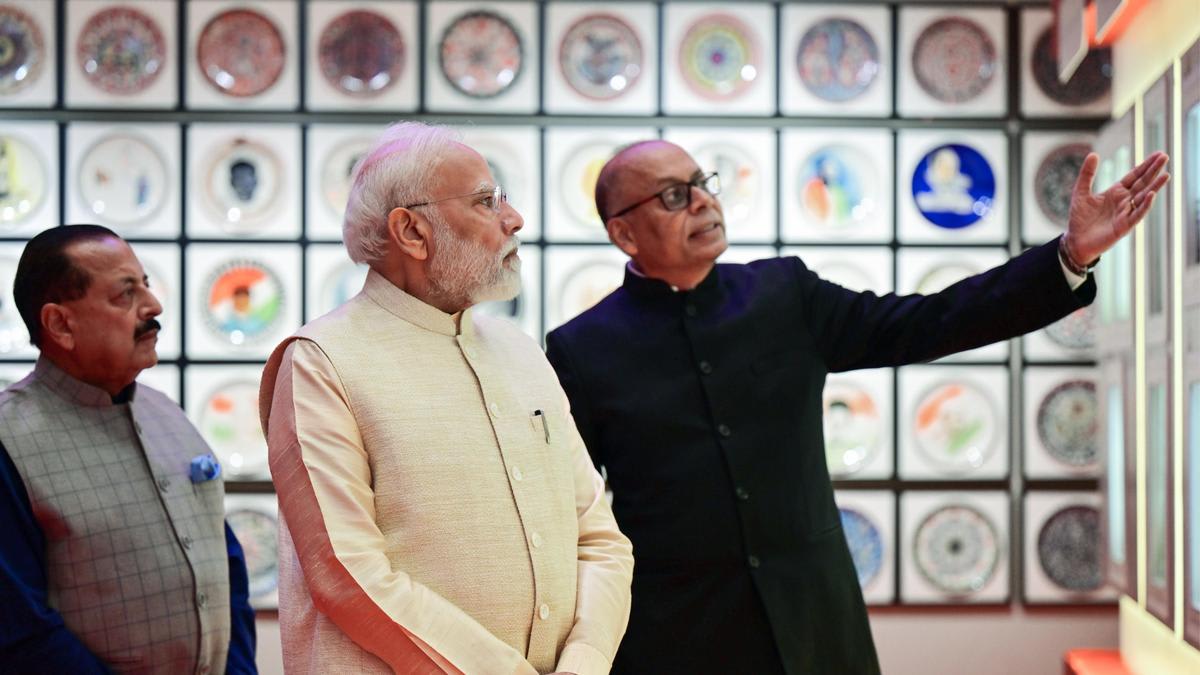
The UPSC celebrated its centenary with Prime Minister Narendra Modi emphasizing a shift toward recruiting youth motivated by public service rather than office. The commission is modernizing its examination process to prioritize reasoning and spontaneous judgment over rote learning.
A Century of Governance: The UPSC Centennial
The Union Public Service Commission (UPSC), India's premier recruitment body, has officially marked its 100-year milestone. Commencing on September 30, the two-day centenary celebration represents a pivotal moment for an institution that serves as the backbone of India’s administrative framework. Prime Minister Narendra Modi’s participation in these ceremonies underscores the government’s continued focus on institutional integrity and the evolution of civil services to meet the demands of a modern, aspirational India.
Rethinking Recruitment: Beyond Rote Learning
At the heart of the centenary discourse is a significant shift in examination philosophy. UPSC Chairman Ajay Kumar has articulated a clear vision: the future of civil service testing must move away from the reproduction of coached or predictable answers. Instead, the Commission is pivoting toward assessing reasoning, spontaneous thinking, and the ability to exercise sound judgment under conditions of ambiguity. This move acknowledges that the challenges faced by modern bureaucrats—ranging from digital transformation to complex socio-economic crises—require agility rather than just encyclopedic knowledge.
The Vision of 'Nation First, Citizen First'
Prime Minister Modi’s address introduced a thematic shift in the recruitment ethos, centered on the mantra of "Citizen is God." By emphasizing that the primary motivation for joining the civil services should be a genuine desire for public service rather than the allure of public office, the administration is seeking to redefine the "why" behind a career in governance. This philosophical adjustment aims to align the aspirations of the youth with the constitutional duty of serving the populace, ensuring that the "Nation First" principle remains the guiding light for incoming officers.
Integrating Trust, Transparency, and Technology
To implement these changes, the Commission has identified three pillars: trust, transparency, and technology. These principles are intended to preserve the constitutional mandate of merit and fairness while integrating modern tools to streamline the recruitment process. As the UPSC enters its second century, the integration of technology is not merely an administrative upgrade but a necessity to ensure that the selection process remains robust, accessible, and resistant to the evolving challenges of the digital age.
Honoring the Legacy of Jurisprudence
The celebrations were further commemorated by the release of a special coin, a stamp, and a book titled '100 Landmark Judgements: Shaping the Policies of UPSC and Public Service Commissions in India'. This publication serves as a historical record of how legal interventions have refined the policies of the UPSC over the last century. By acknowledging these landmark judgments, the Commission reinforces its commitment to the rule of law and the constitutional safeguards that have protected the meritocratic nature of Indian civil services since their inception.
Future Trends in Indian Governance
Looking forward, the UPSC's focus on "spontaneous thinking" suggests that the civil service examination will likely become more scenario-based, reflecting real-world complexities. By prioritizing candidates who possess an innate desire to serve, the government hopes to foster a culture of empathy and efficiency within the bureaucracy. This evolution marks a transition from a colonial-era administrative model to a service-oriented, citizen-centric framework, ensuring that the next generation of civil servants is equipped to lead India through its next century of development.
Verification Required?