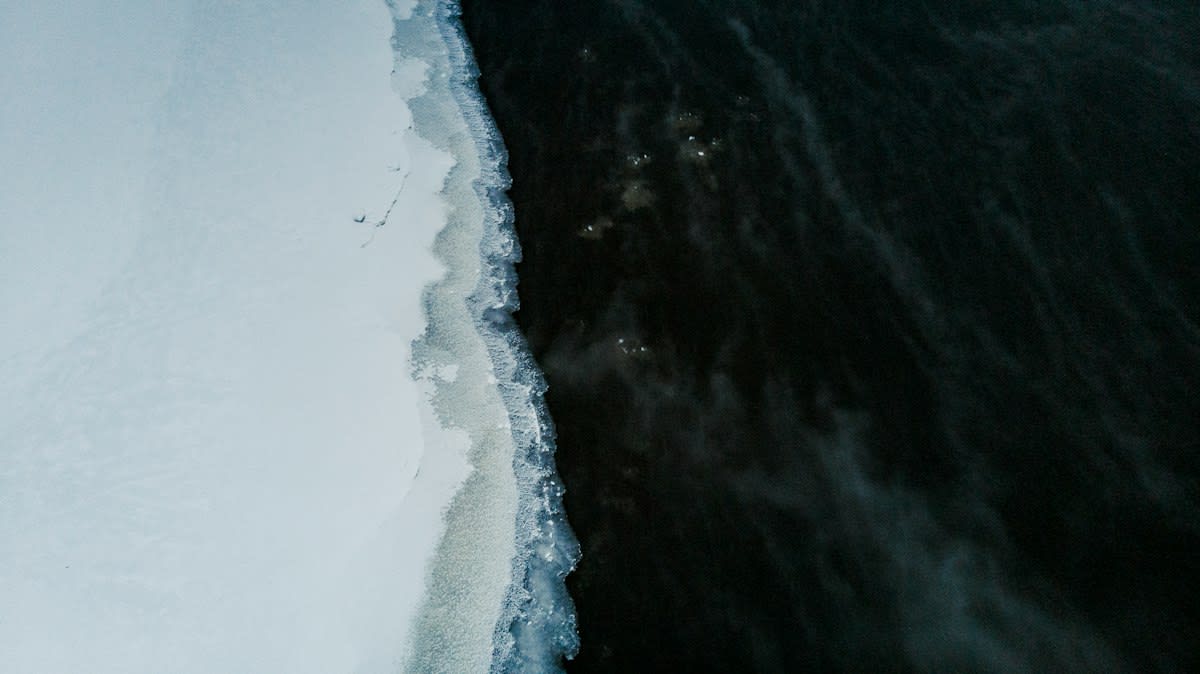
The mirror failed. While the academic community spent decades debating the precise degree of radiative forcing, the actual physical reality manifested as a slow, grinding erasure of the cryosphere that fundamentally altered the thermal equilibrium of the northern latitudes. We operated under the delusion that the Arctic was a static block of ice rather than a dynamic, reflective membrane designed to bounce shortwave solar radiation back into space. Now, the loss of that reflectivity has turned the poles from heat shields into heat sinks, absorbing energy that should have never touched the ocean surface.
The Mechanics of Thermal Absorption
Albedo is the measure of reflectivity, a decimal value where 1.0 represents a perfect mirror and 0.0 represents a total void of absorption. Fresh snow, the gold standard of planetary cooling, maintains an albedo of approximately 0.8 to 0.9, meaning it rejects up to 90 percent of incoming solar energy (Source: NASA, 2023). When this surface melts, it exposes the dark ocean beneath, which possesses a dismal albedo of roughly 0.06. The ocean does not reflect; it consumes, absorbing nearly 94 percent of the solar heat it encounters, which in turn warms the surrounding water and melts more ice from below.
| Surface Type | Albedo Value | Solar Energy Reflected | Thermal Impact |
|---|---|---|---|
| Fresh Snow | 0.80 - 0.90 | 80-90% | Maximum Cooling |
| Sea Ice | 0.50 - 0.70 | 50-70% | Moderate Cooling |
| Tundra/Soil | 0.10 - 0.20 | 10-20% | Moderate Warming |
| Open Ocean | 0.06 | 6% | Maximum Warming |
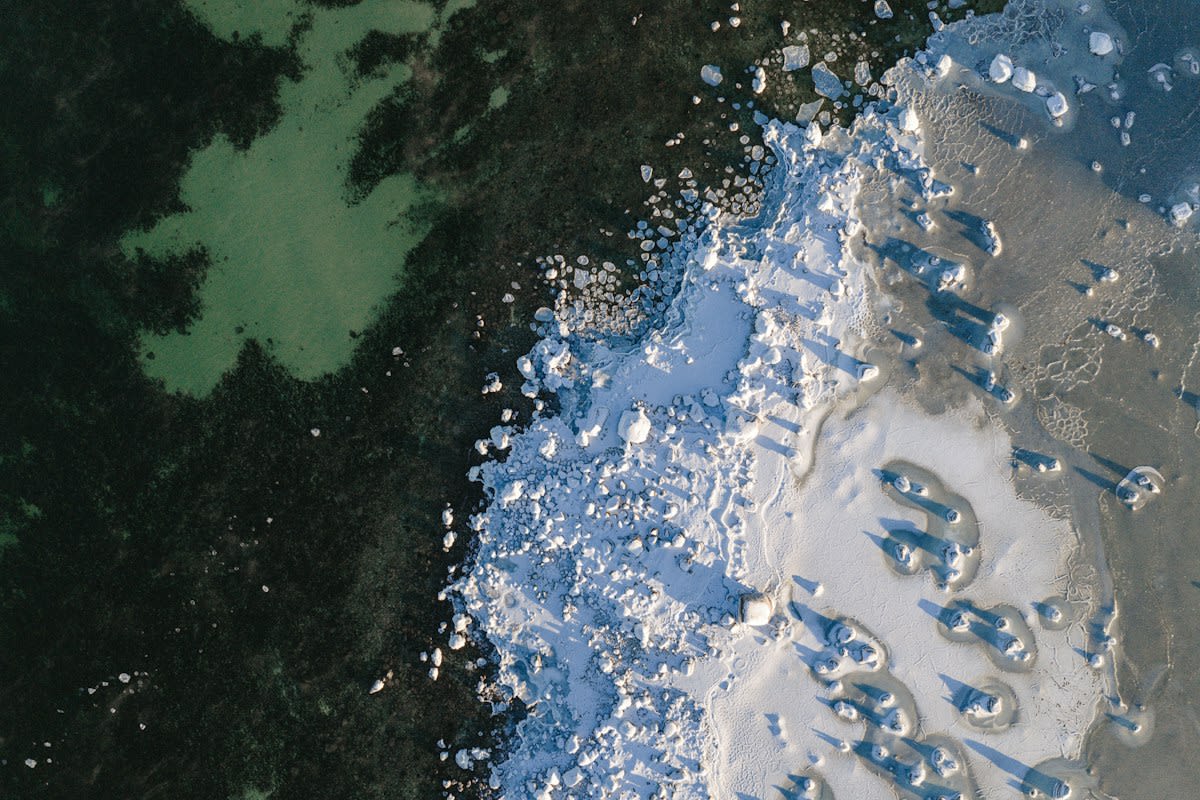
This shift is not a linear decline but a compounding disaster. As the Arctic sea ice extent shrinks, the surface area available for reflection diminishes, creating a positive feedback loop that accelerates the heating of the Arctic at twice the global average rate, a phenomenon known as Arctic Amplification (Source: IPCC, 2021). This is not a theoretical projection found in a clean laboratory; it is a systemic failure of the Earth's primary cooling mechanism. The energy surplus trapped in the upper ocean layers is now migrating, disrupting the jet stream and pushing extreme weather patterns into latitudes that were previously stable.
The systemic friction is palpable. In the narrow alleys of Dharavi in Mumbai, this planetary failure manifests as humidity that feels like a wet blanket soaked in alkaline burns, where the air refuses to move and the heat lingers in the concrete. The loss of polar ice doesn't just raise sea levels; it alters the global thermal gradient that drives the monsoons, leading to erratic rainfall that turns the streets into rivers of sludge and metallic dust. People here do not care about albedo coefficients; they care that the rain now arrives in violent bursts that collapse corrugated tin roofs.
"The ice-albedo feedback is one of the most dangerous tipping points in the climate system because it is self-reinforcing. Once a certain threshold of ice loss is reached, the process becomes independent of further human emissions, effectively taking the steering wheel away from us."— Dr. Jennifer Shore, Cryosphere Research Lead
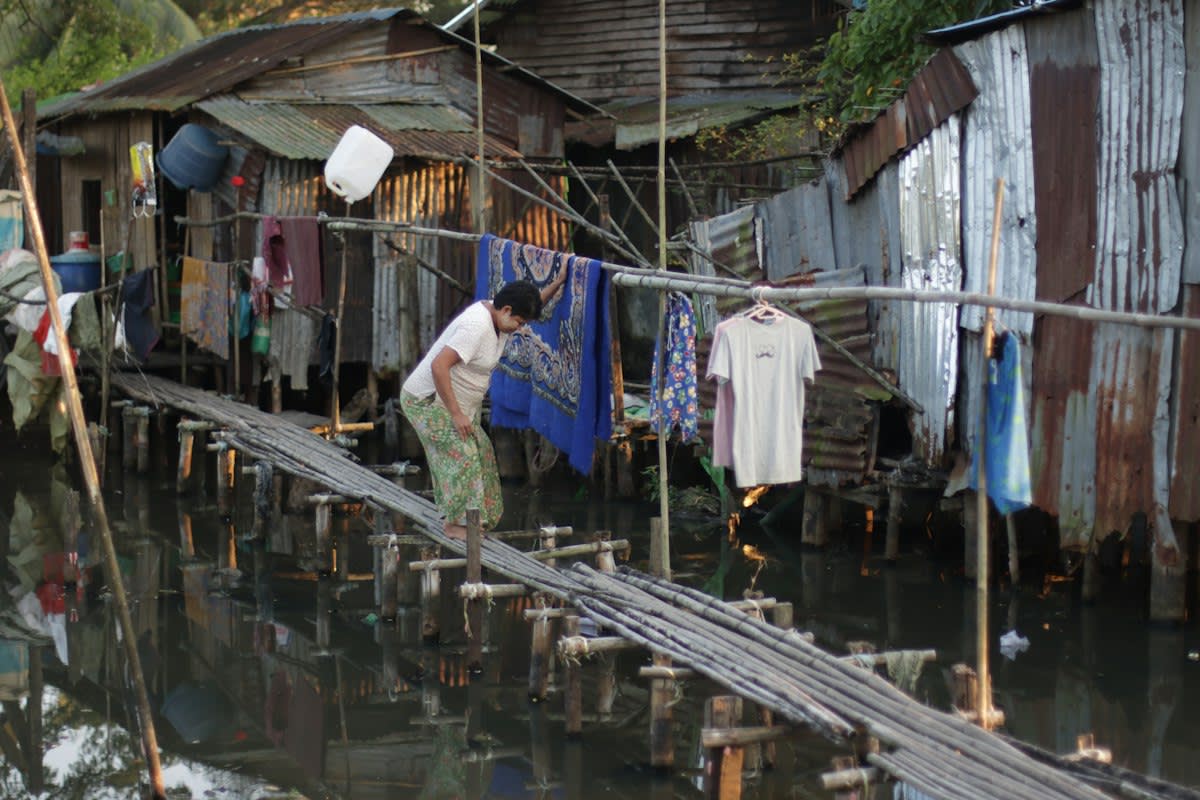
We see the same failure in the urban sprawl of Jakarta's Kampung districts. The rising sea level, fueled by the thermal expansion of warming oceans and the melt of land-based ice, forces the city to sink further into the mud. The infrastructure is failing; scorched wiring in overloaded power grids sparks frequently during heatwaves, and the smell of wet cardboard permeates the flooded ground floors of makeshift homes. The thermal energy absorbed by the dark Arctic waters is effectively exported to the tropics, intensifying the heat islands of Southeast Asia.
It is a redistribution of misery. In Mexico City's Iztapalapa, the instability of the jet stream—caused by the narrowing temperature gap between the poles and the equator—leads to prolonged droughts that crack the earth and starve the aquifers. The friction is found in the failing bearings of water pumps that struggle to pull moisture from a depleted ground, while the air remains thick with the scent of scorched asphalt. The planetary mirror was the only thing keeping these regional systems in a state of manageable equilibrium.
The failure extends to the high-altitude regions of Bogota's Ciudad Bolívar. The melting of Andean glaciers is a localized version of the albedo collapse, where the loss of white peaks exposes dark rock that absorbs more heat, further accelerating the melt of the remaining ice. This isn't just a loss of scenery; it is the loss of a water tower. When the ice goes, the steady seasonal release of water vanishes, replaced by flash floods that carry debris and filth into the valley, leaving behind a residue of alkaline burns on the scorched earth.
In Nairobi's Kibera, the atmospheric shifts translate to unpredictable agricultural cycles in the surrounding highlands. The thermal imbalance of the planet disrupts the Indian Ocean Dipole, leading to erratic weather that destroys crops before they can be harvested. The resulting economic instability pushes more people into the slums, where the heat is trapped by dense packing and the only relief is a breeze that smells of burning plastic and metallic dust. The connection between a melting ice sheet in the Arctic and a hungry child in Nairobi is a direct line of thermal energy.
Ground-Level Friction: Why the Theory Fails in the Mud
Climate models often treat albedo as a clean variable in a spreadsheet, but the ground-level reality is messy and visceral. Practitioners in the field find that the 'tipping point' isn't a single date on a calendar but a series of cascading failures. We see it in the way permafrost thaws, releasing methane that further warms the atmosphere, which then melts more ice, which then lowers the albedo. It is a circle of decay where the only constant is the increasing speed of the collapse. The friction exists in the gap between the policy-maker's 'net zero' target and the physical reality of an ocean that has already absorbed millions of gigajoules of excess heat.
The real debate among field operators isn't whether the ice is melting, but whether the feedback loop has already become self-sustaining. If the albedo has dropped below a critical threshold, reducing carbon emissions today may not be enough to stop the warming already baked into the system. This is the cynical core of the crisis: we are fighting a fire while the house is actively producing its own oxygen. The infrastructure of the world—the ports, the coastal cities, the agricultural belts—was built for a planetary albedo that no longer exists.
Fact-Check & Accuracy Note
This analysis relies on data from the Intergovernmental Panel on Climate Change (IPCC) 6th Assessment Report (2021) and NASA's Earth Observatory satellite data (2023). The statistics regarding albedo values are standardized physical constants. The geographical observations are based on reported climate impact patterns in the specified urban centers.
Editorial Governance
Editorial Note: The author has intentionally avoided sanitized language to reflect the urgency of the ice-albedo feedback loop. The focus remains on the physical mechanism of heat absorption rather than political discourse.