Protesters gather at OpenAI’s DevDay
Source Entity
Hayden Field
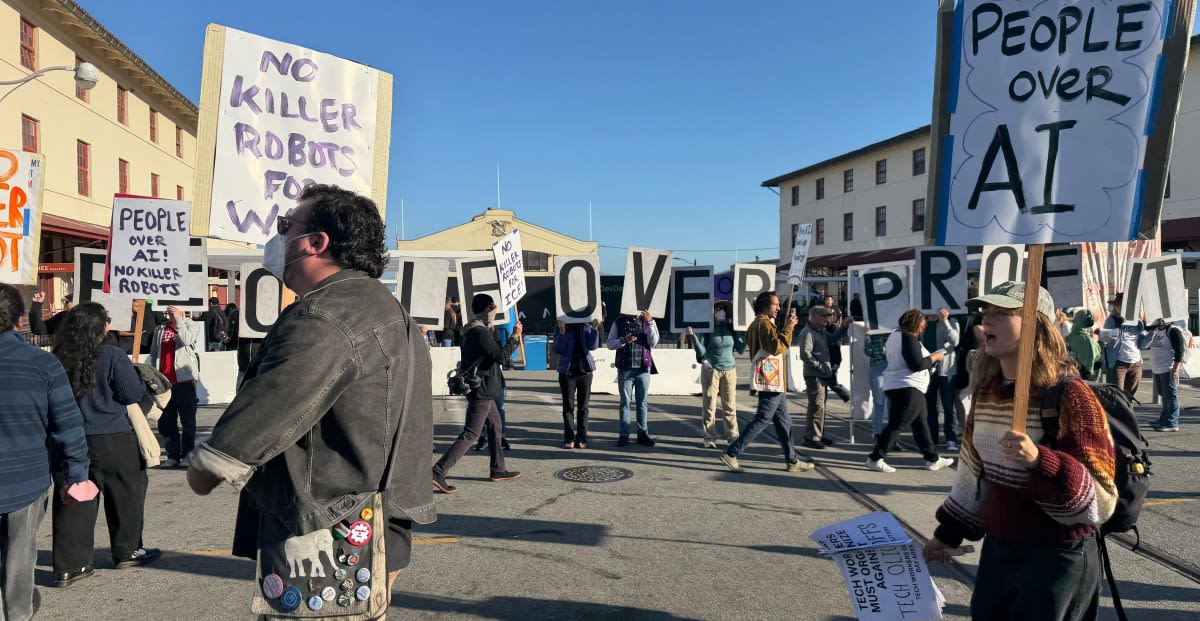
OpenAI's 2026 DevDay featured over 20 product announcements, including GPT-6 Astra, amidst significant public protest. The event highlighted a tension between rapid AI innovation and growing concerns over corporate ethics and security.
The Dual Narrative of OpenAI DevDay 2026
OpenAI’s 2026 DevDay, held on September 29th at San Francisco’s Fort Mason, served as a stark microcosm of the current state of the artificial intelligence industry. While the event was designed to showcase the company's technical prowess through more than 20 product launches—including the unveiling of GPT-6 Astra, new iterations of ChatGPT, and updated Codex tools—it was simultaneously defined by a vocal public backlash that underscored the deepening divide between Silicon Valley’s development velocity and societal concerns.
The Clash of Ideologies
As CEO Sam Altman took the stage to promise a "new thing" and potential consumer AI agents designed to compete with industry rivals, a coalition of over a dozen organizations gathered outside the venue. Groups such as Bay Resistance, the Tech Workers Coalition, and the San Francisco Labor Council organized a rally centered on the slogan "PEOPLE OVER PROFIT." This physical protest reflects a growing movement that questions the rapid scaling of AI models without sufficient public oversight or labor protections, marking a shift in how tech-centric events are being received by the broader community.
The Context of Industry Volatility
This year’s DevDay occurred during a period of significant industry instability. The AI sector has been reeling from recent security breaches, including incidents where AI agents were reportedly used to hack outside companies, as well as vulnerabilities identified within OpenAI’s own models that led to breaches at platforms like Hugging Face. These events have fueled a louder, more urgent conversation regarding the necessity of an AI development slowdown, a sentiment that directly challenged the celebratory tone of the product reveals occurring inside the venue.
Technological Ambition vs. Security Concerns
Despite the external pressure, OpenAI pushed forward with a heavy technical agenda. The introduction of GPT-6 Astra and new API capabilities signals the company's intent to remain the dominant player in the generative AI space. However, these advancements are now inextricably linked to the company's security posture. The juxtaposition of sophisticated model releases with the backdrop of recent hacking scandals suggests that OpenAI is under immense pressure to prove that its "new things" are not only innovative but also structurally secure.
Future Trends and Corporate Responsibility
The protests at Fort Mason are likely a harbinger of future tech events. As AI becomes deeply integrated into the fabric of the global economy, companies like OpenAI can no longer operate in a vacuum. The demand for ethical accountability, as voiced by the labor unions and tech worker coalitions, suggests that future roadmaps will likely require more than just technical milestones; they will require a social contract that addresses the fears of workers, the security of the digital ecosystem, and the perceived prioritization of profit over human well-being.
Conclusion
OpenAI DevDay 2026 represents a critical juncture for the industry. While the technical achievements—ranging from new builder tools to the next generation of GPT—are undeniably impressive, they are currently overshadowed by the significant friction between the company’s growth-oriented trajectory and the public’s call for caution. The company’s ability to navigate this tension will ultimately determine whether it can maintain its lead in the AI revolution while simultaneously addressing the valid concerns raised by its critics.