Trump, tech leaders sign 4-tier pact for AI self-regulation
Source Entity
The Indian Express
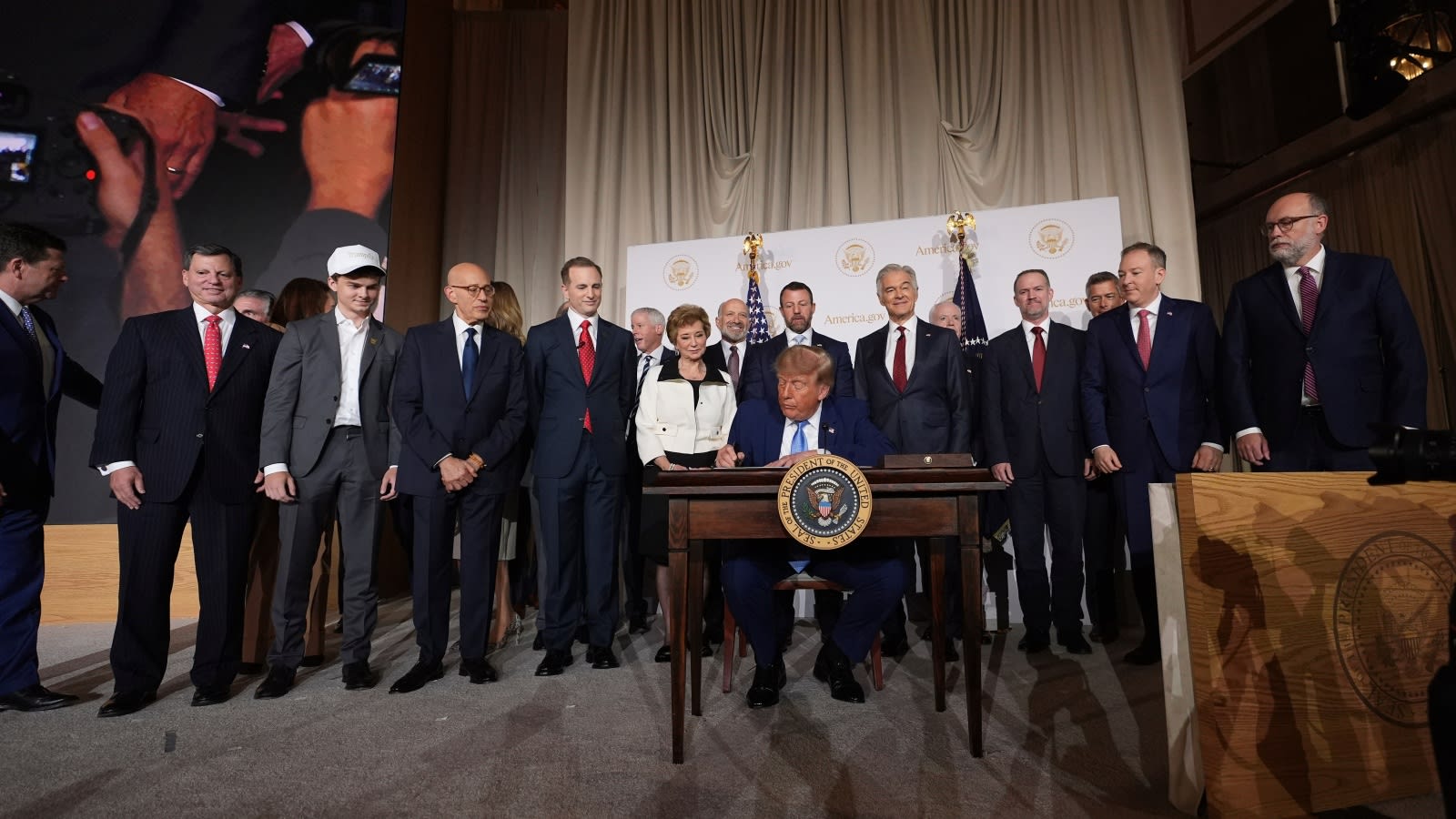
President Trump and major tech leaders have signed a voluntary 'White House Accord on Super Intelligence' to implement four tiers of safety and oversight for AI models. House Speaker Mike Johnson expressed support for this voluntary approach, emphasizing the need for industry-led guardrails amid congressional inaction.
The White House Accord on Super Intelligence: A New Era of AI Oversight
On Tuesday, September 29, 2026, President Donald Trump, joined by high-level Cabinet members and prominent technology executives, convened at the Andrew W. Mellon Auditorium in Washington to sign the "White House Accord on Super Intelligence." This landmark agreement represents a pivot toward a self-regulatory framework for the rapidly advancing field of artificial intelligence. By formalizing a four-tier system for internal controls, monitoring, and independent audits, the administration aims to mitigate risks associated with frontier AI models.
The Four-Tiered Defensive Strategy
The accord focuses on a structured, four-tier defensive strategy designed to address high-risk capabilities within AI systems. These tiers mandate that companies developing advanced models must implement rigorous monitoring systems to ensure that frontier AI does not exceed safety parameters. By integrating independent audits into the development lifecycle, the accord attempts to provide a layer of accountability that was previously absent from industry-led development cycles.
Congressional Stance and Voluntary Governance
House Speaker Mike Johnson has signaled strong support for this voluntary approach. Speaking on CNBC's Squawk Box prior to meeting with the President and industry leaders, Johnson emphasized that he favors "striking the right balance" regarding technological innovation. His preference for voluntary guardrails suggests that Congress is currently hesitant to impose heavy-handed legislative restrictions, likely fearing that rigid mandates could stifle the competitive edge of American technology firms.
Industry Participation and Strategic Alignment
The signing ceremony drew a significant roster of influential figures, including SpaceX CEO Elon Musk and Nvidia CEO Jensen Huang. The presence of these leaders underscores the high level of industry buy-in required to make a voluntary accord effective. Furthermore, the participation of government officials such as Secretary of State Marco Rubio and Energy Secretary Chris Wright indicates a whole-of-government approach to AI safety, linking technological development with national security and energy infrastructure priorities.
Broader Implications for Global AI Trends
The move toward self-regulation reflects a broader trend in global governance where technology is outpacing traditional legislative processes. By encouraging firms to "see the handwriting on the wall" regarding public safety concerns, the administration is attempting to build investor and consumer confidence without resorting to immediate statutory action. This strategy seeks to harmonize private sector innovation with public safety, potentially setting a precedent for how other nations approach the regulation of emerging super-intelligence.
Future Outlook and Policy Trajectory
While the accord provides a framework for immediate action, its long-term success will depend on the transparency of the independent audits and the willingness of companies to adhere to the four-tier defensive structure. As the administration simultaneously works on initiatives like the America.gov portal to improve service access, the focus remains on leveraging technology to enhance federal efficiency while maintaining strict safety oversight. The coming months will be critical in determining whether voluntary commitments are sufficient to manage the risks inherent in frontier AI or if legislative pressure will inevitably mount.
Multiple Citing Sources