We have reached the saturation point of the seamless. For the last few years, the digital world has been optimized for a frictionless experience, but generative AI has accelerated this to a breaking point. By training on the most 'ideal' versions of imagery and layout, AI models have created a visual monoculture—a polished, over-smoothed aesthetic that feels immediately familiar and, consequently, completely invisible. This is the paradox of modern design: when everything is aesthetically perfect, nothing stands out.
This phenomenon is most visible in the high-stakes world of global e-commerce. In the United States market, a reliance on synthetic AI renders for product listings has led to a homogenization of storefronts. Because these models draw from similar training datasets, the resulting images often share identical lighting patterns and generic backgrounds, creating what industry observers call a 'sea of sameness' (Source: EtherArts Product Photography, 2026). This uniformity does more than just bore the consumer; it actively erodes trust. When a shopper cannot distinguish one brand's visual identity from another, the perceived substance of the product itself begins to vanish.
The Great Pivot: From Cold Minimalism to Human Warmth
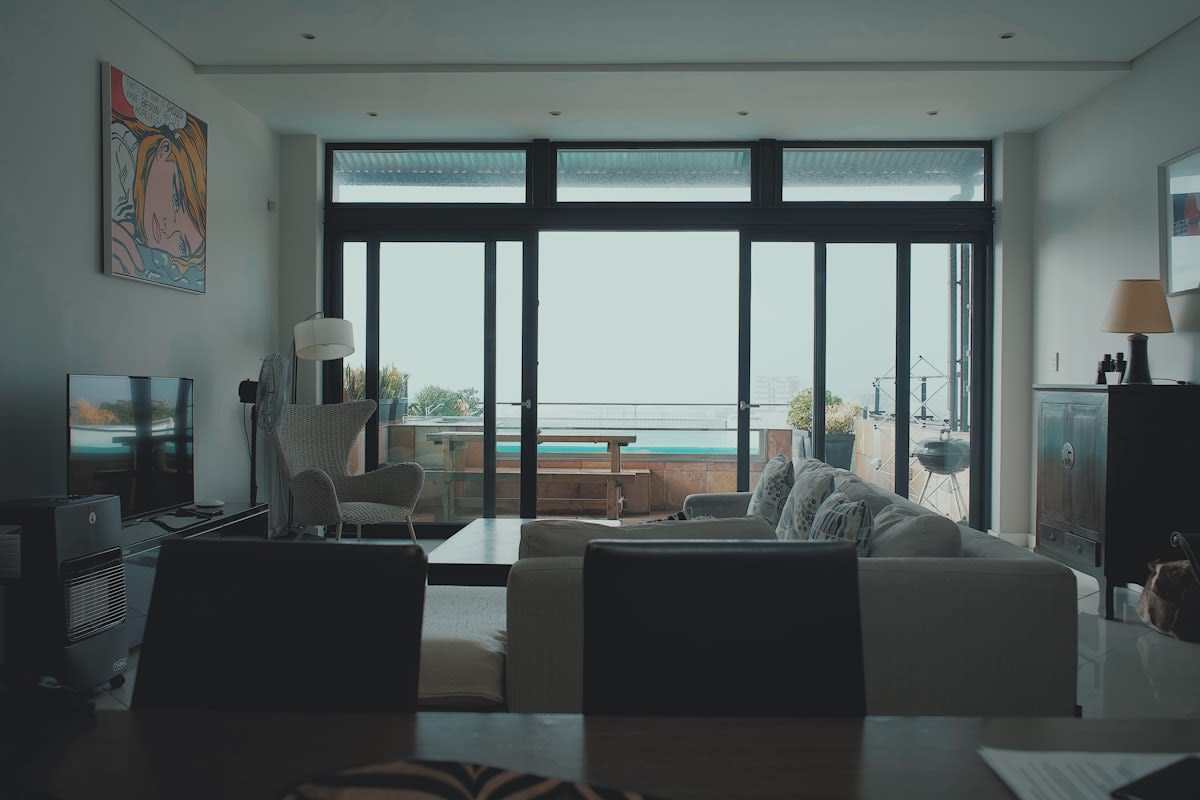
The reaction to this digital sterility is not limited to screens; it is manifesting physically in our living spaces. We are witnessing the most dramatic shift in interior design in a decade. The 'cold minimalism' that dominated the period from 2015 to 2024 is being decisively replaced by a preference for warmth, texture, and personality (Source: Construction Supply Magazine, 2026). This isn't just a change in color palette; it is a psychological migration toward the human touch.
The market data reflects this urgency. The global interior design market, valued at $145.96 billion in 2025, is projected to grow to $152.33 billion in 2026, eventually reaching $214.35 billion by 2034, maintaining a compound annual growth rate of 4.36% (Source: Fortune Business Insights Interior Design Market Report, 2026). This growth is being driven by a desire for 'bespoke character'—hand-finished woods, textured stone, and artisanal details that signal a human was actually involved in the creation process.
"Authentic, well-made materials age gracefully — aligning the trend with a broader anti-throwaway, sustainability-driven mindset."— Virginia Viadas, Design Analyst at Construction Supply Magazine
This shift represents a broader cultural rejection of the 'disposable' aesthetic. While AI can generate a perfect image of a room in seconds, it cannot replicate the narrative depth of a vintage piece mixed with contemporary furniture. The value has shifted from the final image to the story of the object's origin and its physical degradation over time.
Intentional Dissonance as a Trust Signal
If perfection is the hallmark of the machine, then 'ugly'—or more accurately, 'dissonant'—design becomes the hallmark of the human. We are seeing this emerge in high-end interior trends for 2027, where the goal is to break the expected pattern. Examples include the use of red cement tiles with contrasting grout in the Czech Republic or olive green monochrome bathrooms in Poland (Source: Archiproducts, 2026). These choices are intentionally bold and occasionally jarring, serving as a visual wake-up call to a consumer base suffering from visual fatigue.
From a practitioner's perspective, this is where the real friction happens in the studio. For years, the industry mantra was 'clean, intuitive, and invisible.' We spent a decade scrubbing every 'error' out of the user experience. Now, the internal debate has flipped. Designers are arguing about how much 'grit' to add back in. We are seeing a push to move away from the 'deceptive patterns'—formerly known as dark patterns—that prioritize smooth conversion over honest interaction (Source: Medium/uxdesign.cc, 2026). The goal is no longer to make the interface disappear, but to make it feel honest, even if that means adding a bit of friction.

This pursuit of authenticity is extending into the way we perceive media and culture. There is a documented shift in media communication moving from pluralism toward homogeneity in entertainment (Source: PRMC 2026). As AI-driven content optimization pushes every movie, song, and ad toward a statistically 'safe' average, the only way to truly disrupt the feed is to embrace the unconventional. The 'ugly' is not about a lack of skill, but a deliberate choice to reject the algorithmic average.
The New Hierarchy of Visual Value
To understand where we are headed, we have to look at what is currently being valued. The hierarchy has shifted: the 'perfect' is now the baseline (and therefore free), while the 'authentic' is the premium. This is why real product photography is replacing synthetic AI renders to rebuild brand credibility (Source: EtherArts Product Photography, 2026). A photo with a slight shadow imperfection or a non-standard angle is now more persuasive than a flawless 3D render because it proves the product exists in the physical world.
| Design Element | AI Era 'Perfect' (Baseline) | Human Era 'Authentic' (Premium) |
|---|---|---|
| Lighting | Perfectly balanced, synthetic | Natural, inconsistent, directional |
| Texture | Over-smoothed, seamless | Grainy, tactile, flawed |
| Composition | Centrally balanced, algorithmic | Asymmetrical, dissonant, surprising |
| Palette | Trend-optimized, safe | Bold, contrasting, personalized |
Even in the realm of academic and historical research, AI is being used not to create new 'perfect' versions of the past, but to uncover the raw, sensory experiences of the ancient world. For instance, researchers are using AI computer vision and acoustic data to reconstruct the immersive experience of Etruscan tombs in Italy, focusing on how sound reverberated and where attention was drawn in those physical spaces (Source: Journal of Archaeological Method and Theory, 2026). This highlights a critical shift: AI is most valuable when it helps us understand the physical, the sensory, and the imperfect, rather than when it tries to replace them.
The path forward for designers, artists, and brands is not to compete with AI on the grounds of perfection. That is a losing battle. Instead, the opportunity lies in the 'ugly'—the textures that can't be smoothed, the colors that clash, and the layouts that demand attention because they refuse to be invisible. Resilience in the AI era means embracing the friction that makes us human.
Fact-Check & Accuracy Note
This analysis is based on current shifts in the global interior design market and e-commerce trends. While the move toward 'warm minimalism' and 'authentic photography' is well-documented in 2026 industry reports, the long-term psychological impact of 'visual fatigue' caused by AI remains a subject of ongoing debate among UX researchers and cognitive psychologists.
Editorial Perspective
Editorial Note: This piece intentionally avoids the 'crisis' narrative typical of AI discussions. Rather than viewing AI as a threat to design, it is presented as a catalyst that is forcing the industry to rediscover the value of human imperfection.