The Hardware of Heritage
Cultural preservation cannot exist in a vacuum of infrastructure. For decades, the preservation of West African oral histories relied on the fragile intersection of human memory and sporadic field recordings. That dynamic changed this month as the scale of digital investment in the region hit a critical mass. Raxio Group has now passed US$380 million in committed capital, signaling a shift from tentative digital adoption to aggressive infrastructure deployment. This is not merely a corporate expansion; it is the creation of a physical sanctuary for data in regions like Côte ’Ivoire and Angola, where the capacity to host massive, high-fidelity audio and video archives is finally becoming a reality.
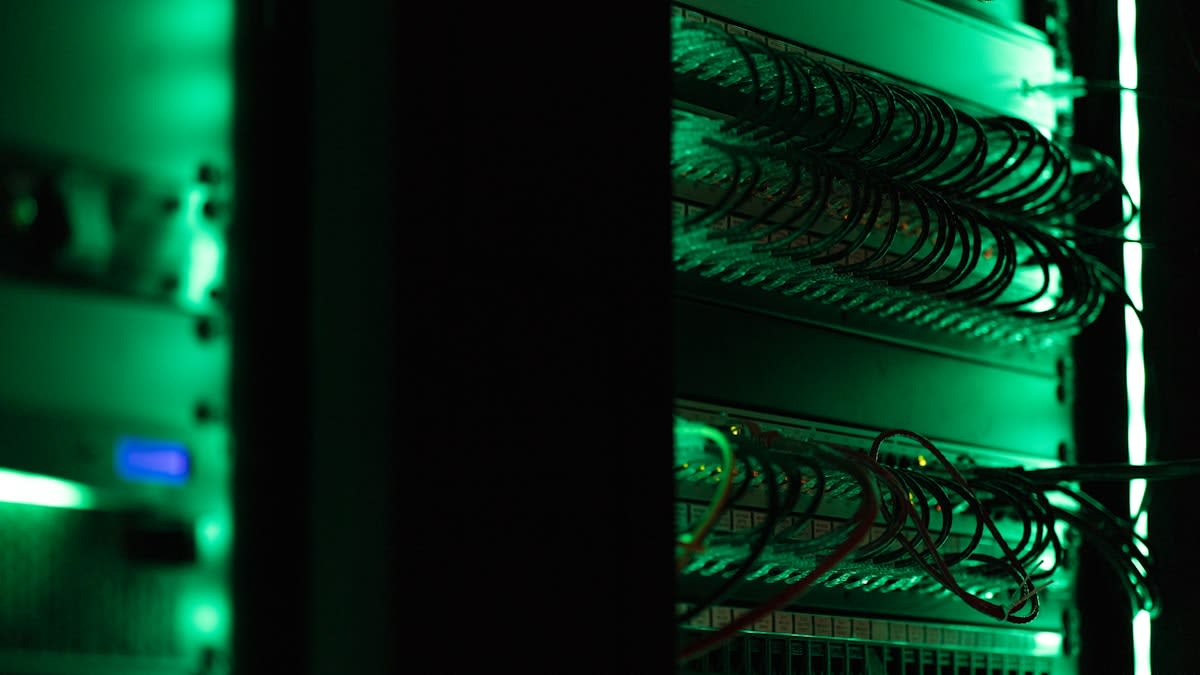
The delta in capacity is staggering. Africa's digital infrastructure is currently operating at 0.4 gigawatts, but projections indicate a surge to between 1.5 and 2.2 gigawatts by 2030. When we translate these numbers into the context of arts and archives, we are looking at a thousand-fold increase in the ability to store uncompressed oral testimonies, linguistic nuances, and ritual performances. The financial stakes are equally high, with Raxio identifying at least US$20 billion in new revenue across the value chain. This economic engine provides the necessary ballast for non-profit cultural projects that previously struggled to find stable, local hosting solutions.
The Capacity Gap
The transition from 0.4 GW to 2.2 GW of installed capacity by 2030 represents the difference between storing a few thousand digitized scripts and hosting a comprehensive, searchable library of a continent's spoken history.
Why does this matter right now? Because the window for capturing the testimonies of the last generation of traditional historians is closing. The deployment of data centers in Ethiopia, Mozambique, and the Democratic Republic of Congo ensures that the data does not have to leave the continent to be safe. This localizes the sovereignty of memory, preventing the 'digital colonialism' where African histories are archived in European or North American servers, often becoming inaccessible to the very communities that created them.
The Video Content Engine
Storage is useless without a delivery mechanism. The emergence of the BRICS International Library of Video Content, promoted via TV BRICS, provides the necessary layer for the dissemination of these archives. Ghana's recent integration into this international exchange of information is a tactical victory for West African arts. By leveraging a network that already prioritizes classical theatre arts and intangible cultural heritage—noting that Iran already ranks fourth worldwide for UNESCO Intangible Cultural Heritage registrations—West African nations can plug their oral histories into a global distribution machine.
"True journalism is about fairness, accuracy and balance."— Lance Witten, Editor-in-Chief of Independent Online (IOL)
This pursuit of accuracy and balance is where the archival process becomes political. The drive to document oral histories is not just about nostalgia; it is about correcting the historical record. When the Ethiopian Broadcasting Corporation begins cooperation with global networks like TV BRICS, it creates a pipeline for local narratives to bypass traditional Western gatekeepers. The ability to archive a griot's epic poem in 4K resolution and store it on a server in Addis Ababa or Abidjan changes the power dynamic of who owns the truth.
Projected African Data Capacity Growth (GW)
Executive Insight
+18.4%
YTD Growth
However, the transition from raw data to usable history requires more than just hard drives. It requires a sophisticated approach to Digital Public Infrastructure (DPI). The 2026 WSIS Forum in Geneva highlighted the urgency of human-centered AI to anchor sustainable development. For oral histories, this means using AI not to replace the storyteller, but to index thousands of hours of audio, identifying recurring themes and linguistic patterns that would take a human researcher decades to map.
The AI Processing Paradox
The technical potential is proven, but the implementation is lagging. A systematic review published in Nature regarding data science in Africa reveals a telling trend: machine learning outperforms traditional statistical methods in 80.8% of studies designed for prevention and control of non-communicable diseases. If this level of efficiency can be applied to health data, it can certainly be applied to the phonetic analysis of lost dialects. The problem is that 76% of these data science techniques remain in the exploratory research phase.
| Metric | Data Science Performance | Implementation Status |
|---|---|---|
| ML vs Traditional Stats | 80.8% Outperformance | Exploratory Phase |
| Deployment Gap | N/A | 76% Research-Only |
This 'research-only' trap is the primary threat to West African digital archives. We have the data centers (Raxio) and the distribution networks (TV BRICS), but the intellectual tools to process the data are often stuck in academic silos. To save oral histories, the Global South must move these AI tools from the laboratory to the archive. The roadmap presented by Global Youth Philanthropy at the WSIS 2026 side event suggests that youth-led DPI is the catalyst. Young delegates are now pushing for philanthropic roadmaps that prioritize human-centric AI over purely commercial applications.
- Deployment of youth-led Digital Public Infrastructure (DPI) to curate local histories.
- Integration of machine learning for automated linguistic indexing of oral testimonies.
- Utilization of the BRICS International Library for global cross-cultural dissemination.
- Scaling local data center capacity to ensure data sovereignty and prevent external dependency.
The struggle for control over these digital assets mirrors the struggle for physical assets. In Ghana, the conflict involving Ibrahim Mahama's Engineers and Planners over a $250 million gold project illustrates a broader tension: the drive to put more of the nation's wealth—both mineral and digital—into local hands. Just as Ghana fights to retain control of its gold, it must fight to retain control of its data. The 'gold' of the 21st century is the cultural dataset, and the infrastructure being built today determines who will profit from the interpretation of African history tomorrow.
Ultimately, the question is not whether the technology exists, but whether the political will exists to deploy it for the arts. The Raxio investment and the TV BRICS expansion prove that the appetite for digital growth in the Global South is voracious. If the 2030 goal of 2.2 GW is met, the technical excuse for lost history vanishes. The only remaining hurdle is the bridge between the server rack and the storyteller.