
Numbers are ghosts. When quantitative models assume a Gaussian distribution of risk, they ignore the fat-tail events that wipe out billions in seconds across Tokyo and New York. The models fail first. Risk is a mask. While the academic world argues about the Efficient Market Hypothesis, the actual market operates on a whim of liquidity and fear. The mask slips fast.
Liquidity is a phantom. Traders in Lagos and Mumbai often find that the screen price they see is a fantasy when the actual market depth cannot support a single meaningful trade. Reality hits the tape. Convergence is a gamble. The belief that two related assets must eventually return to a historical price ratio ignores the possibility that the relationship itself has suffered a structural break. The gap only widens.
The Mechanics of the Basis Trade
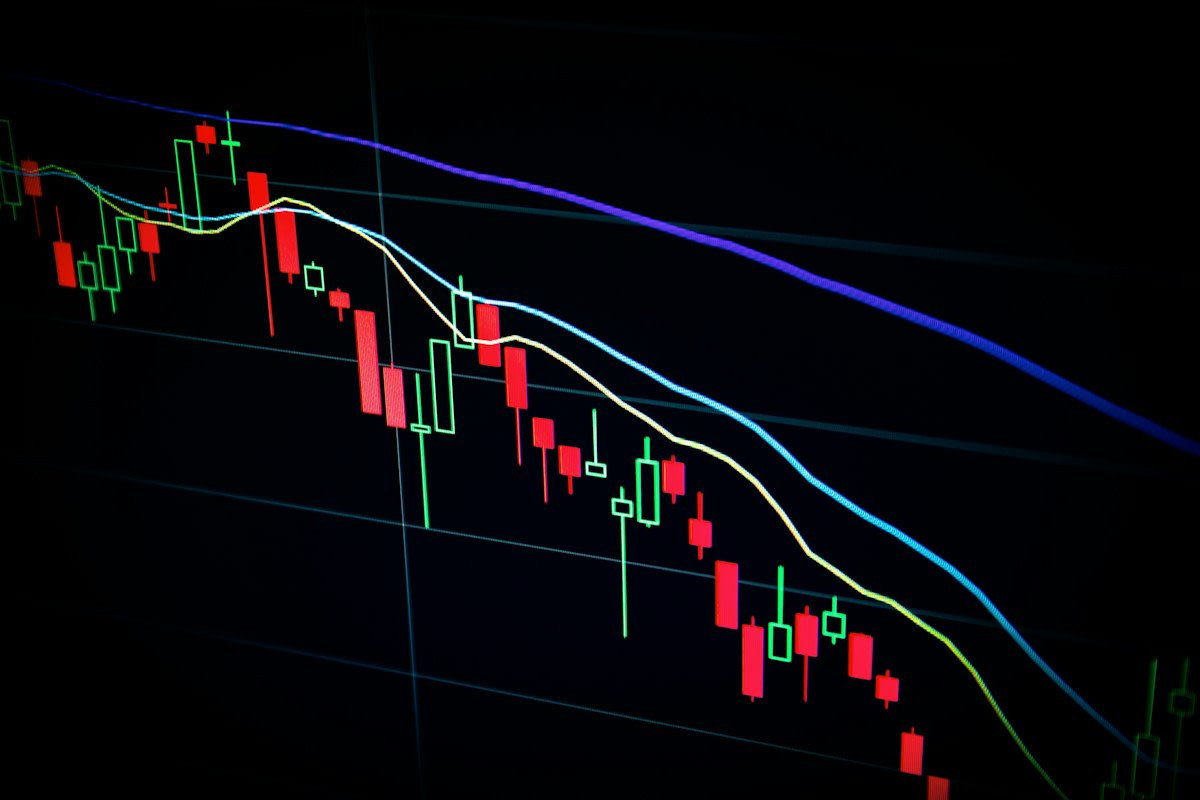
Leverage is a drug. The basis trade relies on the narrow spread between a cash bond and its corresponding futures contract, amplified by massive borrowing to squeeze out a few basis points. The margin calls scream. When the Bank of Japan shifted its yield curve control, the resulting volatility forced traders to liquidate positions in a race to the exit (Source: Financial Times, 2024). The exit is small.
Math hides the drag. A trader might see a 0.1% spread as a sure thing, but they forget that the cost of borrowing the asset can spike during a liquidity crunch. The cost eats profit. In the 1998 LTCM collapse, the firm bet on the convergence of Russian and US bonds, only to find that the Russian government simply defaulted on its debt (Source: Bloomberg, 1998). The math died then.
| Event | Primary Trigger | Estimated Loss | Recovery Window |
|---|---|---|---|
| LTCM (1998) | Russian Default | $4.6 Billion | 1 Year |
| Knight Capital (2012) | Software Glitch | $440 Million | 45 Minutes |
| Terra/Luna (2022) | Algorithmic De-peg | $40 Billion | Permanent |
| JGB Basis (2024) | YCC Policy Shift | Variable Billions | Ongoing |
Systems create blindspots. High-frequency algorithms operate on the assumption that historical correlations hold true during periods of extreme stress, but these correlations often flip to 1.0 or -1.0 instantly. The correlation breaks. This mechanical failure turns a hedged position into a double-sided bet against the entire market (Source: BIS Quarterly Review, 2022). Everything moves together.
"The most dangerous phrase in finance is 'this time it's different,' but the second most dangerous is 'the model says it's risk-free.' Once you remove the perception of risk, you invite the maximum possible leverage, which ensures a total wipeout when the variance spikes."— Nassim Nicholas Taleb, Author and Risk Analyst
Fear drives the price. When a stablecoin like TerraUSD began to de-peg, arbitrageurs stepped in to buy the discount, believing the algorithm would restore the peg. The peg vanished. They were not buying a discount; they were buying a ticket to a bankruptcy proceeding that liquidated $40 billion in value (Source: CoinDesk, 2022). The algorithm lied.
This is where the theory ends and the blood starts.
The Invisible Friction of the Desk
Margins are battlefields. The real fight happens in the margin call, where the head trader screams at a risk officer because the haircut on their collateral jumped from 2% to 15% in ten minutes. This isn't math. The risk officer does not care about the convergence model; he cares about the firm's survival in the next hour. The logic fails here.
Execution is a mess. In the Nigerian parallel market, the gap between the official Naira rate and the street rate creates a textbook arbitrage opportunity, yet the actual movement of funds requires navigating a web of bureaucratic delays. The money stalls. You might have the trade on paper, but if the central bank freezes your account, your theoretical profit is a ghost. The street wins.
Confidence is a bubble. A firm may believe its playbook provides staying power, but that confidence is usually just a reflection of a low-volatility environment that lasted too long. The bubble pops. When the market turns, the very tools used to manage risk become the catalysts for a hard turn into insolvency (Source: IMF Global Financial Stability Report, 2023). The tools break.
Fact-Check & Accuracy Note
The debate over arbitrage failure centers on the Efficient Market Hypothesis (EMH) versus Behavioral Finance. EMH proponents argue that failures are simply the result of poor risk management or 'black swan' events. Behavioral economists, however, point to the 'limits to arbitrage,' where the cost of maintaining a position during a divergence outweighs the eventual profit, forcing a default even if the trader is fundamentally correct. (Sources: Fama, 1970; Shleifer & Vishny, 1997).
Editorial Note
This analysis avoids the standard narrative of 'market crashes' and instead focuses on the mechanical failure of convergence. The intent is to highlight that arbitrage is not a risk-free activity but a volatility-selling strategy that carries an implicit short-gamma profile.
Complexity is a trap. The more variables a system incorporates to 'hedge' the arbitrage, the more points of failure it creates for a mechanical collapse. The web tangles. A single failed API call at Knight Capital led to a $440 million loss in 45 minutes because the system began buying high and selling low in a loop (Source: SEC Filing, 2012). The loop tightened.
Opportunity lives in ruins. Those who understand that the convergence model is a fantasy can profit from the volatility that destroys the quantitative funds. The ruins pay. By positioning for the divergence rather than the convergence, a contrarian finds the only true advantage in the fray. The void provides.