Preserve native cattle breeds for their disease resistance and adaptability, say experts at SVVU seminar
Source Entity
India Latest News: Top National Headlines Today & Breaking News | The Hindu
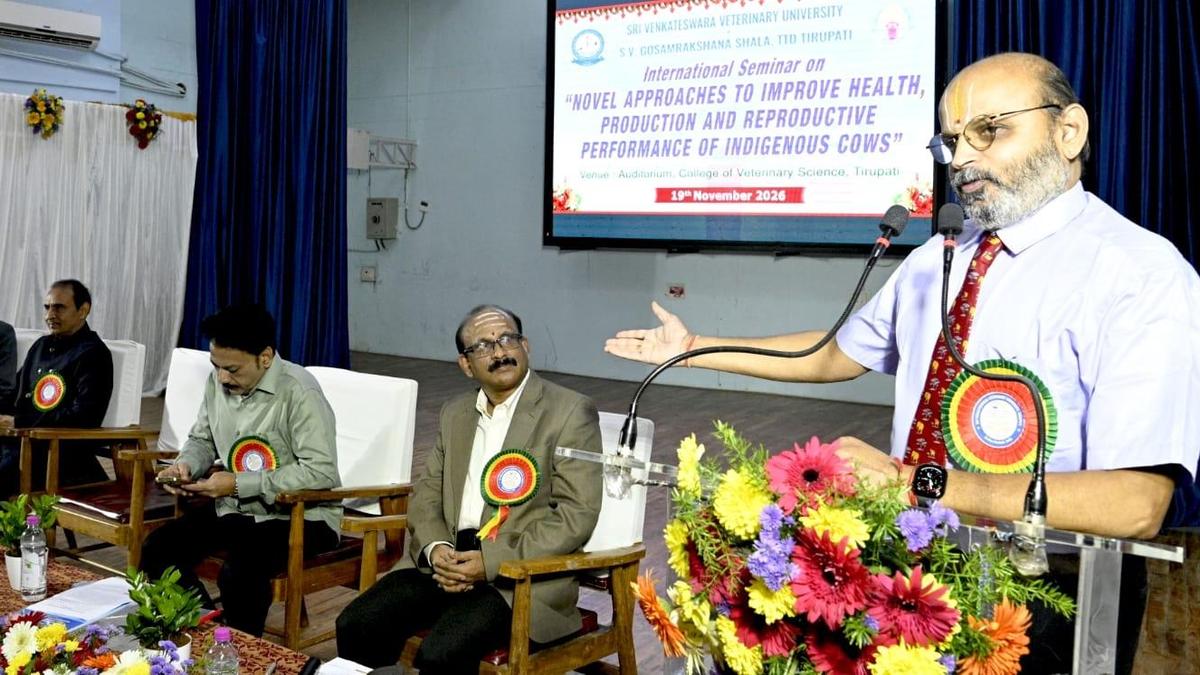
Experts at a recent SVVU seminar emphasized the urgent need to preserve India's 59 indigenous cattle breeds for their superior disease resistance and climate adaptability. The event, held in collaboration with TTD, highlighted the vital role of genetic research in enhancing the productivity and health of native livestock.
Preserving India’s Bovine Heritage: The SVVU Initiative
On November 19, 2026, Sri Venkateswara Veterinary University (SVVU) hosted an international seminar titled ‘Novel approaches to improve health, production and reproductive performance of indigenous cows.’ This event served as a critical platform for scientists and agricultural experts to discuss the long-term sustainability of India’s livestock sector, specifically focusing on the 59 recognized indigenous cattle breeds that form the backbone of rural agrarian economies.
The Strategic Value of Indigenous Breeds
SVVU Vice-Chancellor V. Vaikunta Rao emphasized that India’s indigenous cattle germplasm is a national asset. Unlike high-yield exotic breeds that often require intensive management and specific climatic controls, native breeds have evolved over millennia to withstand the rigors of the Indian climate. Their natural resilience to heat stress and endemic diseases makes them a more sustainable option for small-scale farmers, reducing dependency on expensive veterinary inputs and synthetic medications.
Scientific Collaboration and Conservation
Organized in collaboration with the Tirumala Tirupati Devasthanams (TTD), the seminar highlighted the synergy between traditional knowledge and modern scientific research. By integrating advanced reproductive technologies with traditional breeding practices, the university aims to address the decline in productivity often associated with native breeds. This collaborative approach is essential for scaling up genetic improvement programs without compromising the unique traits that define these breeds.
Addressing Climate Change through Biodiversity
As global temperatures rise, the adaptability of indigenous cattle becomes a matter of food security. The experts at the seminar underscored that these breeds possess genetic markers for heat tolerance that are increasingly relevant in a changing climate. By preserving this biodiversity, India is effectively safeguarding a genetic reservoir that could prove indispensable for future livestock development and cross-breeding programs aimed at climate resilience.
Future Outlook and Research Implications
The academic discourse at SVVU marks a shift toward science-led conservation. With 59 distinct breeds available for study, there is immense scope for genomic mapping and health optimization. The future of the Indian dairy industry likely rests on balancing the high output of commercial breeds with the hardiness of indigenous stock, ensuring that rural farmers have access to robust, low-maintenance livestock that can thrive in local conditions.
Conclusion
The consensus among the participants was clear: the preservation of native cattle is not merely a cultural or agricultural choice, but a scientific necessity. Through continued investment in research and collaborative initiatives like the SVVU-TTD seminar, India can leverage its rich bovine biodiversity to ensure a sustainable, productive, and resilient future for its livestock sector.
Verification Required?