Euclid telescope finds 31 ancient quasars, two shining like a trillion suns
Source Entity
TOI SCIENCE DESK
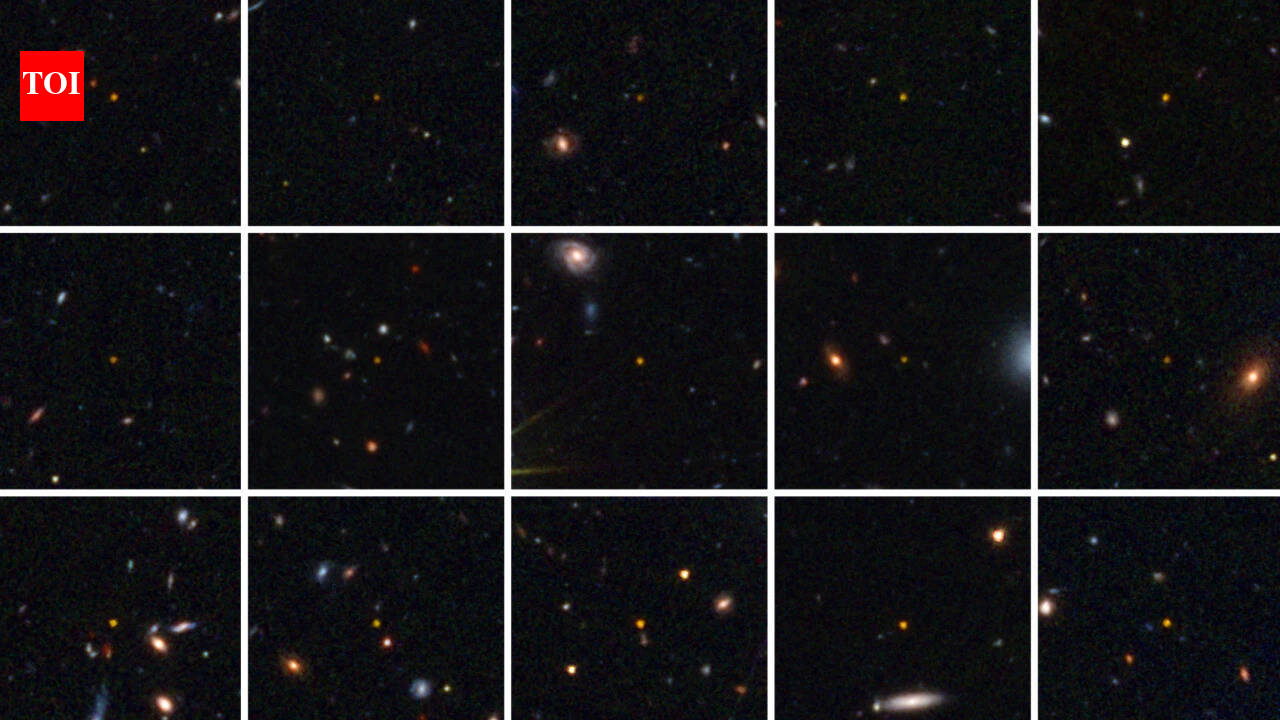
The Euclid space telescope has discovered 31 ancient quasars, including two record-breaking entities dating back to when the universe was 670 million years old. These findings provide critical data regarding the early evolution of the cosmos.
Unlocking Cosmic Origins: Euclid's Quasar Discovery
The recent discovery by the Euclid space telescope of 31 ancient quasars marks a significant milestone in observational astronomy. By identifying these luminous celestial objects, researchers are gaining a clearer window into the infancy of our universe. Quasars, which are powered by supermassive black holes at the centers of active galaxies, serve as vital markers for understanding how the structure of the cosmos began to coalesce shortly after the Big Bang.
Record-Breaking Antiquity
Among the 31 discovered quasars, two stand out as particularly remarkable due to their extreme age and distance. These two quasars emitted the light we are currently observing when the universe was a mere 670 million years old. Because this light has traveled for over 13 billion years to reach our sensors, it acts as a 'time machine,' allowing astronomers to study the physical conditions that existed during the epoch of reionization, a transformative period in cosmic history.
The Power of Cosmic Beacons
Each of these record-breaking quasars shines with the intensity of a trillion suns. This immense luminosity is generated by the gravitational energy of matter spiraling into a supermassive black hole. By studying such high-energy phenomena, scientists can better understand the growth rates of black holes in the early universe and how these gargantuan entities influenced the formation of their host galaxies. The sheer scale of their output provides a unique opportunity to map the distribution of matter in the ancient universe.
Advancing Astronomical Methodology
The successful detection of these distant objects demonstrates the precision and sensitivity of the Euclid telescope's instrumentation. Euclid was designed specifically to probe the dark universe, and its ability to distinguish these faint, ancient signals from the vast cosmic background validates its mission objectives. This discovery not only adds to our catalog of known quasars but also refines the techniques used to survey the deep, early universe, setting a new standard for future space-based missions.
Broader Implications for Cosmology
The study of these 31 quasars is poised to influence our understanding of galactic evolution. By analyzing the light from these distant sources, researchers can infer the composition of the interstellar medium and the presence of heavy elements in the early universe. This data is essential for testing current cosmological models, which seek to explain how a chaotic, cooling universe transitioned into the structured system of galaxies we observe today.
Future Trends in Deep-Space Observation
As Euclid continues its mission, the identification of these quasars suggests that we are likely to find many more hidden structures from the dawn of time. Future research will likely focus on comparing the properties of these early quasars to those found in later epochs to chart their growth over billions of years. This ongoing work will continue to challenge and refine our theories regarding the speed of black hole accretion and the fundamental forces that shaped the early cosmos.