
The Profitability Mirage
Does the ocean actually pay? Most analysts assume that simply planting seaweed or protecting mangroves creates a turnkey revenue stream for coastal nations. They are wrong. The actual cost of maintaining these biological sinks often outweighs the current market value of the credits they produce. In Europe, the dream of a kelp-driven economy is hitting a hard ceiling. A stochastic economic modeling study confirms that ecosystem service payments and green market incentives are simply not enough to make European sugar kelp farming profitable (Source: Bioengineer, 2026). The math fails. The capital required to scale these operations exceeds the trickle of income from current green incentives.
The disparity is stark. While the idea of carbon sequestration sounds lucrative in a boardroom, the physical reality of the North Atlantic is indifferent to financial models. Farmers face brutal weather and high operational overheads. When the credits don't cover the fuel and labor, the project dies. This isn't a temporary dip. It is a fundamental mismatch between the cost of biological production and the price the market is willing to pay for a tonne of sequestered carbon.
| Market Segment | Average Price (per tCO2e) | Price Range | Primary Vintage |
|---|---|---|---|
| Voluntary Carbon Market (VCM) | $4 - $6 | $0.25 - $27 | 2019-2021 |
Look at the Voluntary Carbon Market (VCM) data. The average asking price in 2024 hovered between $4 and $6 per tCO2e (Source: CarbonCredits.com, 2026). Some credits fetch $27, but those are outliers. Most are old vintages from 2019 to 2021. For a kelp farmer in Europe or a mangrove protector in Indonesia, $4 per tonne is a pittance. It does not cover the monitoring costs, let alone the restoration work. The market is saturated with cheap, low-quality credits that drag down the price for high-integrity blue carbon projects.
Price is only one part of the struggle; the rest is a matter of who actually controls the ledger.
The Inertia of Governance
In Fiji, the struggle is not just about money. It is about power. A qualitative empirical study involving 20 stratified interviews reveals a phenomenon termed blue carbon inertia (Source: Purushotham and Thompson, 2026). This is where top-down international pressure to meet Nationally Determined Contributions (NDCs) crashes into national hesitancy. The international community wants credits. The local governments are wary. This creates a stalemate where projects are announced with fanfare but never actually operationalized.
"Blue carbon inertia: top-down international inculcation of credits and NDCs meets national hesitancy, fickle donor funding, consultant dependence and siloed [governance]."— Purushotham and Thompson, Researchers in Fiji Case Study
This inertia is fueled by a dangerous reliance on outside help. Governments often depend on foreign consultants to design their carbon frameworks. These consultants use generic models that ignore local land rights and ecological nuances. The result is a brittle strategy. When the donor funding vanishes, the project collapses because there is no local institutional weight to hold it up. It is a cycle of dependency that prevents true ownership of oceanic assets.

Indonesia offers a different lesson. The blue carbon potential of mangrove ecosystems in North Sumatra is immense (Source: Lewerissa et al., 2024). However, the transition from ecological potential to tradeable credit is slow. Researchers in Pasar Rawa Village have had to develop case-derived proposals just to keep plant components and observation units distinct (Source: Lewerissa et al., 2024). They are fighting to create a measurement, reporting, and verification (MRV) protocol that actually works in the field. Without a field-validated protocol, the carbon remains an estimate, not a commodity.
While some nations struggle with the basics, others are engineering a high-end niche.
The Singapore Exception
Singapore is playing a different game. Since 2024, the city-state has allowed high-quality international credits to offset up to 5% of taxable emissions (Source: Varkkey et al., 2026). This is a surgical move. By limiting the offset percentage and demanding high-quality credits, Singapore is driving demand for the exact type of blue carbon projects that Fiji and Indonesia are struggling to verify. They are not looking for the $4 average; they want the $27 premium.
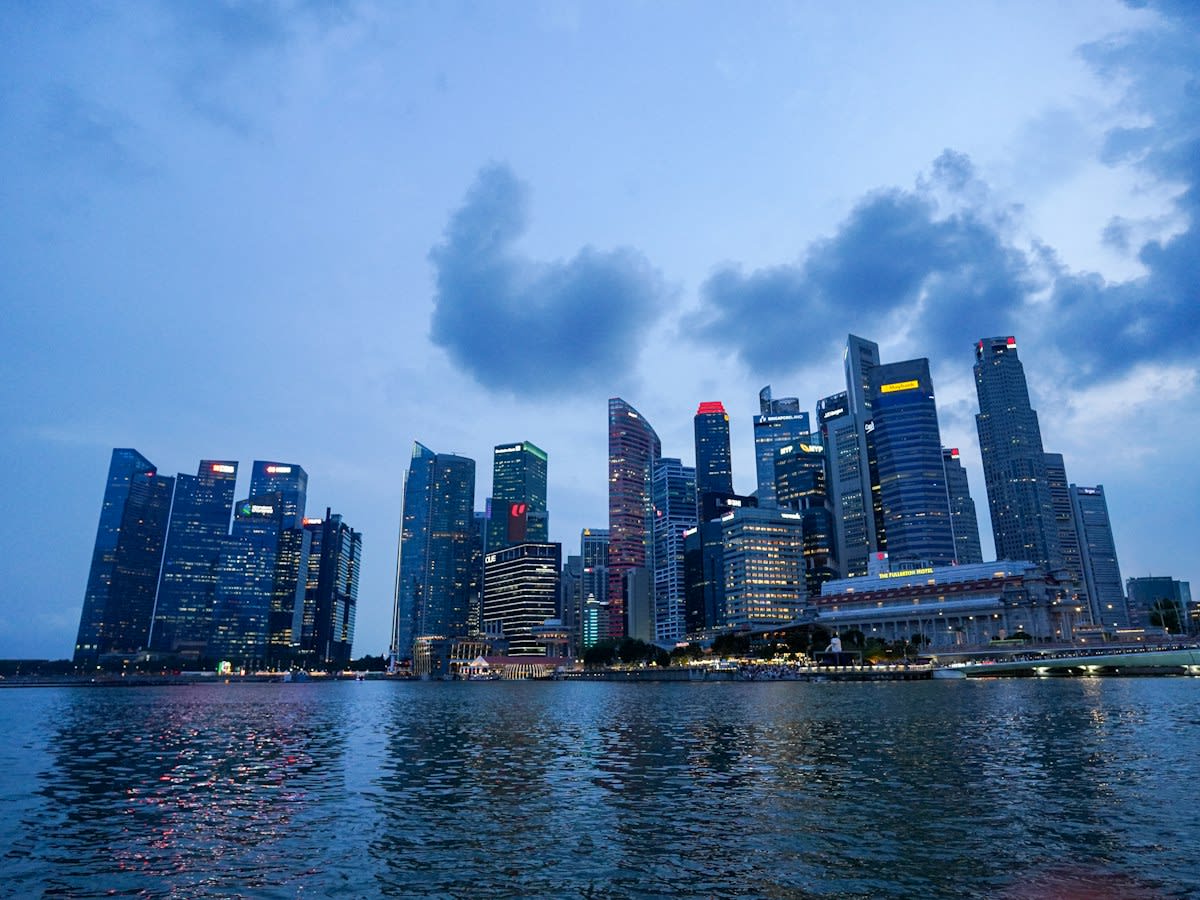
This create a two-tier terrain. On one side, you have the mass market of cheap, questionable credits. On the other, you have a boutique market for verified, high-impact blue carbon. The problem is that the infrastructure to move a project from the mass market to the boutique market is almost non-existent. Most projects lack the data density required to meet Singapore's standards. The gap between a mangrove in Sumatra and a taxable offset in Singapore is a chasm of data and trust.
Fact-Check & Accuracy Note
The primary academic debate centers on the operationalization of Article 6 of the Paris Agreement. While proposed standards linkage exists, no current study has fully evaluated its operationalization for blue carbon (Source: Purushotham and Thompson, 2026). This means the legal bridge for trading these credits across borders is still under construction.
From the perspective of a project developer, the grind is invisible to the public. The real battle is fought in the MRV protocols. There are endless disputes over baseline measurements. How do you prove that a mangrove forest wouldn't have sequestered that carbon anyway? The collision between biological variability and financial rigidity is where most projects fail. Developers spend more time arguing with auditors about soil samples than they do actually planting trees. It is a mechanical failure of the system: we are trying to apply accounting precision to a living, breathing ocean.
The industry is currently in a state of waiting. We are waiting for the VCM to purge its low-quality vintages. We are waiting for national governments to stop fearing the loss of sovereignty over their coastlines. Until then, the blue carbon credit remains a speculative asset rather than a reliable financial tool. The staying power of these projects depends on moving beyond consultant-led models toward community-owned data.
Editorial Note
This report avoids alarmist narratives regarding oceanic collapse. Instead, it focuses on the economic viability of carbon markets. The focus is on the delta between predicted profitability and observed market prices in 2024-2026.