
Waste kills corporate margins. 64 percent of daily AI users report superior productivity compared to non-users (Source: Slack, 2026). Most firms mistake lean efficiency for value, ignoring the fragility of stripped-down operations. This clinical obsession with minimalism creates a vulnerability where a single disruption erases years of marginal gains. Corporate leadership in Mumbai often ignores these invisible risks until the supply chain snaps.
The Fallacy of Lean Value
Lean manufacturing targets the removal of non-value-adding activities to meet customer requirements. Value is strictly defined by the customer perspective, meaning anything else is viewed as waste (Source: OAEPublish, 2026). However, the pursuit of zero waste often leads to zero resilience. When budget slack is minimized—such as the 320 CU threshold mentioned in portfolio selection—the system loses its ability to absorb shocks (Source: OAEPublish, 2026). This harsh reality proves that extreme lean is a liability.
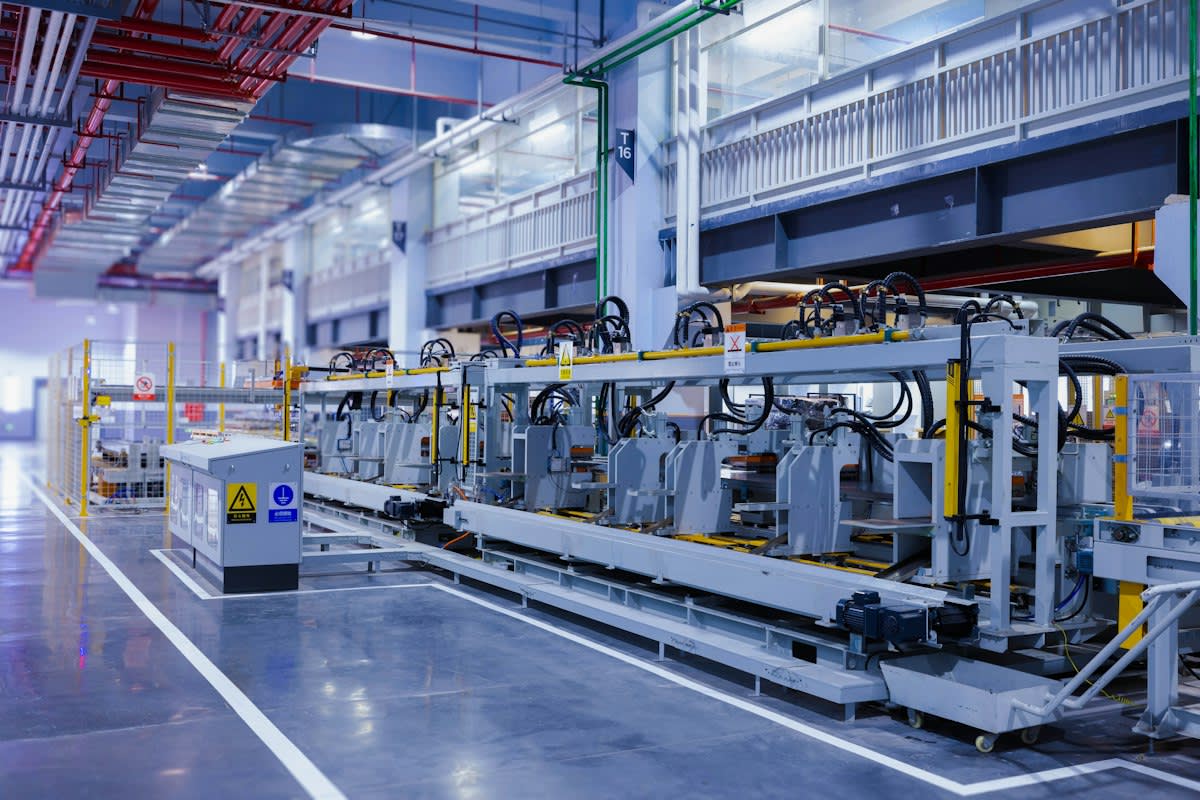
The transition toward redundancy requires a change in how value is measured. Instead of looking at immediate costs, firms must look at avoided losses (Source: EY, 2026). This means valuing the waste of an idle backup plant as a hedge against volatility. When the cost of a disruption exceeds the cost of the redundancy, the redundant model wins. Those who fail to see this are optimizing for a world that no longer exists.
Energy Security and the End of Just-in-Time
Energy sectors are now abandoning the just-in-time model. Petrovietnam is actively boosting backup capacity to respond to unforeseen circumstances (Source: Petrovietnam, 2026). This is a calculated move away from the lean ideal toward strategic redundancy. The goal is to ensure that energy supply remains constant even when primary routes fail. This move recognizes that the cost of outage is far higher than the cost of storage.
"The demand to cover the inventory shortfall, estimated at least 2 billion barrels, will continue to absorb supply over the next 18-24 months."— Amin H. Nasser, CEO of Aramco
Route diversification is no longer a luxury but a survival mechanism. EY suggests that avoiding losses and ensuring market access are the primary metrics for success (Source: EY, 2026). For example, a 3% toll on the Hormuz strait would add approximately $1.80 per barrel if crude prices are $60 (Source: EY, 2026). This cost makes alternative corridors economically viable despite their initial inefficiency. The waste of a longer route is a small price for guaranteed delivery.
- Multinational strategic reserve mechanisms to share costs (Source: Petrovietnam, 2026)
- Bilateral storage agreements to ensure backup access (Source: Petrovietnam, 2026)
- Maintaining spare refining capacity to prevent total collapse (Source: Petrovietnam, 2026)
- Route diversification to avoid single-point failures like the Hormuz strait (Source: EY, 2026)
Strategic reserves are becoming a global priority. Petrovietnam is discussing multinational strategic reserve mechanisms and bilateral storage agreements (Source: Petrovietnam, 2026). These measures share reserve costs and maintain spare refining capacity to avoid the waste of total energy collapse. This is a direct rejection of the just-in-time philosophy. The objective is to build a buffer that can withstand months of instability.
Hardware Hardening: The Nvidia Model
Hardware giants are scaling redundancy aggressively. Nvidia and its partners are expanding global manufacturing capacity to harden the supply chain (Source: TipRanks, 2026). Substrate agreements with IBIDEN, Samsung Electro-Mechanics, and Unimicron will result in a 2.5x capacity increase over three years (Source: TipRanks, 2026). This investment prevents the waste of market opportunity during demand spikes.
| Strategy | Primary Metric | Objective | Inherent Risk |
|---|---|---|---|
| Lean Manufacturing | 320 CU Budget Slack | Minimize Non-Value Activities | Fragility |
| Strategic Redundancy | 2.5x Capacity Increase | Supply Chain Resilience | Over-investment |
| AI Integration | 50% Time Saving | Information Retrieval | Tool Dependency |
Amkor is planning to increase advanced packaging capacity by over 300% by 2028 (Source: TipRanks, 2026). Furthermore, KYEC is building US facilities supported by a $1.1 billion capacity reservation advance (Source: TipRanks, 2026). These moves prioritize availability over the lean dream of zero inventory. The goal is to ensure that production never stops, regardless of the cost of the buffer. This is the new operational standard for high-stakes technology.
Planned Capacity Increases (2026-2028)
Executive Insight
+18.4%
YTD Growth
I have sat in rooms where CFOs argue over 2% efficiency gains while ignoring the risk of total system failure. The friction exists between the lean purists who see redundancy as waste and the risk managers who see it as insurance. In reality, the waste of a backup facility is cheaper than the total loss of a production line. This tension defines the current struggle in global logistics. Most executives only realize this after the first failure occurs.
AI as a Waste Reduction Engine
AI integration serves as another layer of waste reduction by targeting administrative friction. Nico Cormier, CTO at reMarkable, reports saving 50 percent of his time by using enterprise search (Source: Slack, 2026). This removes the waste of human-led information retrieval. When AI searches across files and apps, it eliminates the need to piece together answers from multiple tools (Source: Slack, 2026).
"With Slack’s enterprise search, I save 50 percent of my time by easily accessing information, which has been incredible."— Nico Cormier, CTO at reMarkable
The 64 percent productivity boost reported by AI users suggests that tools can handle the waste of coordination (Source: Slack, 2026). By automating the search for context, teams can focus on high-value output rather than administrative friction. This allows a firm to remain lean in its human capital while being redundant in its digital access. It is the only way to scale without adding linear overhead.

Failure Points and Structural Risks
The primary failure point in this transition is over-correction. Firms that move from just-in-time to just-in-case without a specific strategy risk bloating their balance sheets with useless inventory. Redundancy must be strategic, not random. The waste of too much inventory can be as damaging as the waste of too little, leading to capital stagnation.
Another risk is tool dependency. While AI saves 50 percent of time, it creates a reliance on the underlying platform (Source: Slack, 2026). If the AI layer fails, the human ability to retrieve information manually has often withered. This is a new form of value waste: the loss of institutional knowledge in exchange for algorithmic speed.
Ultimately, value waste occurs when a company optimizes for the wrong metric. Optimizing for cost in a world of volatility is the ultimate waste. The companies that survive will be those that embrace strategic slack and redundancy as essential assets. The goal is not zero waste, but optimal resilience.
Fact-Check Note
This report is based on 2026 data from Slack, EY, TipRanks, Petrovietnam, and OAEPublish. All capacity percentages and financial tolls are cited directly from these sources.
Editorial Note
The transition from lean to redundant models is not a trend but a survival response to geopolitical and supply chain instability.