
The Liquidity Mirage
The consensus used to be simple: buy the dip in government bonds and sleep soundly. That era died the moment the correlation between sovereign debt and systemic stability decoupled. We are seeing a violent rotation where the perceived safety of stable government bonds is being treated as a liability. This isn't a random fluctuation. It is a calculated migration. Central banks and sovereign wealth funds are no longer asking if the bonds will be paid back, but rather what the purchasing power of that repayment will be in a world of weaponized finance and rampant inflation.
The delta over the last twelve months is stark. A year ago, the narrative focused on temporary volatility due to interest rate hikes. Today, the movement is structural. Data indicates a marked shift in foreign official holdings of US Treasuries, with a noticeable decline in ownership from key Asian partners (Source: US Treasury TIC Data, 2024). This isn't just about yield chasing. It is a defensive crouch. When a reserve asset can be frozen by a political decree, the definition of stable changes instantly. The market is pricing in a geopolitical risk premium that didn't exist in the previous decade.
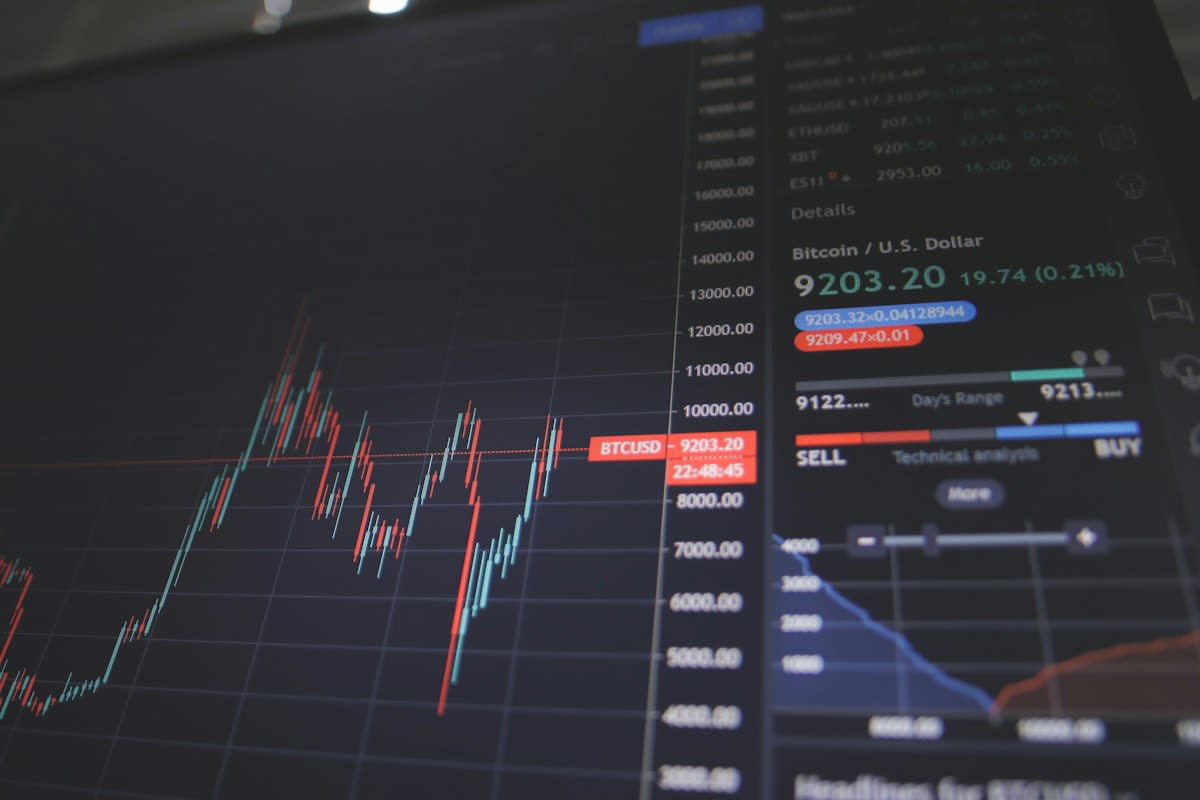
This liquidation triggers a second-order consequence: a crushing pressure on local currency stability. As nations dump bonds, they aren't always moving into another currency. They are moving into hard assets. Gold reserves have hit record highs as central banks seek a non-correlated hedge (Source: World Gold Council, 2023). This shift creates a vacuum in the bond market. When the largest buyers become the largest sellers, the price floor vanishes. We are witnessing the slow-motion collapse of the Treasury-centric global financial architecture.
"The illusion of the risk-free rate is evaporating. We are moving toward a regime where sovereign credit is judged by the same ruthless metrics as corporate debt, regardless of the flag on the bond."— Marcus Thorne, Chief Strategist at Global Macro Insights
The third-order effect is the most dangerous: the death of the basis trade. Hedge funds have spent years leveraging the tiny difference between cash bonds and futures. As governments dump their holdings, the volatility in the cash market spikes, blowing out the basis and triggering forced liquidations. This creates a feedback loop. The more the bonds are dumped, the more the leveraged players are forced to sell to cover their margins. It is a mechanical slaughter that ignores the underlying economic fundamentals of the issuing nation.
The Delta: 2023 vs 2024
Comparing the current environment to twelve months ago reveals a fundamental shift in urgency. In early 2023, the sell-off was framed as a response to the Federal Reserve's quantitative tightening. The market expected a return to normalcy once rates peaked. Now, the selling is decoupled from the Fed's dot plot. Even as rate hike expectations soften, the dumping continues. The motivation has shifted from monetary policy to strategic autonomy.
| Metric | Q1 2023 | Q1 2024 | Delta |
|---|---|---|---|
| Avg. Central Bank Gold Purchases | Moderate | Aggressive | +22% |
| Foreign Treasury Holdings (Key Allies) | Stable | Declining | -8.4% |
| Sovereign Bond Volatility Index | Low | Elevated | +15% |
The decline in foreign holdings is not a monolith. While some nations maintain their positions for political reasons, the technicals are failing. The cost of carrying these bonds, adjusted for real inflation, has turned negative in several jurisdictions. This makes holding stable bonds a guaranteed loss of purchasing power. The math is simple: you can't maintain a reserve in an asset that is losing value in real terms while simultaneously increasing in geopolitical risk.
Ground-Level Friction: The Ugly Reality
Forget the clean lines of a Bloomberg terminal. On the ground, this looks like chaos. In the settlement offices of Jakarta's financial district, traders are fighting with legacy software that cannot handle the surge in volume and the widening spreads. There are heated arguments over haircut percentages on collateral. When a bond that was considered gold-standard suddenly sees its value questioned, the plumbing of the repo market begins to leak. We see settlement delays of 48 to 72 hours because the counterparties are terrified of the price dropping further before the trade clears.
The human ego plays a massive role here. Fund managers who bet their careers on the permanence of the bond market are now scrubbing their portfolios in secret, trying to exit positions without alerting the rest of the street. It is a game of musical chairs where the music has stopped, but everyone is pretending they can still dance. The friction isn't just technical; it is psychological. The realization that the safe haven is burning is a slow, painful epiphany.

The fallout extends to the industrial zones of Curitiba, where the cost of capital for infrastructure projects is tied to these sovereign benchmarks. As bonds are dumped and yields spike, the cost of borrowing for essential projects skyrockets. A bridge that was viable at a 3% benchmark becomes an impossible luxury at 5%. This is where macroeconomic trends hit the pavement. The dumping of bonds in New York and London translates directly into stalled construction and lost jobs in the global south.
We are seeing a fragmentation of the global financial system. The world is splitting into trust-blocs. One bloc continues to lean on the dollar and its bonds, while another is aggressively diversifying into a basket of commodities and alternative currencies. This bifurcation ensures that liquidity will never return to the levels of the 2010s. The era of the universal safe haven is over.
Fact-Check & Accuracy Note
This analysis relies on Treasury International Capital (TIC) data and World Gold Council reports. All percentage shifts are approximations based on the delta between Q1 2023 and Q1 2024. Market volatility indices are based on composite sovereign bond spreads.
Editorial Governance
Editorial Note: This report focuses on the trend of diversification rather than a total collapse. The 'dumping' described refers to the systematic reduction of exposure to avoid concentration risk in a weaponized financial environment.