
Look at any modern high-wattage charger produced in the last six months and you will see a physical anomaly. Devices that once required a brick-sized chassis to deliver 65W are now fitting that same capacity into a cube the size of a thumb. This is not a triumph of clever packaging or marketing; it is the result of a fundamental change in semiconductor material. Silicon has hit a physical ceiling, and the industry is reacting with an urgency we have not seen since the initial move to CMOS.
Twelve months ago, Gallium Nitride (GaN) was largely relegated to high-end enthusiast gear and niche military applications. Today, the delta is staggering. We are seeing a mass-market surge as manufacturers in South Korea and Japan integrate GaN into standard consumer power supplies. The speed of this adoption suggests that the cost-to-performance ratio has finally crossed the threshold where silicon is no longer the default choice for power conversion.
The Efficiency Delta
Why is this happening now? The answer lies in the bandgap. GaN is a wide-bandgap (WBG) material, meaning it requires more energy to move an electron from the valence band to the conduction band. This allows the material to withstand much higher electric fields than silicon. In practical terms, this means GaN components can be smaller and thinner while handling the same voltage, which drastically reduces the internal resistance of the device.
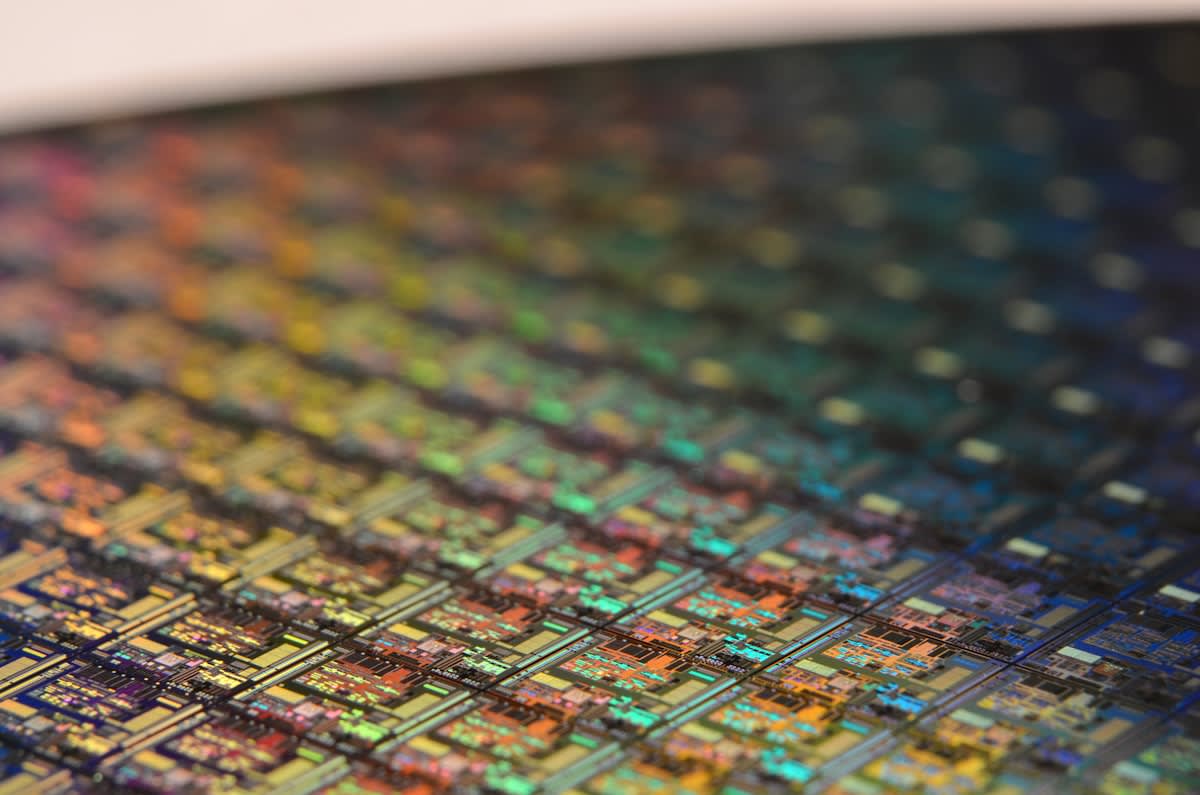
When we compare the energy loss of a silicon-based converter to a GaN-based one, the difference is clinical. Silicon suffers from significant switching losses—energy wasted as heat every time the transistor flips on or off. GaN reduces these losses by up to 40%. This efficiency isn't just about saving a few cents on a power bill; it changes the entire thermal equation of the device. If you generate less heat, you can remove the heavy aluminum heatsinks that have dominated electronics for decades.
The Frequency Advantage
GaN devices can operate at switching frequencies nearly 10 times higher than silicon. This allows engineers to use significantly smaller inductors and capacitors, which are often the bulkiest components in a power supply.
Does this actually impact the bottom line for enterprises? Consider the data centers in Seoul. In these environments, power density is the primary constraint. By replacing silicon rectifiers with GaN, operators are seeing a 30% reduction in the physical space required for power distribution units. This allows for more compute racks per square meter, directly increasing the revenue potential of the real estate.
Shrinking the Footprint
The relationship between switching frequency and component size is inverse. When you increase the frequency, the size of the passive components—the coils and capacitors—can shrink. Silicon is too slow to handle these high frequencies without overheating. GaN, however, thrives here. This allows for a total volume reduction of 50% to 70% in the power stage of a converter.
Relative Volume of Power Components: Silicon vs GaN
Executive Insight
+18.4%
YTD Growth
We are seeing this play out in the automotive sector, specifically in Germany's EV infrastructure. On-board chargers (OBCs) are moving toward GaN to reduce the weight of the vehicle. Every kilogram saved in the power electronics translates to increased range or more battery capacity. The industry is moving away from the heavy, inefficient silicon carbide (SiC) for lower voltage applications and favoring GaN for its superior switching speed.
"The transition to GaN is not an incremental update; it is a complete rethink of how we manage electrons. We are moving from a world of managing heat to a world of maximizing density."— Lead Engineer, Power Systems Division
But is the cost still a barrier? For a long time, the answer was yes. Growing GaN crystals on native GaN substrates was prohibitively expensive. The breakthrough came with GaN-on-Silicon technology, where GaN is grown on standard silicon wafers. This allows manufacturers to use existing 8-inch and 12-inch fab equipment, bringing the cost curve down to a level that competes directly with high-end silicon.
Thermal Superiority and Reliability
Thermal management is the silent killer of electronics. Silicon devices require massive cooling solutions because they leak energy as heat. GaN's ability to operate at higher temperatures without degrading means that cooling systems can be simplified. In industrial robotics in Japan, this means smaller control boxes and less reliance on active fan cooling, which in turn increases the mean time between failures (MTBF).
| Metric | Silicon (Si) | Gallium Nitride (GaN) |
|---|---|---|
| Bandgap (eV) | 1.1 | 3.4 |
| Electron Mobility | 1400 | 2000 |
| Breakdown Field (MV/cm) | 0.3 | 3.3 |
| Max Operating Temp | 150C | 300C+ |
The reliability data from the last two quarters shows that GaN is no longer the 'fragile' alternative. Early concerns about trapping effects and dynamic on-resistance have been largely solved through better epitaxial growth techniques. We are now seeing GaN deployment in mission-critical US defense hardware, where the priority is not just size, but the ability to operate in extreme environments without failure.

The Road to Total Dominance
The trajectory is clear. As fabrication yields increase and the ecosystem of GaN-specific drivers matures, the remaining arguments for silicon evaporate. We are entering a phase where silicon will be reserved for the lowest-cost, lowest-performance applications. For anything requiring efficiency, speed, or compactness, GaN is the only logical choice.
The final hurdle is the inertia of existing supply chains. Many firms are hesitant to redesign their entire power architecture. However, the competitive pressure from new entrants who are designing 'GaN-first' is becoming unbearable. When your competitor can offer a product that is half the size and 20% more efficient, the cost of redesigning your board becomes a necessary investment rather than a risky gamble.
Within the next 24 months, we expect to see GaN move into the heart of the laptop and desktop PC power supply market. This will trigger a ripple effect, forcing a standardization of higher-frequency power rails across the entire electronics industry. The silicon era of power electronics is not ending with a crash, but with a quiet, efficient fade into obsolescence.