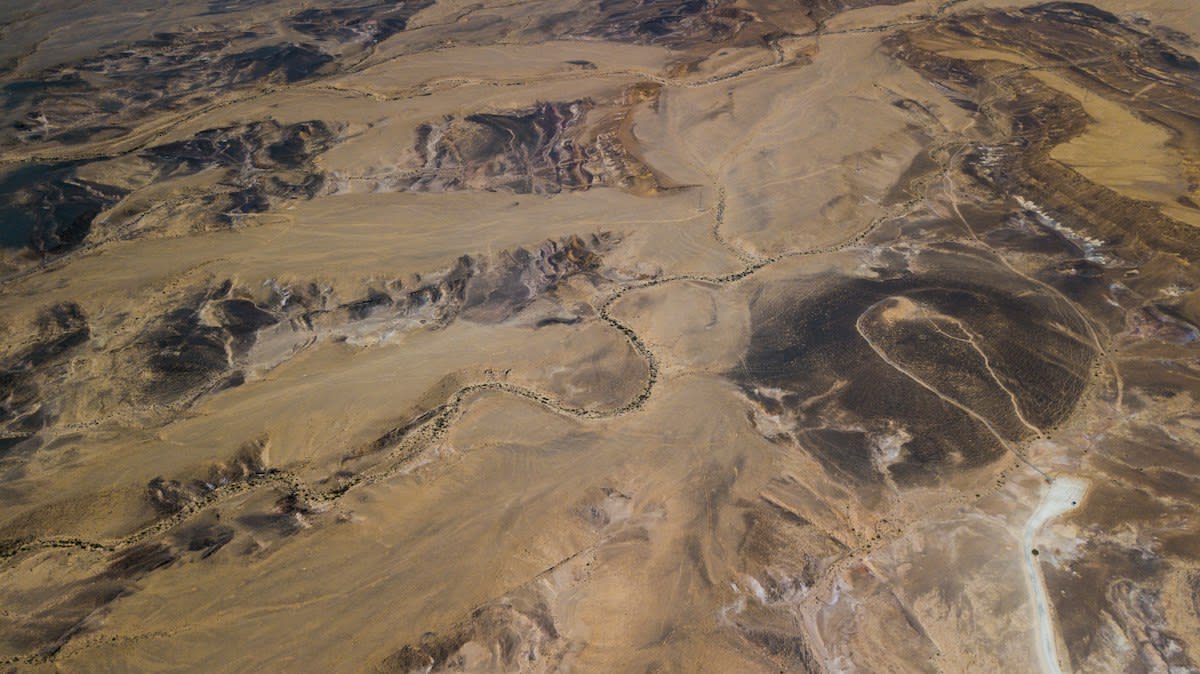
Your reservoir is leaking. While engineers obsess over concrete dams and surface liners, millions of cubic meters of treated water vanish into the atmosphere every year through evaporation in arid zones. The earth is a better vault. Why do we continue to trust open-air ponds when the geological terrain offers a secure, evaporation-free storage medium? This reliance on surface storage is a mechanical failure of imagination. (Source: World Bank, 2022).
Prerequisites for Groundwater Banking
Start with the data. You cannot bank water if you do not understand the transmissivity and storativity of the aquifer, which requires a dense network of monitoring wells to map the subterranean flow. Accuracy is non-negotiable here. Without a precise hydrogeological model, you risk pushing water into a confined zone where it cannot be extracted during a drought. You need a clear map. (Source: USGS, 2021).
- High-resolution lithological logs to identify permeable layers.
- Legal water rights that allow for the 'storage' and 'recovery' of water.
- Water quality data to prevent the contamination of existing aquifers.
- A defined 'banking zone' with established boundaries for credit accounting.
The Banking Process: Step-by-Step Execution
- Identify the source water: Secure surplus surface water from wet seasons or treated wastewater that meets strict infiltration standards to avoid clogging the soil pores.
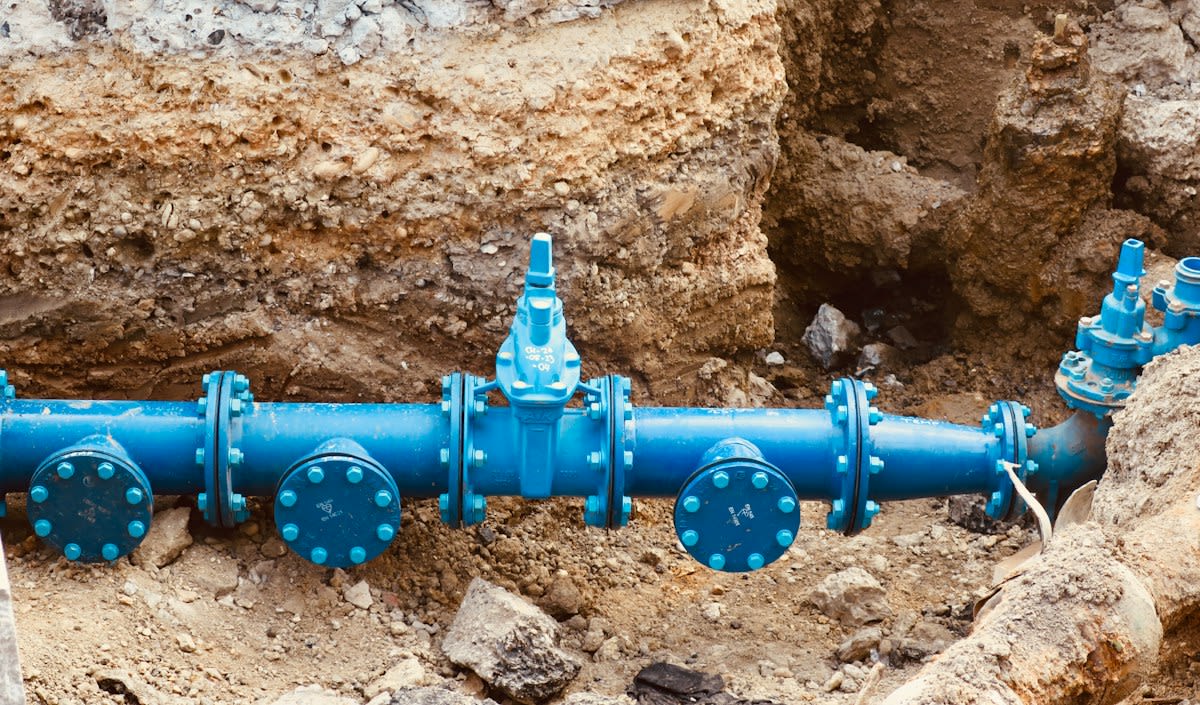
- Select the recharge method: Choose between spreading basins for shallow aquifers or direct injection wells for deeper, confined layers depending on the soil's vertical permeability.
- Conduct a pilot infiltration test: Push a controlled volume of water into the ground to measure the actual recharge rate versus the theoretical model's predictions.
- Establish the credit ledger: Document every cubic meter of water injected so that the user can legally claim a proportional amount during the recovery phase.
- Monitor the plume: Use pressure transducers and conductivity sensors to track the movement of the stored water and ensure it does not migrate off-site.
Water is money. When you push excess surface runoff into an aquifer during a wet year, you are essentially depositing capital into a subterranean vault that avoids the evaporation losses common to surface reservoirs. It is a financial hedge. In the Murray-Darling Basin of Australia, these practices have shifted how agriculturalists view their water security (Source: Australian Department of Agriculture, 2020).
"The transition from surface storage to groundwater banking is not just a technical change; it is a shift in how we value the invisible assets beneath our feet."— Dr. Elena Rossi, Senior Hydrologist at IGRAC
The flow must be managed. If you inject water too quickly, you create a pressure bulb that can trigger micro-seismic events or force existing saline water into fresh zones. Precision is the only way. This requires a constant feedback loop between the injection pumps and the monitoring wells to keep the pressure within safe limits. (Source: Groundwater Management Act, 2019).
Global Applications and Economic Weight
Look to India. In Maharashtra, community-led recharge structures have turned depleted villages into water-surplus zones by capturing monsoon runoff in small-scale percolation tanks. This is grassroots banking. By saturating the upper soil layers, these communities have raised the water table by an average of 2 to 5 meters in selected districts (Source: Central Ground Water Board, 2021). Local ownership drives success.
| Region | Method | Primary Goal | Efficiency Rate |
|---|---|---|---|
| California, USA | Spreading Basins | SGMA Compliance | 85-95% |
| Perth, Australia | Direct Injection | Urban Supply | 90-98% |
| Maharashtra, India | Percolation Tanks | Rural Agriculture | 60-75% |
Cost is a factor. The energy required to pump water into a deep aquifer can be significant, but it is often lower than the cost of transporting water over long distances via pipelines. The trade-off is clear. When you compare the energy cost of injection to the loss of 30% of surface water to evaporation, the subterranean option wins. (Source: World Bank, 2022).
The Practitioner's Friction: Hidden Disputes
The real fight is hidden. I have sat in boardrooms where hydrologists and lawyers screamed over the definition of a credit because the physical water moves and does not stay in one neat pile. This friction creates a legal web. You cannot simply 'own' a cubic meter of water in an aquifer because the moment you inject it, it mixes with the existing groundwater. This is where the theory of banking hits the wall of physical reality.
Trust is the currency. When a neighboring farm sees you injecting water, they often fear you are stealing their future access or contaminating their well. Communication must be aggressive. Without a transparent monitoring system that everyone can access, the project will fail due to social friction rather than technical failure. (Source: USGS, 2021).
Common Pitfalls and Mechanical Failures
Clogging is the enemy. Fine silts and biological films build up on the bottom of infiltration basins, turning a high-permeability zone into an impermeable seal within months. Scouring is the cure. You must implement a strict drying-and-scraping cycle to remove the 'schmutzdecke' layer and restore the flow. Failure to do this kills the project. (Source: World Bank, 2022).
Chemistry can betray you. Injecting oxygen-rich surface water into a reducing aquifer can trigger the release of naturally occurring arsenic or fluoride from the rock into the water. This is a geochemical trap. You must run a detailed compatibility analysis before the first drop is injected to ensure you are not poisoning your own bank. (Source: USGS, 2021).
Fact-Check & Accuracy Note
The primary academic debate centers on 'recovery efficiency'—the percentage of injected water that can actually be retrieved. While some claim 90% efficiency, others argue that a significant portion is lost to regional flow or trapped in dead-end pores, meaning the 'bank' may not pay out in full.
Stability is the goal. By utilizing these subterranean vaults, we move from a state of seasonal panic to a state of strategic reserve. It is a hard turn. The future of water economics depends on our ability to treat the ground not as a mine, but as a savings account. This is the only way to ensure staying power in a volatile climate. (Source: Australian Department of Agriculture, 2020).