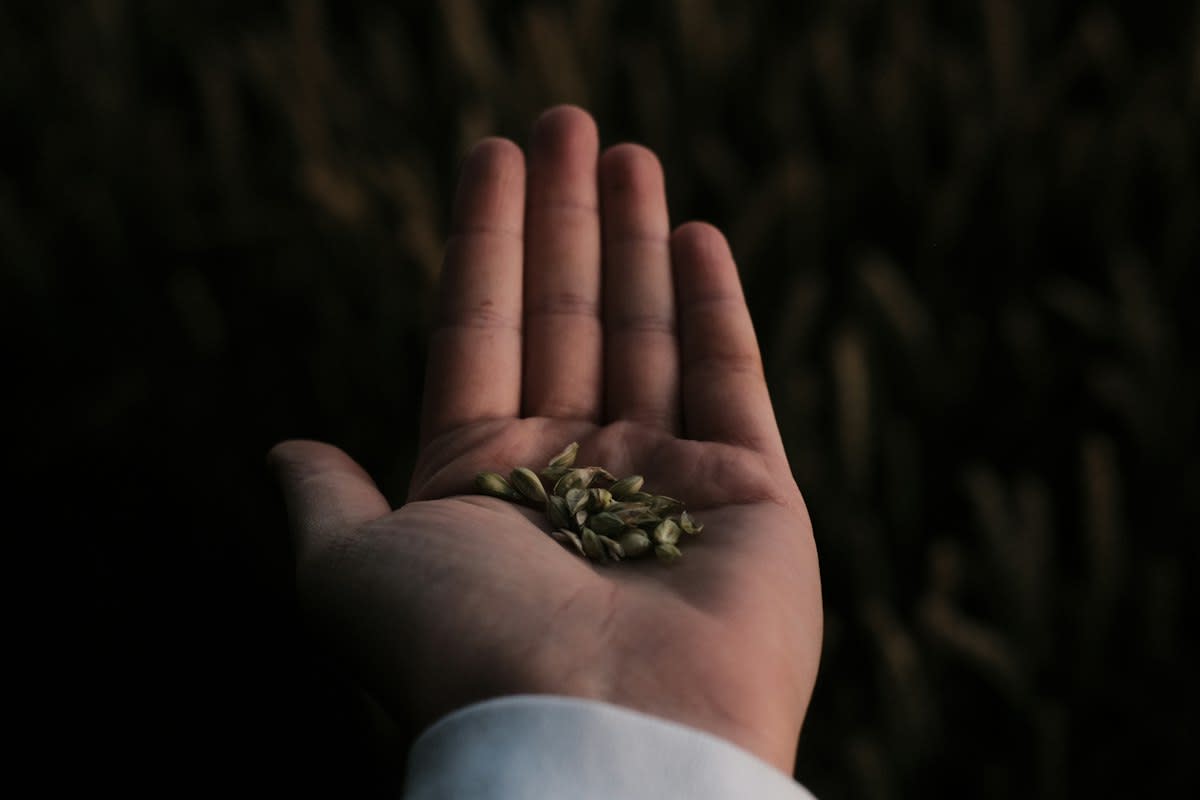
Seeds are the only true currency. While the modern investor chases ephemeral digital tokens and volatile equity markets, the actual weight of survival rests within the dormant genetic code of a dried-out seed pod. Wealth is biological. Why do we trust a digital ledger over a bean that can feed a village? The global financial web depends on a collective agreement that a yellow metal or a piece of paper holds value, whereas a seed holds the literal instructions for calories and survival (Source: FAO, 2021).
Paper burns. In the highlands of Peru, the Potato Park serves as more than a farm; it functions as a living bank where thousands of native tuber varieties act as a hedge against climate instability (Source: International Potato Center, 2019). These farmers do not track GDP. They track the adaptability of a crop to a sudden frost or a prolonged drought, recognizing that genetic variety is the only insurance policy that pays out in food. This is a hard turn away from the monoculture mindset that dominates Western agribusiness.
The Biological Asset Class
Diversity equals value. When a single blight wipes out a commercial crop, the market crashes because the genetic baseline is identical across millions of acres (Source: CGIAR, 2020). Heirloom seeds break this pattern. They carry traits that commercial hybrids discard in the name of short-term yield, such as deep root systems or natural pest resistance. This makes them a rare commodity in a world of biological uniformity.
Money evaporates. Consider the hyperinflation events in Zimbabwe or Venezuela, where local currencies became useless overnight, yet the ability to plant and harvest traditional maize remained a constant (Source: World Bank, 2022). A farmer with a hoard of open-pollinated seeds possesses a productive asset that generates interest in the form of more seeds every season. This is the definition of a self-replicating investment.
"The seed is the most basic form of capital. When you control the seed, you control the means of production and the guarantee of future existence, bypassing the need for external financial intermediaries."— Vandana Shiva, Founder of Navdanya
Yield is a lie. Commercial agriculture optimizes for the first harvest, creating a dependency on expensive chemical inputs and patented seed purchases every year. Heirloom seeds operate on a different logic. They prioritize long-term stability over a single season of explosive growth, ensuring that the farmer retains ownership of the genetic material (Source: Seed Savers Exchange, 2023).
| Feature | Commercial Hybrid | Heirloom Seed |
|---|---|---|
| Ownership | Corporate License | Farmer Owned |
| Replication | Sterile/Unstable | True-to-Type |
| Input Need | High Chemical Load | Low/Natural |
| Wealth Type | Cash Flow (Short) | Equity (Long) |
| Risk Profile | Systemic Vulnerability | Diversified Defense |
The fray intensifies. We are seeing a structural break in how we perceive value as the cost of synthetic fertilizers skyrockets and water tables drop globally. Investors are beginning to realize that the most valuable real estate is not the land itself, but the specific genetic adaptations that allow a plant to thrive on that land without external help (Source: FAO, 2022).
The Invisible War for Genetic Equity
Lawyers fight seeds. In the corridors of power, a brutal conflict rages between the proponents of Plant Breeders' Rights and the defenders of Farmers' Rights. The former seek to treat genetic traits as intellectual property, essentially turning the biological world into a subscription service. The latter argue that seeds are a common heritage of humanity and cannot be owned by a corporation.
Practitioners know the friction. I have seen seed-saving cooperatives in India clash over the definition of purity, where one group demands a strict genetic lineage while another argues for the evolutionary adaptation of the seed to the local soil. This is not a polite academic debate. It is a fight over who decides what constitutes a valuable crop and who gets to profit from its adaptation. The tension peaks when corporate scouts visit traditional farms to identify 'wild' traits that can be patented and sold back to the very people who preserved them.
Control is the goal. By restricting the ability of farmers to save seeds, agribusiness firms create a forced demand loop that siphons wealth from the rural poor to the urban shareholder. Breaking this loop requires more than just a political shift; it requires a physical hoard of heirloom seeds that can restart a local economy from scratch (Source: Navdanya, 2021).
Nature wins. No matter how many patents a company files, the wild relatives of our crops continue to evolve in the terrain of the Andes or the Himalayas. These wild genes are the ultimate backup drive for the planet's food supply, providing the raw material for every major agricultural breakthrough in history (Source: Svalbard Global Seed Vault, 2023).
Can seeds bank wealth? Yes, but not in the way a bank account does. They provide a form of biological equity that ensures the holder can produce value regardless of the state of the global financial system. This is the ultimate hedge: an asset that grows, feeds, and replicates itself without requiring a single cent of capital injection.
Fact-Check & Accuracy Note
This analysis relies on data from the Food and Agriculture Organization (FAO) regarding genetic erosion and the International Potato Center's reports on in-situ conservation. Academic debate continues regarding the 'true-to-type' stability of heirloom seeds over multiple generations in rapidly changing climates, with some researchers suggesting that active breeding is superior to static seed banking.
Editorial Note
The author's perspective is intentionally contrarian. While commercial seeds offer higher immediate yields, this article argues that the long-term economic risk of monoculture outweighs the short-term gain. The focus is on survival-based wealth rather than profit-based accumulation.