
The Death of the Stop-and-Go Economy
Batch production is a pause. It is a breath held. For over a century, the dominant logic of industrial manufacturing has been the 'lot'—a discrete quantity of material processed through a series of stages, where each stage must be completed and validated before the next begins. This creates a rhythmic but stuttering flow. You mix, you wait, you test, you move, and you clean. In the pharmaceutical and chemical sectors, this legacy system has been the gold standard, but it carries a hidden tax of inefficiency that the modern global economy can no longer afford to pay.
Enter continuous manufacturing. Imagine a river instead of a series of buckets. Raw materials enter one end of a seamless system and finished products emerge from the other in a constant, uninterrupted stream. There is no 'waiting for the batch to finish.' There is no massive downtime for cleaning between lots. By integrating the entire production sequence into a single, automated flow, companies are effectively erasing the temporal gaps that have defined industrial throughput for decades. Why cling to a system that requires a hard stop every few hours?
The Conceptual Shift
The core difference is temporal. Batch production measures success by the quality of the lot; continuous manufacturing measures success by the stability of the flow.
The Delta: Why the Shift is Accelerating Now
Twelve months ago, continuous manufacturing was often discussed as a futuristic goal or a niche application for high-value specialty chemicals. Today, it has shifted from a 'competitive advantage' to a 'survival requirement.' The delta is driven by a brutal realization: the global supply chain is too fragile to support the rigid lead times of batch production. When a critical ingredient fails or a demand spike hits, a batch-based facility is a dinosaur—slow to pivot, burdened by massive inventory piles, and trapped by the physics of its own footprint.
The urgency has been compounded by the rise of Process Analytical Technology (PAT). We now possess the sensors and the computing power to monitor chemical reactions in real-time, millisecond by millisecond. In the old batch world, you tested the product at the end; if it failed, the entire batch was scrap. In a continuous system, the sensors detect a deviation instantly, and the system self-corrects on the fly. We have moved from post-mortem quality control to real-time quality assurance.
"We are no longer asking if continuous manufacturing is possible, but how quickly we can strip out the legacy batch infrastructure that is currently acting as a brake on our growth."— Industry Lead, Global Process Engineering
This is not just about speed; it is about the radical reduction of waste. Traditional batch processing often results in significant 'off-spec' material during the ramp-up and ramp-down phases of each lot. By eliminating these start-stop cycles, continuous lines can reduce material waste by up to 40% in some high-precision applications. When you multiply that efficiency across a global portfolio, the economic incentive becomes an irresistible gravity.
Global Deployment: A Borderless Transition
This shift is unfolding with different flavors across the globe. In Europe, the focus is on 'green chemistry,' using continuous flow to minimize the carbon footprint of massive chemical complexes. By reducing the size of reactors and the energy required to heat and cool giant vats of material, European firms are turning continuous manufacturing into a sustainability tool. They are replacing sprawling factories with compact, modular 'plug-and-play' units that can be deployed closer to the end customer.
Across Asia, particularly in the pharmaceutical hubs of India and China, the drive is about sheer throughput and cost-efficiency. The goal is to dismantle the massive warehouse requirements associated with batch production. Why store six months of inventory when you can produce exactly what the market demands in a continuous stream? This 'just-in-time' production model is slashing capital expenditure on storage and reducing the risk of product expiration.
In North America, the innovation is centered on agility and personalized medicine. The ability to switch a continuous line from one product to another with minimal downtime allows for 'small-batch' continuous runs. This enables the production of orphan drugs or specialized materials that were previously too expensive to manufacture using traditional batch methods. The industrial bottleneck is being broken by the ability to scale down as effectively as we scale up.
| Metric | Batch Production | Continuous Manufacturing |
|---|---|---|
| Lead Time | Weeks to Months | Days to Hours |
| Footprint | Large (Vats/Tanks) | Compact (Modular Pipes) |
| Quality Control | End-of-process testing | Real-time (PAT) |
| Waste Levels | High (Lot-based scrap) | Low (Steady-state) |
| Capital Risk | High (Single lot failure) | Low (Continuous correction) |
The transition is not without friction. The primary barrier is not technical, but psychological and regulatory. For decades, regulators have been trained to approve 'batches.' They want to see a certificate for Lot #402. Moving to a system where there are no lots, only a continuous stream of validated product, requires a complete rewrite of the regulatory playbook. However, the tide has turned, and global health and trade authorities are now actively incentivizing this shift to ensure drug security and supply chain resilience.
The Human Component: From Operator to Orchestrator
As the hardware changes, the human role must evolve. The era of the 'plant operator' who manually valves a tank or monitors a temperature gauge is ending. In its place is the 'systems orchestrator.' These are professionals who manage complex data streams and intervene only when the AI-driven control system flags a deviation. The skill set is shifting from mechanical aptitude to data literacy. If you cannot read a real-time spectral analysis, you cannot run a modern continuous line.
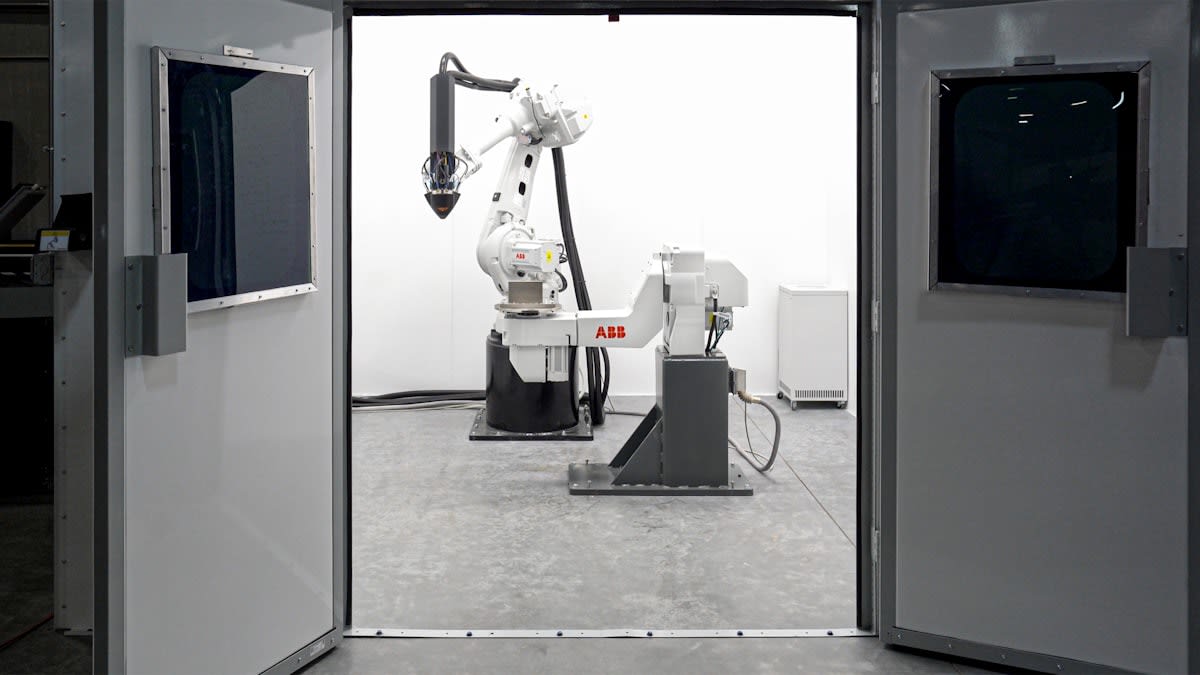
This creates a significant talent gap. Many legacy industrial hubs are finding themselves with a workforce trained for a world of buckets and vats, while the technology demands a workforce trained in control theory and software integration. The companies winning this race are those investing in massive internal retraining programs, treating their human capital as a system that also needs to be 'upgraded' to continuous flow.
Does this mean the total disappearance of batch production? Likely not. There will always be a place for extremely low-volume, artisanal, or highly complex custom syntheses where the cost of setting up a continuous line outweighs the benefits. But for anything intended for the mass market, batch is becoming a liability. It is a slow, expensive, and risky way to build the future.
The Bottom Line
The industrial bottleneck isn't just a technical problem—it's a mindset problem. The shift to continuous manufacturing is the physical manifestation of the 'Agile' philosophy moving from software into the hard world of atoms.
Looking ahead, the integration of continuous manufacturing with additive manufacturing (3D printing) will create a truly frictionless production ecosystem. We are approaching a world where a digital design can be fed into a continuous flow system and emerge as a finished, validated product in a matter of hours, regardless of where the factory is located. The era of the industrial bottleneck is ending, and the era of the infinite stream has begun.