
The Myth of Monolingualism
Markets have blind spots. For years, the corporate world assumed that a few dominant languages could cover the entire globe without losing critical consumer nuance. This was a mistake. Why do we assume a single translation layer suffices for a trillion-dollar economy? When firms ignore the nuance of regional dialects, they miss the specific consumer triggers that drive high-end spending in fragmented markets. Language is a filter.
Data reveals gaps. Germany expects foreign overnight stays to grow by 29% between 2026 and 2036, specifically noting that Mandarin, Korean, and Arabic will be heard more commonly (Source: Tourism Review Media, 2026). This is a shift. Such growth suggests that the ability to facilitate commerce in these specific tongues is no longer a luxury but a baseline requirement for growth. Foreign spending in Germany is projected to grow by 75% by 2036 (Source: Tourism Review Media, 2026). Translation equals revenue.
The Cost of Linguistic Neglect
Disconnects cost billions. Belgium's transition to a federal state was driven by mounting tensions between major ethnolinguistic groups, which were worsened by growing economic disparities between the Flemish and Walloon regions (Source: Britannica, 2026). Division creates poverty. This history proves that when language is used as a barrier rather than a bridge, the resulting economic disparity can destabilize an entire national structure. Regional tongues are not just culture. They are economic determinants.
Wealth follows the word. In Belgium, agricultural activity centers on livestock, with dairy and meat products constituting more than two-thirds of total farm value (Source: Britannica, 2026). This is a reality. The economic weight of these sectors is distributed across a terrain of linguistic tension, where the inability to synchronize regional dialects often leads to inefficient resource allocation. Markets fail without communication. Nuance is the grease.
"investment demand as the primary driver of precious metals prices"— Jeffrey Christian, CPM Group
Demand drives value. Just as Jeffrey Christian of CPM Group identifies investment demand as the primary driver for gold and silver (Source: Kitco, 2026), linguistic demand is now driving the valuation of AI firms. This is the pattern. The market does not reward the most complex tool, but the tool that meets the most urgent, underserved demand. Niche languages are the new gold. Capital seeks access.
The Computational Bridge
AI scales the solution. OpenAI is now valued at $1.25 trillion after raising another $11 billion in a funding round that emphasizes its role as a global utility (Source: The Verge, 2026). This is a massive sum. The capability to ingest and synthesize forgotten dialects allows companies to enter markets that were previously too expensive to localize manually. Algorithms eat barriers. Speed is the advantage.
Valuations reflect potential. While OpenAI hits record heights, its rival Anthropic is nearing an IPO, signaling a race to capture the linguistic intelligence market (Source: The Verge, 2026). Competition fuels precision. The goal is no longer just 'translation,' but the ability to simulate the cultural weight and emotional resonance of a specific regional dialect. Local is the target. Scale provides the means.

The internal war rages. In the war rooms of LLM development, a silent collision occurs between the Generalists and the Localists. The Generalists want one model to rule them all, while the Localists argue that missing a single regional idiom can alienate an entire demographic's purchasing power. This is not a technical debate; it is a fight over which data sets get prioritized for tokenization. Efficiency often kills nuance. Accuracy requires investment.
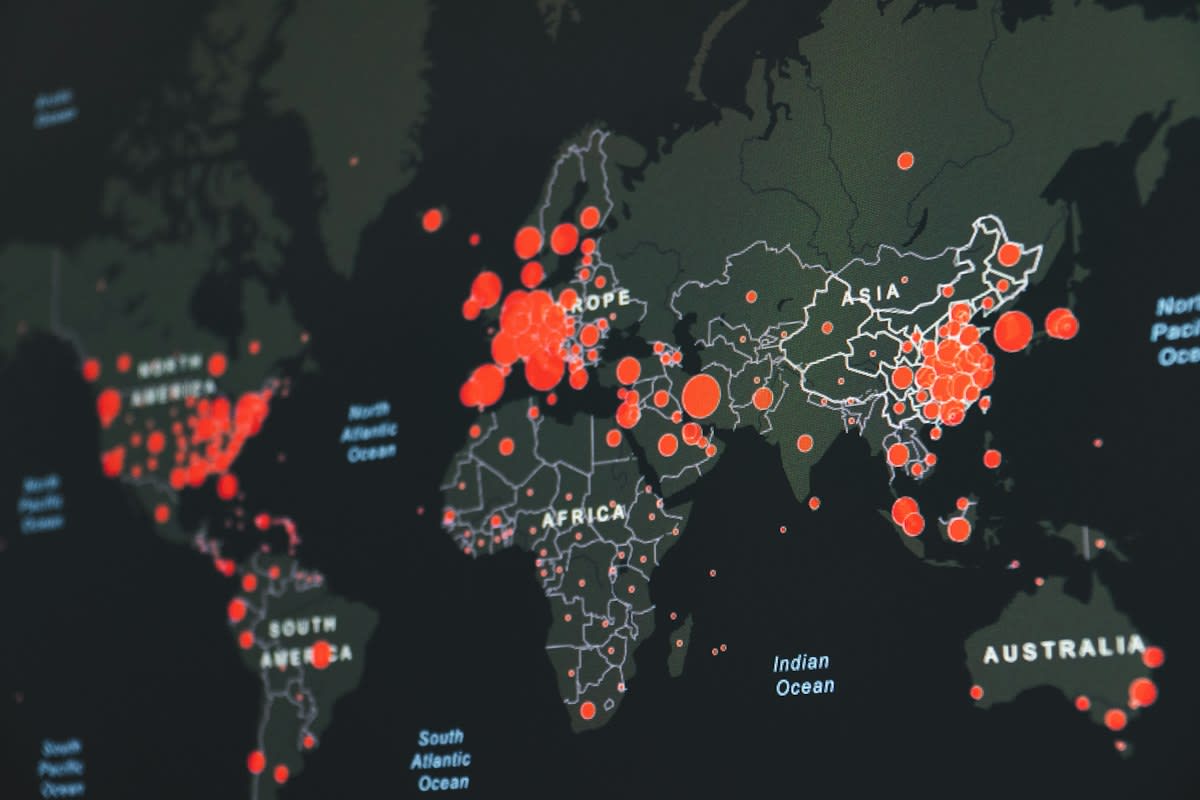
Mapping the New Growth Vectors
Tourism is the trigger. Across Europe, foreign overnight stays are expected to grow by 42% and overall overnight stays by 32% (Source: Tourism Review Media, 2026). This is a surge. The smallest and medium-sized destinations will see the largest increase in foreign tourists, creating a desperate need for hyper-local linguistic support. Small towns need tongues. Language opens doors.
Spending follows comfort. When a tourist from East Asia or the Middle East finds a service provider who speaks their specific dialect, the propensity to spend increases. This is a mechanical failure of old business models. By ignoring the linguistic preferences of the projected growth in Asia and the Middle East, European destinations risk leaving 75% of potential spending growth on the table (Source: Tourism Review Media, 2026). Comfort drives commerce. Words are currency.
Fact-Check & Accuracy Note
The data cited in this report draws from Tourism Review Media (2026) regarding European tourism projections, Britannica (2026) for Belgian socio-economic history, and The Verge (2026) for AI market valuations. Academic debate continues regarding whether AI translation preserves 'cultural nuance' or merely creates a 'homogenized approximation' of regional dialects, potentially erasing the very distinctions that drive market value.
A hard turn awaits. The companies that will dominate the next decade are not those with the biggest budgets, but those with the best linguistic maps. This is a strategic requirement. By treating forgotten dialects as assets rather than obstacles, firms can unlock loyalty in regions that feel overlooked by the global default. Loyalty is the prize. Access is the key.