
The Death of the Traditional Debt Cycle
For decades, the relationship between developing nations and global creditors was a zero-sum game of interest payments and austerity. The cycle was predictable: borrow for infrastructure, suffer a currency shock, and spend the next decade servicing debt at the expense of social services. But a systemic pivot is underway. We are seeing the emergence of the Great Swap, where biodiversity is no longer treated as a romanticized luxury of the Global South, but as a hard asset capable of offsetting sovereign liabilities. This is not about charity. It is a sophisticated financial arbitrage where nature is capitalized to provide fiscal breathing room.
The logic is simple yet disruptive. By trading debt relief for verifiable conservation outcomes, nations can simultaneously reduce their debt-to-GDP ratios and fund the preservation of critical ecosystems. This shift represents a fundamental change in how the global financial architecture views risk. Instead of focusing solely on credit ratings and fiscal deficits, creditors are beginning to integrate ecological stability into the solvency equation. If a nation's economy depends on the resilience of its forests or reefs, then protecting those assets is a rational strategy for ensuring long-term repayment capacity.
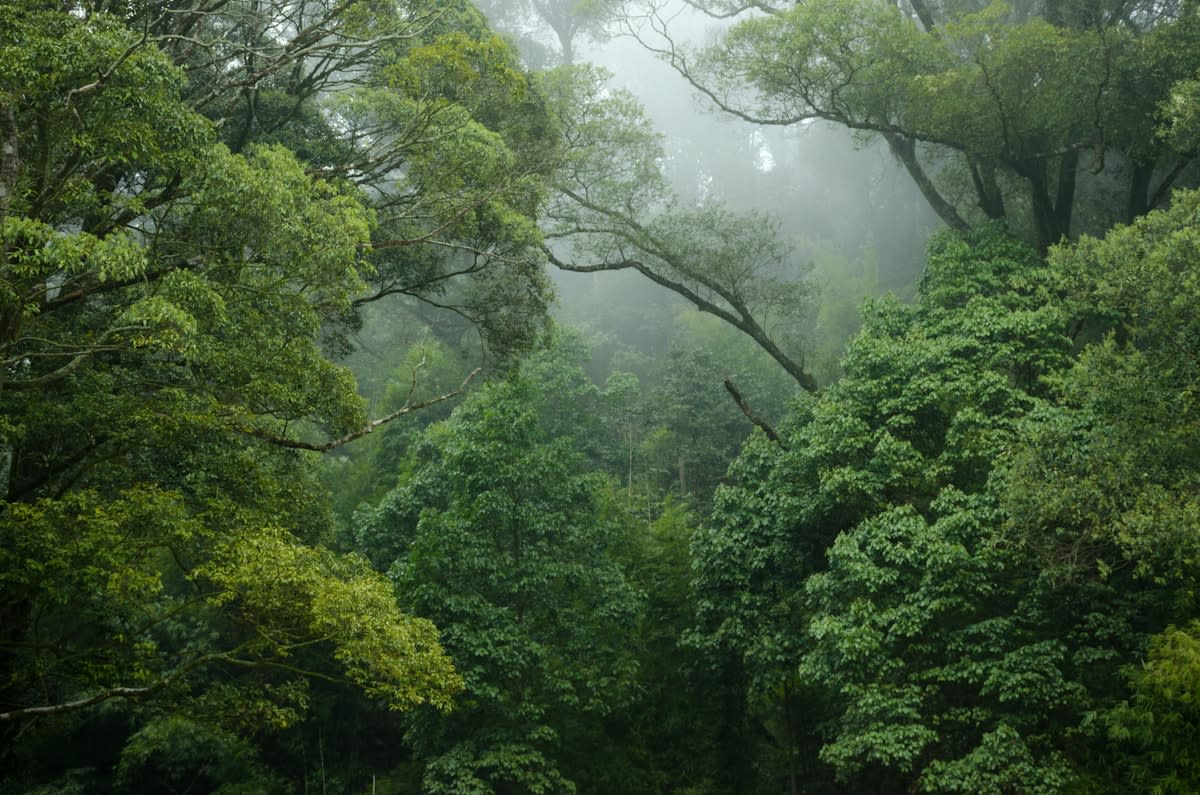
The Guatemala Blueprint: Engineering the Swap
Guatemala provides a masterclass in the operational friction of these instruments. Through the support of UNDP BIOFIN, the country is assessing the feasibility of a debt-for-nature swap designed to free up public resources and channel them directly into the National Nature Conservation Fund (FONACON) (Source: UNDP BIOFIN, 2026). This isn't a simple handshake deal; it requires a rigorous analysis of the country's entire public debt portfolio to identify which obligations are most suitable for conversion. The goal is to create a sustainable flow of funding for the national protected areas system, effectively turning a liability into a conservation engine.
However, the internal political struggle is where the real story lies. In Guatemala, the drive for biodiversity finance creates a direct clash between government entities. On one side, the Ministry of Agriculture, Livestock and Food (MAGA), the National Forest Institute (INAB), and the National Council of Protected Areas (CONAP) are aligned with the conservation goals (Source: UNDP BIOFIN, 2026). On the other side, the Ministry of Communications, Infrastructure and Housing (MICIV) and the Ministry of Energy and Mines (MEM) often represent the opposite impulse—prioritizing industrial expansion and extraction that can negatively impact biodiversity (Source: UNDP BIOFIN, 2026). The swap is as much about internal governance and inter-ministerial power shifts as it is about finance.
"UNDP BIOFIN supports Guatemala in assessing the feasibility of a debt for nature swap to free up public resources and channel them into the conservation and sustainable use of biodiversity."— UNDP BIOFIN, Institutional Report on Guatemala
From a practitioner's perspective, this is where the 'rubber meets the road.' When I talk to the people designing these swaps, the debate isn't about whether nature is valuable—it's about Measurement, Reporting, and Verification (MRV). The friction occurs in the 'additionality' argument: can the creditor prove that the forest wouldn't have been saved anyway? The real battle is fought in the spreadsheets, arguing over the exact hectare of degraded land prevented from loss and how that translates into a basis point reduction in interest rates. It is a high-stakes negotiation where biologists and bond traders must find a common language.
Blended Finance and the TFFF Model
The UK is attempting to scale this logic through the Tropical Forests Forever Facility (TFFF). By announcing a £400m loan investment, the UK government is moving toward a blended-finance mechanism (Source: edie.net, 2026). Unlike traditional grants, this facility is designed to pay countries based on the actual amount of tropical forest they conserve and the amount of degraded land they prevent from being lost (Source: edie.net, 2026). This transforms the financial relationship from a donor-recipient dynamic into a performance-based contract.
This model is critical because it addresses the scale of the problem. The urgency is underscored by the IPBES Global Assessment Report, which highlights the systemic drivers of anthropogenic biodiversity loss (Source: Nature Climate Change/IPBES, 2019). When you combine this with the fact that climate change is actively exacerbating the environmental impacts of agriculture (Source: Science, 2024), the financial risk to these nations becomes existential. The TFFF approach acknowledges that protecting nature is a global public good, but it insists that the payment for that good must be tied to verifiable results.
| Feature | Traditional Sovereign Debt | Biodiversity-Linked Swap/Facility |
|---|---|---|
| Primary Goal | Capital repayment & interest | Ecological outcome & debt reduction |
| Payment Trigger | Calendar date/Fixed schedule | Verifiable conservation metrics |
| National Impact | Fiscal drain/Austerity | Resource liberation for conservation |
| Risk Focus | Creditworthiness/GDP | Natural Capital resilience |
The Systemic Shift: From Aid to Asset Management
We are witnessing the financialization of nature, and while critics argue this commodifies the environment, the strategic reality is that it provides a mechanism for resilience. The decline in habitat suitability—such as that seen in European bumblebee populations due to climate change (Source: Nature Climate Change, 2026)—serves as a warning of what happens when ecological collapse is not priced into the economy. By integrating biodiversity into sovereign debt, we are finally assigning a price to the 'ecosystem services' that have been treated as free for centuries.
The Great Swap is not a cure-all, but it is a necessary evolution. It moves the conversation away from 'saving the planet'—a narrative that often feels like a burden imposed on the Global South—toward 'managing assets.' When a country can trade a portion of its debt for the protection of a rainforest, it is no longer a beggar at the table of international finance; it is a provider of a critical global service. This rebalances the power dynamic, giving biodiverse nations a strategic lever in their negotiations with the Global North.

Editorial Note
This analysis views biodiversity swaps not as environmental altruism, but as a strategic restructuring of sovereign risk. The transition from grant-based aid to blended-finance loans (like the TFFF) signals a move toward a 'payment-for-performance' global economy.
Fact-Check & Accuracy Note
Key claims regarding the £400m UK investment are sourced from edie.net (2026). Data on Guatemala's debt-for-nature feasibility and ministerial conflicts are sourced from UNDP BIOFIN (2026). References to biodiversity loss and climate impacts are sourced from Nature Climate Change (2026), Science (2024), and the IPBES Global Assessment Report (2019). The exact impact of these swaps on long-term GDP remains a subject of ongoing economic debate.