
For too long, the global financial system has treated the environment as a free buffet. We have extracted value without accounting for the depreciation of the underlying asset. This negligence is no longer just an ethical lapse; it is a systemic financial risk. Frank Elderson of the European Central Bank has explicitly warned that the breakdown of nature and the collapse of ecosystem services pose a growing threat to core financial stability. When the processes that support human activity—water filtration, pollination, coastal protection—fail, the resulting economic shock is not a localized event but a systemic contagion.
A natural capital audit is the process of bringing these invisible assets onto the balance sheet. It requires a shift in perspective: viewing a forest not as a collection of timber, but as a provider of services. Whether you are managing a coastal resort in a Low and Middle Income Country (LMIC) or a massive agricultural conglomerate, the goal is the same. You must quantify the flow of benefits from nature to your business and determine the cost of replacing those services if the ecosystem collapses. This is where the transition from vague sustainability goals to hard economic data begins.
Prerequisites for the Audit
Before you begin calculating values, you need a specific set of tools and frameworks to ensure your data is audit-ready and compliant with emerging global standards. You cannot simply invent a value for a mangrove forest; you must align with recognized reporting structures to ensure the data has institutional credibility. Without this alignment, your audit is merely a brochure, not a financial document.
- Alignment with TNFD (Taskforce on Nature-related Financial Disclosures) and IFRS (International Financial Reporting Standards).
- A comprehensive map of ecosystem services relevant to your specific geography.
- Baseline data on biological traits (e.g., species variety, soil health, carbon sequestration rates).
- Access to regional market data for ecosystem service pricing (e.g., blue-carbon credit rates).
The Step-by-Step Valuation Process
Calculating natural capital is not a one-size-fits-all operation. It requires a tiered approach that balances the precision of the data with the capacity of the operator. The following steps outline the path from identification to financial integration, utilizing the latest frameworks in trait-based analysis and blue-carbon accounting.
- Identify Ecosystem Services: Distinguish between 'sinks' and 'sources'. For instance, in sustainable agriculture, crops must be reframed as multifunctional. They are not just recipients (sinks) of pollination and nutrient cycling, but active providers (sources) of ecosystem services. Use a trait-process-service framework to link specific functional traits of your land to the ecological processes they drive.
- Select Your Compliance Pathway: Avoid the trap of uniform reporting requirements which can be prohibitively expensive. Implement a three-tier compliance pathway. Tier 1 is for small-scale operators with basic reporting; Tier 2 is for medium enterprises with internalized costs; Tier 3 is for large-scale institutional reporting aligned with full IFRS standards.
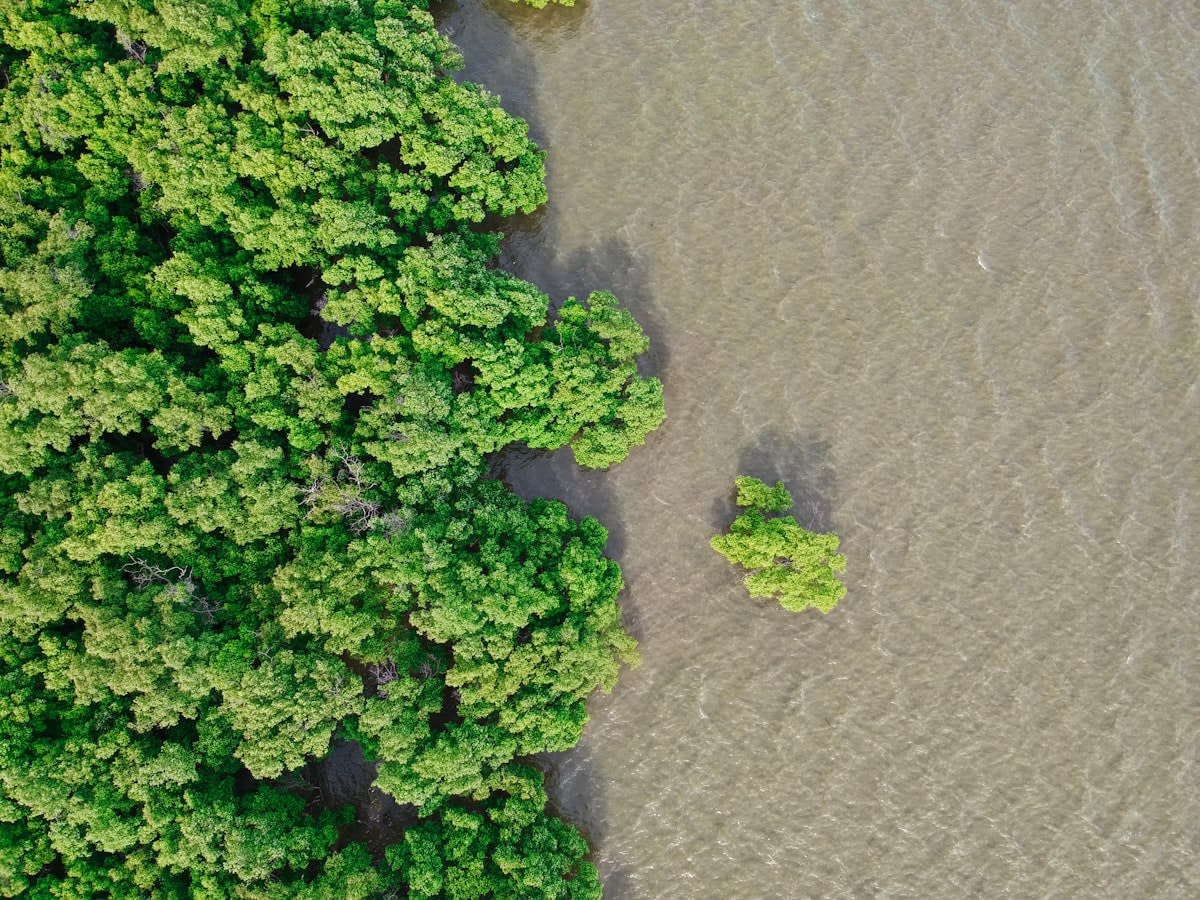
- Quantify the Bio-Physical Flow: Measure the actual output of the environment. In the Pamoja case, this involved tracking carbon sequestration, where the ecosystem captured greater than or equal to 8,000 tonnes of CO2 per year. This physical measurement is the raw material for your economic calculation.
- Convert Flow to Economic Value: Apply market pricing to your quantified flows. For blue-carbon revenue, this means multiplying the sequestered CO2 by the current market rate for carbon credits. In the Pamoja example, this mechanism channeled approximately US$200,000 into community development.
- Internalize Reporting Infrastructure: Ensure the audit pays for itself. Rather than treating reporting as an external cost, earmark a percentage of the revenue generated from the natural asset. A 10% earmark for reporting infrastructure is typically sufficient to fund Tier 2 compliance for community-level enterprises.
Pro Tip: Think Multifunctionally
The 'Trait-Process-Service' framework allows you to move beyond simple biomass measurements. By linking the functional traits of a species to the actual delivery of a service, you can prove the economic value of biodiversity rather than just the value of the land itself.
Once these steps are completed, the result is a dynamic asset ledger. You are no longer looking at a static piece of land, but a stream of revenue and risk mitigation. This transition is critical because, as the ECB notes, the risks associated with the collapse of these services are far more complex to map than a single weather event. A natural capital audit provides the map.
Financial Implications of Ecosystem Collapse
What happens when the audit reveals a deficit? When ecosystem services collapse, the cost is not just environmental—it is a direct hit to the balance sheet. For a business reliant on natural pollination, the collapse of local bee populations represents a sudden, unplanned increase in operational costs. For a coastal development, the loss of mangrove buffers means an exponential increase in insurance premiums and infrastructure repair costs following storm surges.
| Asset Type | Service Provided | Economic Metric | Risk of Collapse |
|---|---|---|---|
| Mangroves | Carbon Sequestration | Blue-Carbon Revenue | High Financial Volatility |
| Multifunctional Crops | Nutrient Cycling | Reduced Fertilizer Cost | Operational Cost Spike |
| Wetlands | Water Filtration | Water Treatment Savings | Infrastructure Failure |
The goal of the audit is to identify these vulnerabilities before they become crises. By quantifying the value of the service provided by nature, a company can justify the investment in restoration. If a mangrove forest is providing $200,000 in annual value, spending $20,000 on its maintenance is not an expense—it is a high-yield investment in asset protection.

Common Pitfalls in Natural Capital Accounting
Even experienced practitioners make mistakes that undermine the credibility of their audits. The most frequent error is the 'Static Asset Fallacy'—treating nature as a fixed piece of equipment rather than a living system. Ecosystems are dynamic; their value fluctuates based on health, biodiversity, and external pressures. A forest that is losing its biodiversity is a depreciating asset, even if the acreage remains the same.
- Ignoring the Dual Role of Crops: Failing to recognize that crops can be sources of ecosystem services, not just sinks, leads to an undervaluation of sustainable farming practices.
- Over-burdening Small Operators: Imposing uniform, high-cost reporting requirements on small-scale enterprises in LMICs. This often leads to non-compliance or skewed data.
- Underestimating Reporting Costs: Treating the audit as a one-time event rather than a recurring operational cost. This is why the 10% earmark is essential.
- Confusing Carbon with Nature: Focusing solely on CO2 sequestration while ignoring other critical services like pest suppression or microclimatic regulation.
To avoid these pitfalls, the audit must be an iterative process. It requires a willingness to update valuations as new trait-based data emerges and as global reporting standards like those from the TNFD evolve. The objective is not a perfect number, but a directionally accurate understanding of how your business is entwined with the natural world.
"Reliance on nature was more complicated to map than the impact of a single extreme weather event."— Frank Elderson, ECB Executive Board