Pre-Greek: The lost language hidden within Ancient Greek
Source Entity
Hacker News
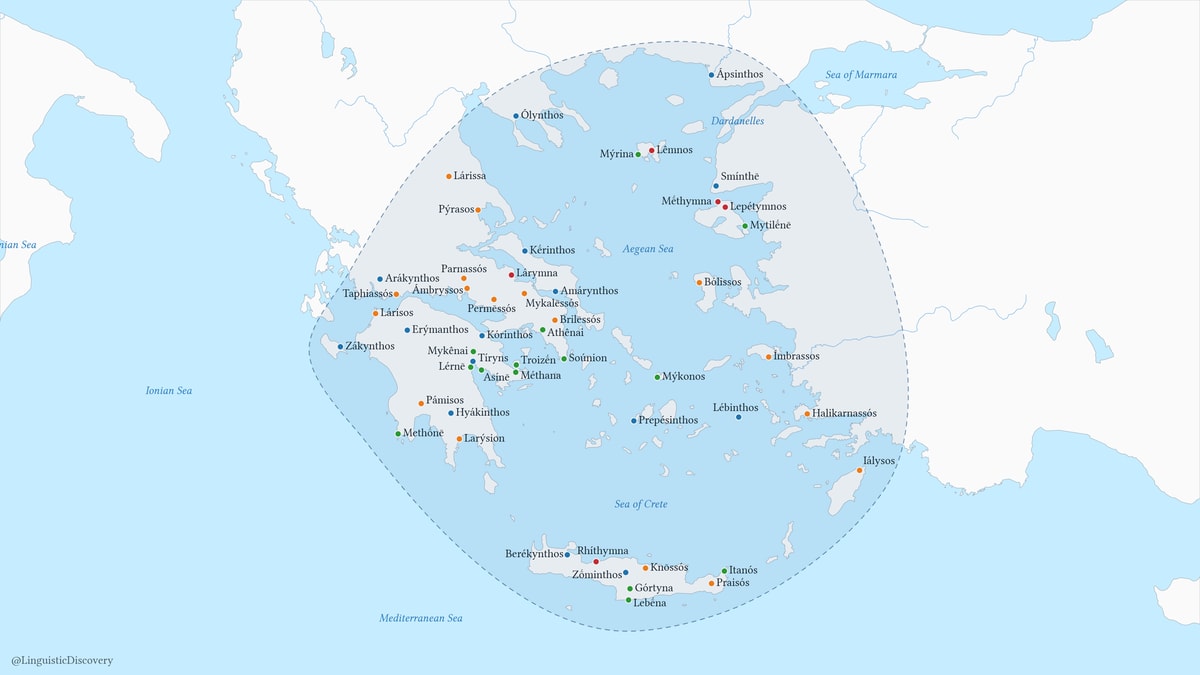
Linguists are investigating a mysterious pre-Greek substrate language containing roughly 1,000 words that defy Indo-European classification. This enigma includes foundational cultural terms like 'labyrinth,' 'olive,' and names of deities such as Athena and Ares.
The Linguistic Enigma of Pre-Greek
The origins of the Greek language have long been a subject of intense academic scrutiny, yet a significant portion of its vocabulary remains stubbornly detached from its Indo-European roots. As noted by the historian Herodotus in his Histories, the ancient Pelasgians—the pre-Hellenic inhabitants of the region—spoke a language that was distinctly non-Greek. This observation serves as the cornerstone for modern linguistic theories regarding a 'substrate' language that persisted even after the arrival of Proto-Indo-European speakers.
Lexical Anomalies in Classical Greek
Modern scholarship has identified approximately 1,000 words in Ancient Greek that lack any identifiable etymological connection to the Indo-European family. These are not merely obscure technical terms; they constitute the very fabric of Greek civilization. Iconic words such as labýrinthos (labyrinth) and elaía (olive) reside in this category, suggesting that the fundamental agricultural and architectural vocabulary of the Aegean predates the culture we identify as Classical Greece.
The Cultural Imprint of the Pelasgians
Perhaps most startling is the inclusion of divine and mythological names within this unidentified linguistic stratum. Names like Akhilleús (Achilles), Odysseús (Odysseus), and Athḗnē (Athena), alongside the god of war Árēs, appear to be linguistic holdovers from a pre-Greek population. Even major geographical centers such as Kórinthos (Corinth) and Athênai (Athens) carry names that linguists have failed to trace back to Proto-Indo-European roots, implying that the identity of these cities was established long before the Greek language became dominant.
Challenges in Linguistic Reconstruction
The failure to categorize these words after centuries of rigorous study highlights the limitations of comparative linguistics. When etymological tools cannot bridge the gap between Greek and its neighbors, it suggests the presence of a 'lost' language that vanished without a written corpus. Because these words were integrated into Greek so thoroughly, they act as fossils, preserving the memory of a people who were absorbed rather than erased.
Broader Implications and Future Trends
This phenomenon of linguistic substrate provides a profound insight into the migratory patterns and cultural synthesis of the ancient world. Future research will likely rely on advanced computational linguistics and cross-disciplinary studies involving archaeology and genetics to identify the origin of these 1,000 words. As we refine our understanding of these anomalies, we move closer to reconstructing the lost history of the Pelasgians, who provided the foundational substrate upon which the grandeur of Ancient Greek civilization was built.