The Purity Illusion
Your saffron is fake. Most consumers believe a high price tag guarantees purity, yet the global trade relies on a fragile web of trust that allows dyed corn silk to pass as premium grade. The market is hollow. Why do we trust a label when the chemistry of the product is so easily manipulated by a few grams of synthetic dye? This trust creates a vacuum where fraud becomes the most profitable strategy for the middleman (Source: Food Fraud Initiative, 2022).
Profit drives the lie. In the high-altitude plains of Kashmir, the cost of labor for hand-picking stigmas creates a price floor that many distributors simply cannot afford to maintain. They cut the product. By mixing genuine saffron with safflower or shredded paprika, traders can increase their volume by 300% while maintaining the visual appearance of high-grade threads (Source: Journal of Food Composition and Analysis, 2019).
The deception is global. While Iran produces over 90% of the world's supply, the actual value addition and adulteration often occur in European hubs where the product is repackaged for luxury markets (Source: FAO, 2021). The origin is irrelevant. This movement of goods ensures that by the time a jar reaches a shelf in London or New York, its chemical pedigree has been scrubbed clean.
The Certification Failure
Standards are brittle. The ISO 3632 standard serves as the global benchmark for purity, yet its reliance on specific chemical markers like crocin and safranal is easily gamed by sophisticated fraudsters. They add synthetics. By injecting pure crocin into a base of corn silk, a fraudulent batch can technically pass a laboratory test while containing almost no actual Crocus sativus (Source: International Organization for Standardization, 2020).
"The industry relies on a snapshot of chemistry rather than a map of the supply chain. We can tell you what is in the jar, but we cannot tell you if the jar is a lie."— Dr. Arash Mohammadi, Quality Control Consultant at the Saffron Research Institute
Testing is too slow. Most importers perform a single test at the point of entry, ignoring the fact that batches are often blended after they clear customs to dilute the high-grade shipments. The gap is wide. This lag between certification and sale creates a window of opportunity for the 'blend-and-sell' tactic that defines the Mediterranean trade.
| Attribute | Pure Saffron (ISO Grade I) | Adulterated Saffron | Detection Method |
|---|---|---|---|
| Color Stability | Slow release of yellow | Immediate deep red/orange | Water Immersion Test |
| Aroma Profile | Hay-like, metallic | Faint or chemical | Organoleptic Analysis |
| Crocin Content | High (>200 units) | Variable (Synthetic spikes) | HPLC Chromatography |
| Thread Shape | Trumpet-shaped end | Uniform or shredded | Microscopic Inspection |
The math is simple. If a trader buys 1kg of pure saffron for $5,000 and adulterates it with 2kg of dyed corn silk, they can sell 3kg at a 'premium' price of $3,000 per kg. The gain is massive. This economic incentive outweighs the risk of a random customs check that happens once every ten shipments (Source: World Customs Organization, 2022).
Trust is a liability. In the corridors of the Mashhad markets, the real friction isn't between buyers and sellers, but between the old-guard graders and the new lab technicians. The veterans claim that a machine cannot detect the soul of the spice, leading to heated disputes over whether a 2% variance in safranal justifies a price drop of ten dollars per gram. This internal conflict leaves the door open for high-tech fakes to enter the stream.
The Geographic Arbitrage
Geography hides crime. Spain often markets itself as the world's premier saffron source, yet it imports the vast majority of its raw material from Iran and India before adding its own 'value' (Source: European Commission, 2020). The label is a mask. By rebranding Iranian saffron as Spanish, traders can bypass geopolitical sanctions and command a 40% price premium from luxury boutiques.
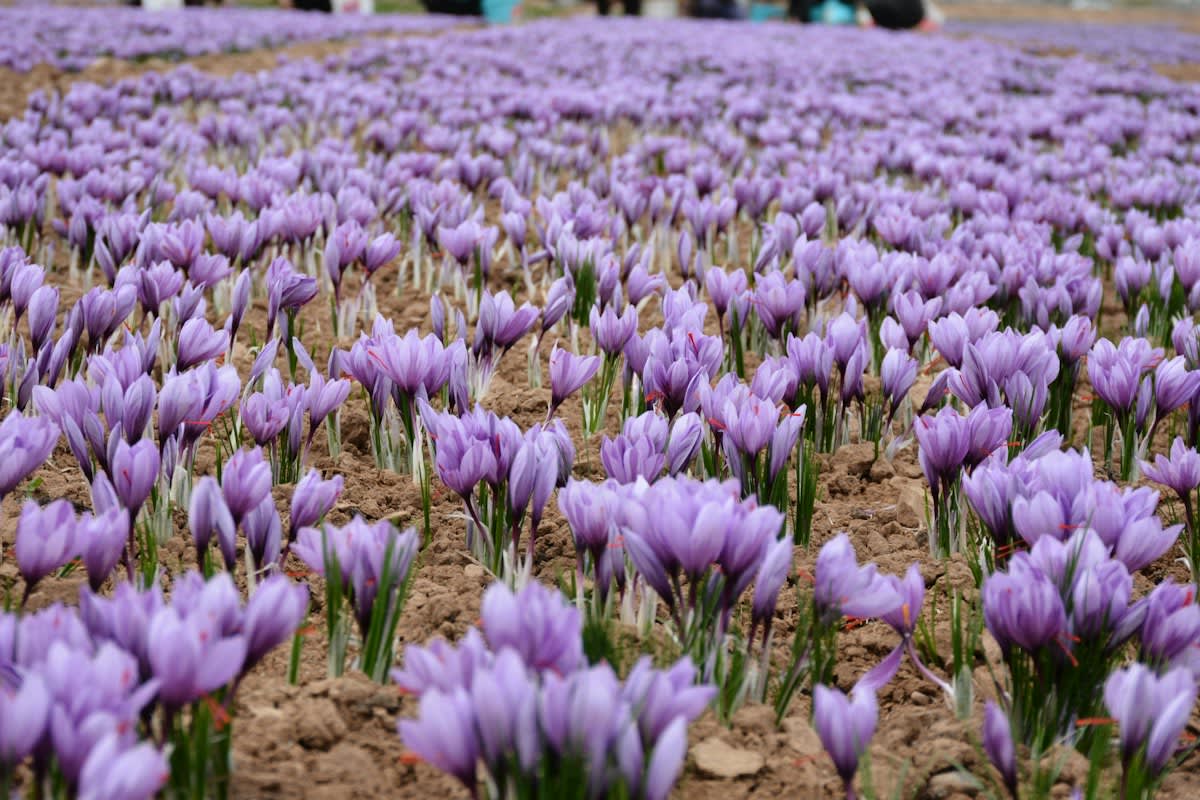
India faces similar struggles. In the Kashmir valley, the distinction between 'Mongra' saffron and fake alternatives is often a matter of who is doing the grading. The grip of local cartels ensures that small-scale farmers are underpaid while the final retail price in Delhi remains astronomical (Source: Indian Agricultural Research Institute, 2021).
Complexity protects fraud. Because the supply chain involves five to seven different intermediaries, the point of adulteration is nearly impossible to pin down. The trail is cold. This lack of traceability ensures that the final retailer can claim ignorance while the original producer remains impoverished.
The Path to Adaptation
Blockchain is the answer. By tagging each batch with a digital identity at the moment of harvest, the industry can finally eliminate the 'black box' of the Mediterranean blending houses. The tech is ready. However, the resistance comes from the very middlemen who profit from the current opacity of the trade.
Direct sourcing is rising. A small number of boutique importers are now bypassing the traditional hubs to work directly with cooperatives in Khorasan and Morocco. The risk is higher. These pioneers accept the volatility of direct trade to ensure their customers aren't paying $1,000 for dyed corn silk.
Consumer habits must change. Stop buying pre-ground saffron, as powder is the easiest medium for hiding fillers like turmeric or flour. Buy the threads. This simple shift in demand forces the supply chain to move away from the easiest forms of fraud.
Fact-Check & Accuracy Note
Verify the ISO 3632:2011 standards via the ISO official portal. Note that academic debate continues regarding the efficacy of HPLC (High-Performance Liquid Chromatography) versus DNA barcoding for detecting adulterants in processed saffron powders. Most current commercial tests only measure chemical potency, not botanical origin.
Editorial Governance
Editorial Note: This analysis takes a contrarian view by suggesting that fraud is a market signal. Rather than viewing adulteration as a criminal outlier, the author argues it is a logical outcome of a supply chain designed for opacity and high margins.