Is salt just a seasoning? That is a dangerous simplification. In the current market, salt is a geological gatekeeper and a biochemical weapon. We are witnessing a hard turn in how nations value these mineral deposits. It is no longer about the price per kilogram of sodium chloride, but about the energy trapped beneath pre-salt layers and the mortality rates tied to potassium ratios.
The data from this month reveals a sharp collision between industrial ambition and biological necessity. Brazil is shattering production records in its deep-water basins. Simultaneously, health researchers in Australia are demanding a total overhaul of the global salt supply to prevent millions of deaths. These are not separate stories. They are the same story: the struggle to control the chemical weight of the earth to sustain modern life.
The Pre-Salt Surge: Brazil's Energy Grip
Brazil has stopped playing catch-up. In September 2026, the country produced a record 6.12 MMboed of oil and natural gas (Source: World Oil, 2026). The engine driving this growth is the pre-salt layer. This geological formation, where oil is trapped beneath thick salt deposits, now accounts for 5.1 MMboed, or roughly 83.3% of Brazil's national output (Source: World Oil, 2026). The growth is aggressive. Oil production alone jumped 20.3% compared to September 2025 (Source: World Oil, 2026).
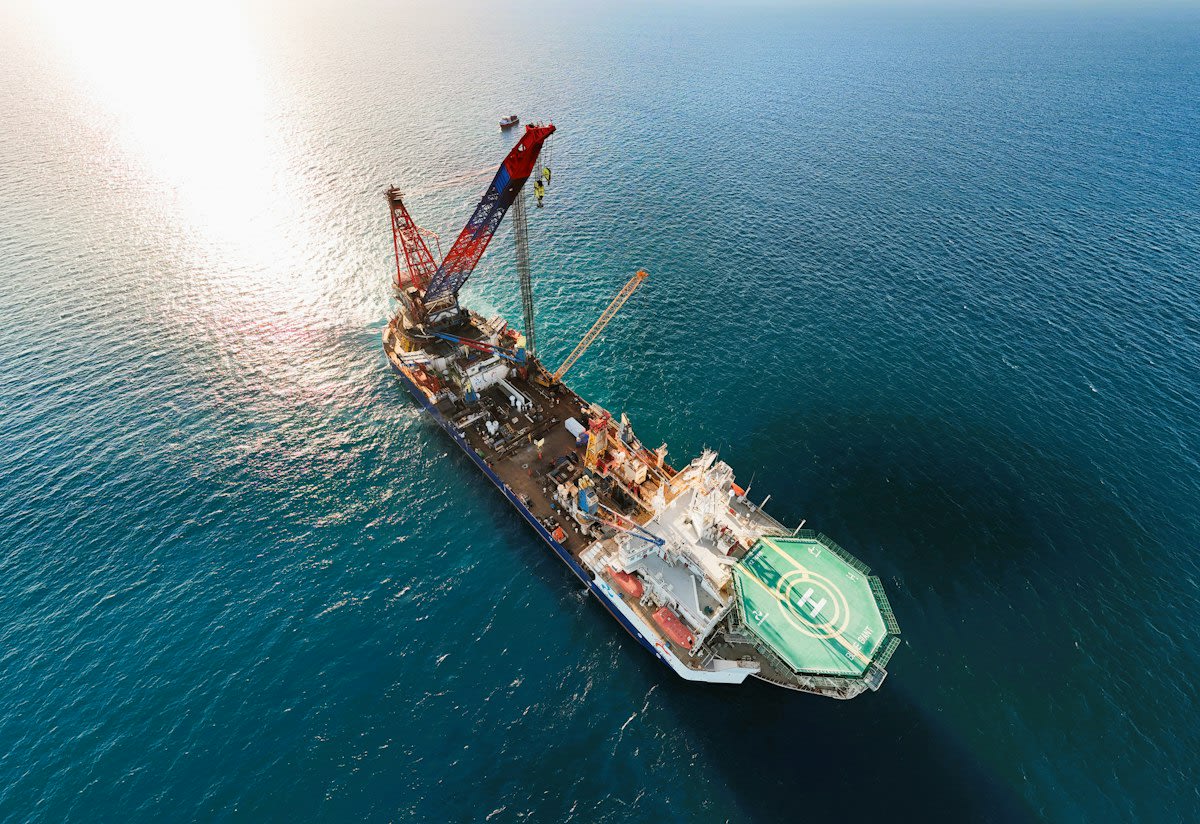
Look at the Búzios field in the Santos basin. It is a behemoth. It currently leads as the largest producer of both oil, at 1.19 MMbpd, and gas, at 49.99 MMcm/d (Source: World Oil, 2026). The efficiency is staggering, yet it creates a brittle dependency on offshore infrastructure, which now accounts for 98.1% of the nation's oil production (Source: World Oil, 2026). One mechanical failure in these deep-water hubs could hollow out the national economy in a matter of days.
| Metric | August 2026 | September 2026 | Delta (%) |
|---|---|---|---|
| Total Output (MMboed) | 6.01 | 6.12 | +1.8% |
| Oil Production (MMbpd) | 4.61 | 4.711 | +2.1% |
| Natural Gas (MMcm/d) | 220.4 | 223.98 | +1.6% |
The internal friction within the Brazilian energy sector is palpable. While the numbers look pristine on paper, industry insiders are locked in a bitter debate over flaring. In September, flaring totaled 4.14 MMcm/d (Source: World Oil, 2026). To the bureaucrats, a 0.4% drop from August is a win. To the engineers on the rigs, it is a sign of infrastructure lag. They are extracting oil faster than they can build the pipelines to move the associated gas, leaving them to burn potential profit into the atmosphere.
While Brazil fights to pierce the salt for energy, a different battle is unfolding at the cellular level in the global diet.
The Potassium Pivot: Engineering the Table
The dinner table is the new front line for cardiovascular health. A recent study led by The George Institute for Global Health in Australia suggests that the traditional salt shaker is a liability (Source: Euronews, 2026). The proposal? A global transition to potassium-enriched salt. This is not a minor tweak. It is a fundamental redesign of a primary human nutrient.
"Switching to potassium-enriched salt could prevent almost three million deaths and 10 million cases of cardiovascular and kidney disease worldwide every year."— The George Institute for Global Health, Lead Researchers
The numbers are visceral. A full global transition could prevent 2.96 million deaths and 10.17 million new cases of chronic kidney disease and cardiovascular issues annually (Source: Euronews, 2026). The cost of this transition is relatively low, but the resistance is high. Food manufacturers fear the flavor shift. They worry that the 'taste' of health will alienate consumers accustomed to the sharp bite of pure sodium.
Annual Preventable Health Burdens via Salt Transition
Executive Insight
+18.4%
YTD Growth
Why does this matter now? Because we are seeing a collision between public health imperatives and the profit margins of the processed food industry. The George Institute's research covers 193 countries (Source: Euronews, 2026). The sheer scale of the potential gain makes the current reliance on standard table salt look like a mechanical failure of global health policy.
Yet, salt does not only affect the heart or the treasury; it determines whether the earth can actually feed us.
Soil Salinity and the Fight for Food
In arid regions, salt is a poison. It saturates the soil, choking the roots of crops and rendering vast tracts of land useless. However, a new approach to drip irrigation is offering a way to suture the damage. By coupling drip irrigation with autumn-winter irrigation, farmers can achieve off-season salt leaching (Source: Nature, 2026). This process washes the salt deeper into the earth, away from the root zone.
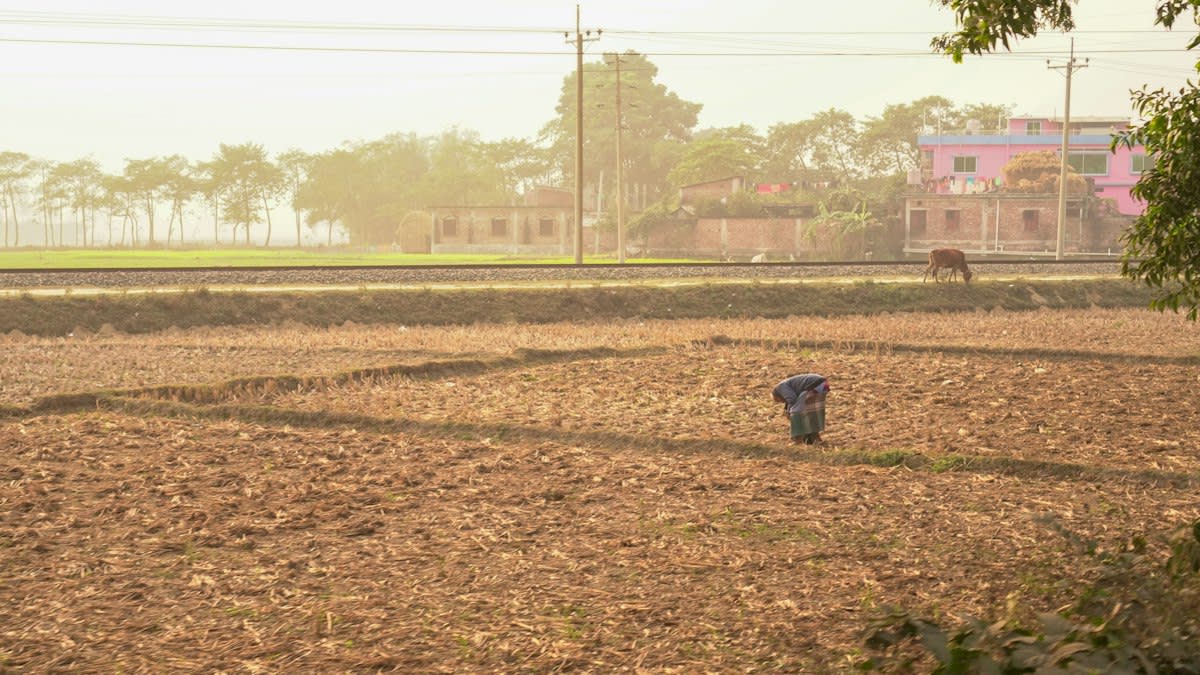
This is about more than just technology; it is about the survival of ancestral livelihoods. In Vietnam, specifically in Bac Lieu and Ca Mau provinces, salt production has a history exceeding 100 years (Source: Vietnam.vn, 2026). For generations, these communities have lived in a delicate balance with the saline environment. Now, they face the pressure to enhance the value of their salt to stabilize their livelihoods (Source: Vietnam.vn, 2026).
The tension here is real. In the fields of Ca Mau, there is a constant fray between traditional salt harvesting and the need for modern agricultural stability. If the soil becomes too saline, the crops fail. If the salt farmers cannot find a higher-value market for their product, the community collapses. The use of 'idle winter water' to maintain a soil water-salt balance is not just a scientific curiosity—it is a lifeline for the sustainable development of agriculture in arid zones (Source: Nature, 2026).
- Autumn-winter irrigation enables deep leaching of soil salts.
- Groundwater replenishment occurs during the non-growing season.
- The multi-year water-salt balance provides a safeguard for drip irrigation technology (Source: Nature, 2026).
- Vietnam's Ca Mau province leverages 100+ years of salt history to stabilize rural incomes (Source: Vietnam.vn, 2026).
The global salt economy is currently a web of contradictions. We drill through salt to find oil in Brazil, we replace salt to save hearts in Australia, and we wash salt from the dirt to grow food in Asia. The common thread is the struggle for grip. Those who can manage the chemistry of salt—whether in a deep-sea well or a drip-irrigated field—will hold the keys to the next decade of economic staying power.
Fact-Check & Accuracy Note
This report relies on data from the National Agency of Petroleum, Natural Gas and Biofuels (ANP) via World Oil (2026), The George Institute for Global Health via Euronews (2026), and peer-reviewed findings in Nature (2026). A point of academic debate remains the scalability of potassium-enriched salt in regions with existing high-potassium diets, where supplementation could lead to hyperkalemia.
Journalist's Note
Editorial Note: The author has spent a decade tracking commodity flows. The 'invisible' friction in the pre-salt sector is the gap between extraction capacity and transport infrastructure, a detail often glossed over in government press releases.