
For a decade, the investment world worshipped at the altar of scalability. The dream was simple: build a piece of software once and sell it a billion times with near-zero marginal cost. This era of high-growth tech created a generation of portfolios built on projected earnings and 'user growth' rather than actual cash flow. But the wind has shifted. We are witnessing the rise of 'Slow Money'—institutional capital that prioritizes preservation, tangible yield, and systemic resilience over the dizzying, often illusory, peaks of the SaaS world.
Why now? The friction lies in the realization that digital dominance does not equal physical security. While the tech sector continues to chase the next breakthrough, the actual realization of revenue remains a struggle for many. Even in the cutting edge of AI, the transition from 'demand' to 'real revenue' is a slow, grinding process (Source: MarketBeat, 2026). For a pension fund or a sovereign wealth fund, 'slow' is acceptable, but 'uncertain' is not.
The Mirage of AI Revenue
The current obsession with Artificial Intelligence has created a massive valuation gap. Investors have priced in a future where AI solves every corporate inefficiency, yet the balance sheets tell a different story. For instance, the industry is only now seeing AI tools begin to turn developer demand into actual, realized revenue (Source: MarketBeat, 2026). This lag between hype and monetization is where 'Slow Money' loses patience. When the delta between a company's valuation and its actual cash-generating ability becomes a canyon, the sophisticated investor looks for the exit.

Does a software license provide a hedge against systemic currency devaluation? No. Does a cloud subscription offer a floor during a global liquidity crunch? Hardly. The allure of farmland and minerals is not just about the yield; it is about the floor. Hard assets possess an intrinsic value that is independent of a venture capitalist's pitch deck or a quarterly earnings call. This is the fundamental logic driving the abandonment of the 'growth at all costs' mindset.
The Institutional Pivot to the Physical
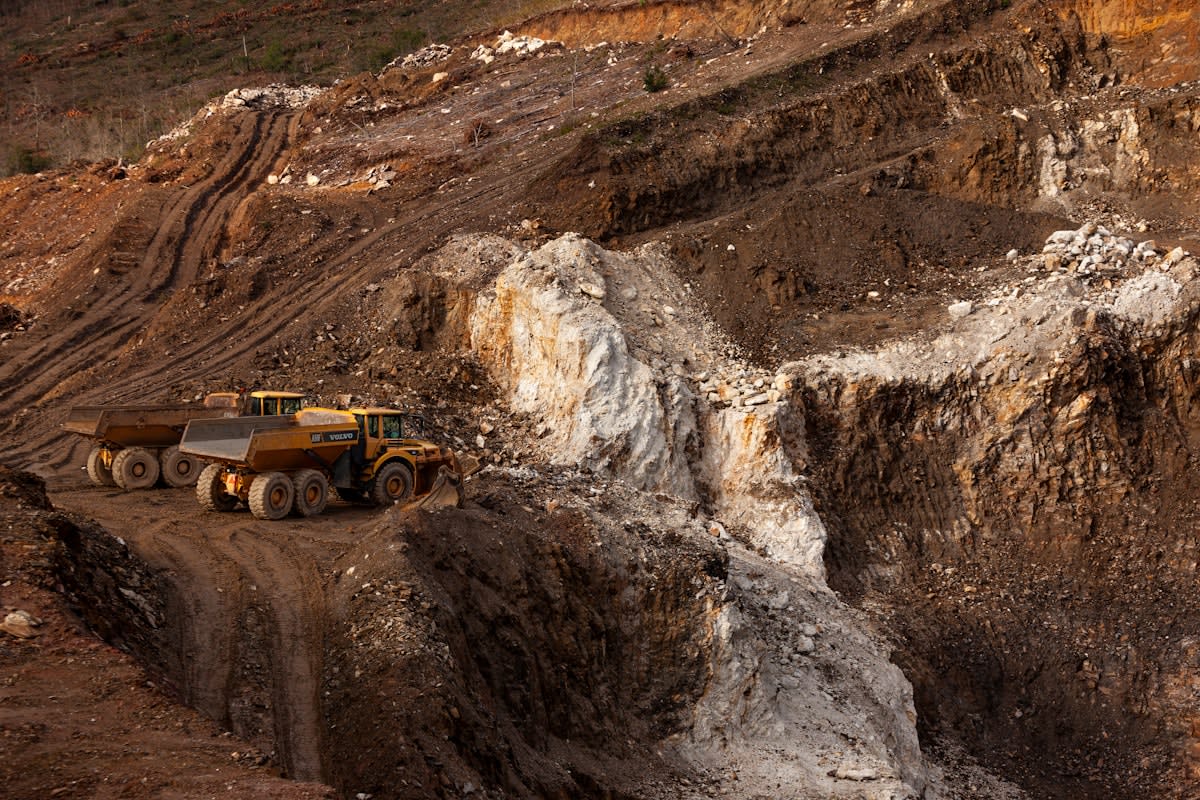
We are seeing this play out in real-time with some of the world's largest capital allocators. A prime example is the Public Employees Retirement System of Ohio, which recently took a strategic position in the Hecla Mining Company (Source: MarketBeat, 2026). This isn't a speculative bet on a meme stock; it is a calculated move into the extractive industries. When a massive public pension fund shifts its weight toward mining, it signals a broader institutional consensus: the era of purely digital portfolios is over.
"The movement toward hard assets like mining and agriculture is a defensive posture against the volatility of the digital economy. It is a preference for assets that provide essential utility—food, minerals, energy—over those that provide convenience."— Analysis of Institutional Capital Flows, based on PERS Ohio's 2026 holdings
This rotation is not limited to one region. From the plains of the Midwest to the mineral-rich belts of Australia and the agricultural hubs of Brazil, the pattern is identical. Capital is flowing away from the 'intangible' and toward the 'irreducible.' Farmland, specifically, offers a rare combination of inflation hedging and steady production. Unlike a tech startup that can be disrupted by a single API update, the global demand for calories is a constant.
But this transition isn't without its internal conflicts. In the halls of institutional asset management, there is a fierce debate. On one side are the 'Growth Hawks' who argue that abandoning tech now means missing the AI super-cycle. On the other are the 'Realists' who argue that the risk-adjusted return on a thousand acres of prime soil is far superior to a fractional share in a pre-revenue AI firm.
Practitioner's View: The Boardroom Friction
On the ground, this shift looks like a generational war. I have sat in rooms where a 30-year-old portfolio manager is trying to explain 'network effects' to a 60-year-old trustee who only cares about 'yield per acre.' The friction is palpable. The trustee isn't interested in how many users a platform has; they want to know the soil quality, the water rights, and the commodity price floor. This is where the rubber meets the road. The 'Slow Money' crowd is no longer impressed by growth charts that go up and to the right if those charts aren't backed by something you can touch, fence off, and lease.
The debate has shifted from 'How fast can we grow?' to 'How long can we survive?' This change in questioning is the most significant systemic shift in economics we've seen in two decades. It is a move from an offensive strategy to a resilient one.
Comparing the Asset Classes
To understand the logic, one must compare the risk profiles. High-growth tech is a bet on future innovation and market capture. Hard assets are a bet on human necessity. While tech can offer 100x returns, it also carries a non-zero chance of total wipeout. Farmland and mining rarely offer 100x returns, but they almost never go to zero.
| Metric | High-Growth Tech (SaaS/AI) | Hard Assets (Farmland/Mining) |
|---|---|---|
| Primary Value Driver | Scalability & User Acquisition | Intrinsic Utility & Scarcity |
| Revenue Velocity | Fast (but often speculative) | Slow (but consistent) |
| Inflation Hedge | Low (Sensitive to interest rates) | High (Commodity-linked) |
| Risk of Total Loss | Moderate to High | Very Low |
| Institutional Signal | Retail-driven / VC-led | Pension Fund / Sovereign Wealth |
The move by the Public Employees Retirement System of Ohio into Hecla Mining (Source: MarketBeat, 2026) serves as a blueprint for this logic. By diversifying into the physical extraction of minerals, they are essentially buying insurance against a digital collapse. They are acknowledging that no matter how advanced our AI becomes, the physical world still requires metals, minerals, and food.
The Resilience Playbook
This isn't a retreat from the future; it is a strategic repositioning for it. The most successful portfolios of the next decade will likely be 'barbell' strategies—holding a small amount of high-upside tech while anchoring the bulk of the capital in irreducible assets. The goal is to capture the upside of the digital revolution without being destroyed by its volatility.
When we look at the broader economic landscape, the signal is clear. The obsession with 'disruption' is being replaced by an obsession with 'durability.' In a world of ephemeral software and volatile crypto-markets, the most radical investment move you can make is to buy something that has existed for ten thousand years: the earth.
Editorial Note
This shift is not a sign of economic decline, but of institutional maturity. The market is moving away from the 'growth at any cost' phase of the digital age and entering a phase of 'value realization.'
Fact-Check & Accuracy Note
The claims regarding the Public Employees Retirement System of Ohio's position in Hecla Mining and the revenue trends of AI tools in the tech sector are sourced from MarketBeat (2026). The broader analysis of 'Slow Money' and farmland trends reflects institutional investment patterns observed in the resource and agricultural sectors. There is ongoing debate among analysts regarding whether this is a permanent rotation or a temporary hedge against current inflation.