
The Great Scarcity Shift
Focus is the new currency. This is not a poetic metaphor but a literal accounting reality for the trillion-dollar platforms that dictate our digital existence. For decades, the global economy operated on the premise that information was the primary scarcity. We built libraries, search engines, and databases to solve the problem of access. But the pendulum has swung. Now, we live in an era of hyper-abundance where the bottleneck is no longer the availability of information, but the biological capacity of the human brain to process it. We have transitioned from an information economy to an attention economy, where human focus is the most precious, finite commodity on the balance sheet.
The core of this shift is the concept of arbitrage. In traditional finance, arbitrage is the simultaneous purchase and sale of an asset to profit from a difference in the price. In the new economy, platforms perform attention arbitrage. They identify low-cost ways to capture a user's focus—through dopamine-loop notifications or algorithmic curation—and then sell that focus to the highest bidder in the form of targeted advertising or data-driven conversion. The profit margin is the delta between the cost of the hook and the value of the captured gaze. This is a systemic restructuring of value creation that transcends borders and industries.
"A wealth of information creates a poverty of attention."— Herbert Simon, Nobel Laureate and Cognitive Psychologist

The Mechanics of Focus Pricing
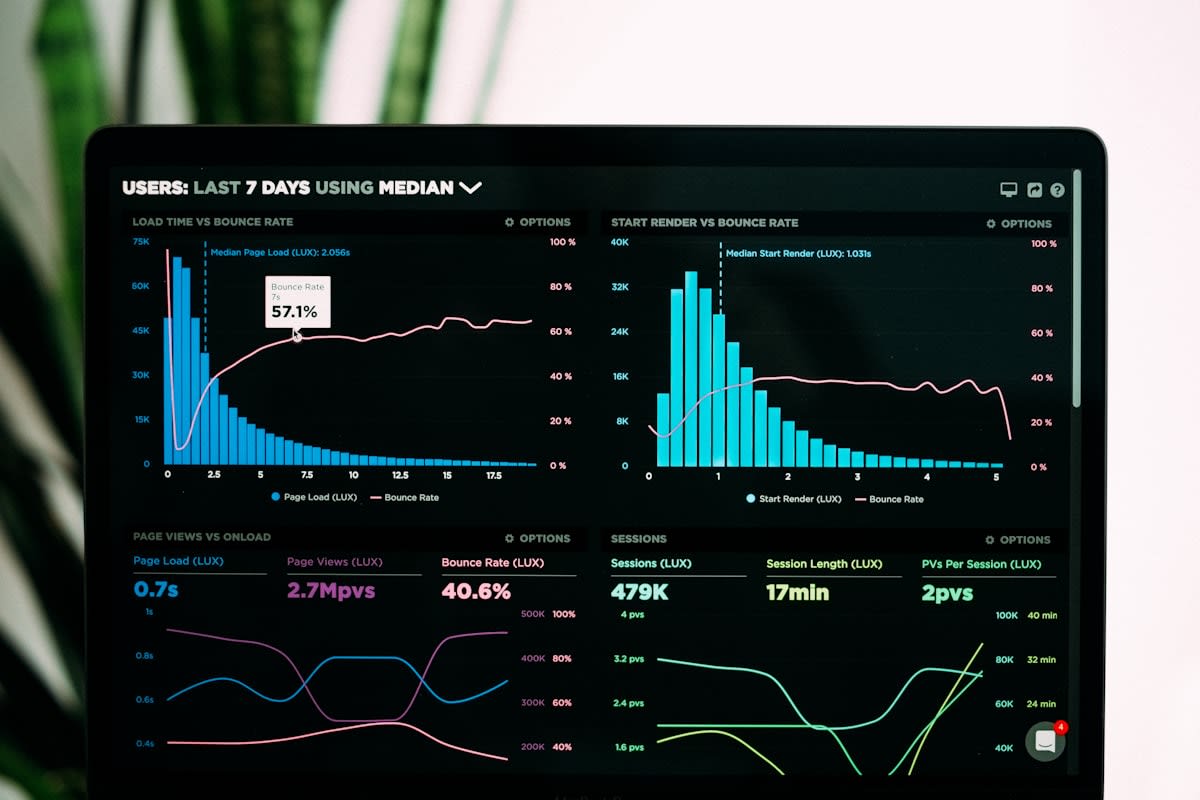
How do you price something as ephemeral as a glance? The market has solved this through proxy metrics. We no longer measure 'interest'; we measure 'time spent' and 'interaction frequency'. According to DataReportal's 2024 Global Overview Report, the average internet user spends approximately 6 hours and 40 minutes online daily (Source: DataReportal, 2024). To a strategic analyst, this is not a statistic about leisure; it is a measurement of available inventory. Every single minute of that window is a slot that can be auctioned off in real-time via programmatic advertising. The pricing is dynamic, fluctuating based on the perceived value of the user's demographic and their current psychological state.
This pricing model creates a perverse incentive for platforms to maximize 'stickiness' at the expense of utility. When the product is the user's attention, the goal is not to help the user complete a task and leave, but to ensure they never leave at all. This has led to the rise of the 'Infinite Scroll' and the 'Auto-play' function—architectural choices designed specifically to bypass the brain's natural stopping cues. By removing the friction of completion, platforms effectively lower the cost of attention acquisition, widening their arbitrage margins.
| Model | Primary Asset | Monetization Vector | Attention Strategy | Risk Factor |
|---|---|---|---|---|
| Ad-Supported | User Gaze | CPM/CPC Auctions | Maximizing Time Spent | Ad Blindness |
| Subscription | User Trust | Recurring Revenue | Maximizing Perceived Value | Churn Rate |
| Data-Mining | Behavioral Patterns | B2B Data Sales | Maximizing Interaction Depth | Regulatory Crackdown |
| Freemium | User Habit | Upsell Conversion | Creating Utility Dependence | Conversion Ceiling |
The transition from these models is where the real strategic battles are fought. We are seeing a gradual move away from pure ad-supported models toward hybrid subscriptions. Why? Because the cost of acquiring new attention is skyrocketing. As users become more cynical about algorithmic manipulation, the 'cost per acquisition' (CPA) rises. The most resilient companies are those diversifying their attention portfolios, ensuring they don't rely solely on the volatility of the ad market.
Global Divergence: Regional Strategies for Capture
The arbitrage of attention does not look the same in San Francisco as it does in Shanghai or Nairobi. In East Asia, we see the rise of the 'Super-App'—entities like WeChat or Grab that consolidate entire digital lives into a single interface. By integrating payments, social networking, and logistics, these platforms eliminate the need for the user to switch apps. This is the ultimate attention play: reducing the 'switching cost' to zero. When a user never leaves the ecosystem, the platform captures 100% of the available digital attention, creating a closed-loop economy that is incredibly difficult for competitors to penetrate.
In contrast, the Western model has historically been more fragmented, relying on an ecosystem of specialized apps. However, this is shifting as Google and Apple integrate more services into their OS layers. The battleground has moved from the application layer to the operating system layer. Whoever controls the home screen controls the gateway to attention. In emerging markets across Africa and Southeast Asia, the leapfrog effect is evident. Mobile-first populations are bypassing the desktop era entirely, meaning their attention is captured through high-frequency, low-bandwidth interactions, forcing platforms to optimize for extreme efficiency and immediate gratification.
The Practitioner's Friction: Inside the Growth Room
If you spend enough time in product growth meetings, you'll notice a recurring, visceral tension between two schools of thought. On one side are the 'Engagement Maximizers' who live by the North Star metric of Daily Active Users (DAU) and Time Spent. They view any drop in session length as a failure of the product. On the other side are the 'Value Optimizers' who argue that high engagement can actually be a sign of inefficiency—that the user is struggling to find what they need. This is the ground-level reality of the attention economy: a constant tug-of-war between creating a tool that is useful and creating a drug that is addictive.
The real debate isn't about ethics—it's about LTV (Lifetime Value). Practitioners are realizing that 'junk attention'—the mindless scrolling that happens during a commute—has a lower conversion value than 'intentional attention'. The industry is now pivoting toward 'Meaningful Social Interactions' (MSI), a metric popularized by Meta to shift focus from passive consumption to active engagement (Source: Meta Investor Relations, 2018). The goal is to move the arbitrage from quantity to quality. It is far more profitable to own ten minutes of a user's deep focus than two hours of their distracted browsing.
"The next decade of growth won't come from finding more users, but from increasing the quality of the attention we already have. We are moving from the era of the 'Attention Grab' to the era of 'Attention Stewardship'."— Sarah Chen, Former Head of Growth at a Global FinTech Unicorn
Adaptation and the Premium on Focus
As the arbitrage of attention reaches a saturation point, we are witnessing the emergence of a counter-economy. Focus is becoming a luxury good. We see this in the rise of 'digital detox' retreats, the premium pricing of distraction-free hardware, and the growing market for deep-work productivity tools. When attention is scarce, the ability to concentrate becomes a competitive advantage. For the individual, the most strategic move is no longer to compete for attention, but to protect it. Those who can maintain deep focus in an environment designed to shatter it will command a significant premium in the labor market.
Businesses are also adapting. The most sophisticated brands are moving away from 'interruptive marketing'—which relies on stealing attention—toward 'permission-based marketing', which earns it. By providing genuine value before asking for focus, they lower the psychological cost of the interaction. The future belongs to the entities that stop treating human focus as a resource to be mined and start treating it as a relationship to be cultivated. The arbitrage is shifting; the profit is no longer in the capture, but in the trust.
Fact-Check & Accuracy Note
Key claims regarding average global internet usage are sourced from DataReportal's 2024 reports. The shift toward 'Meaningful Social Interactions' is based on Meta's public strategic pivots documented in their 2018-2019 investor communications. The concept of attention scarcity is grounded in the foundational work of Herbert Simon. There is ongoing debate among economists regarding whether attention can be quantified as a formal 'commodity' or if it remains a behavioral proxy.